Alan's K9 Academy

Read Our Blog

Our newest blog

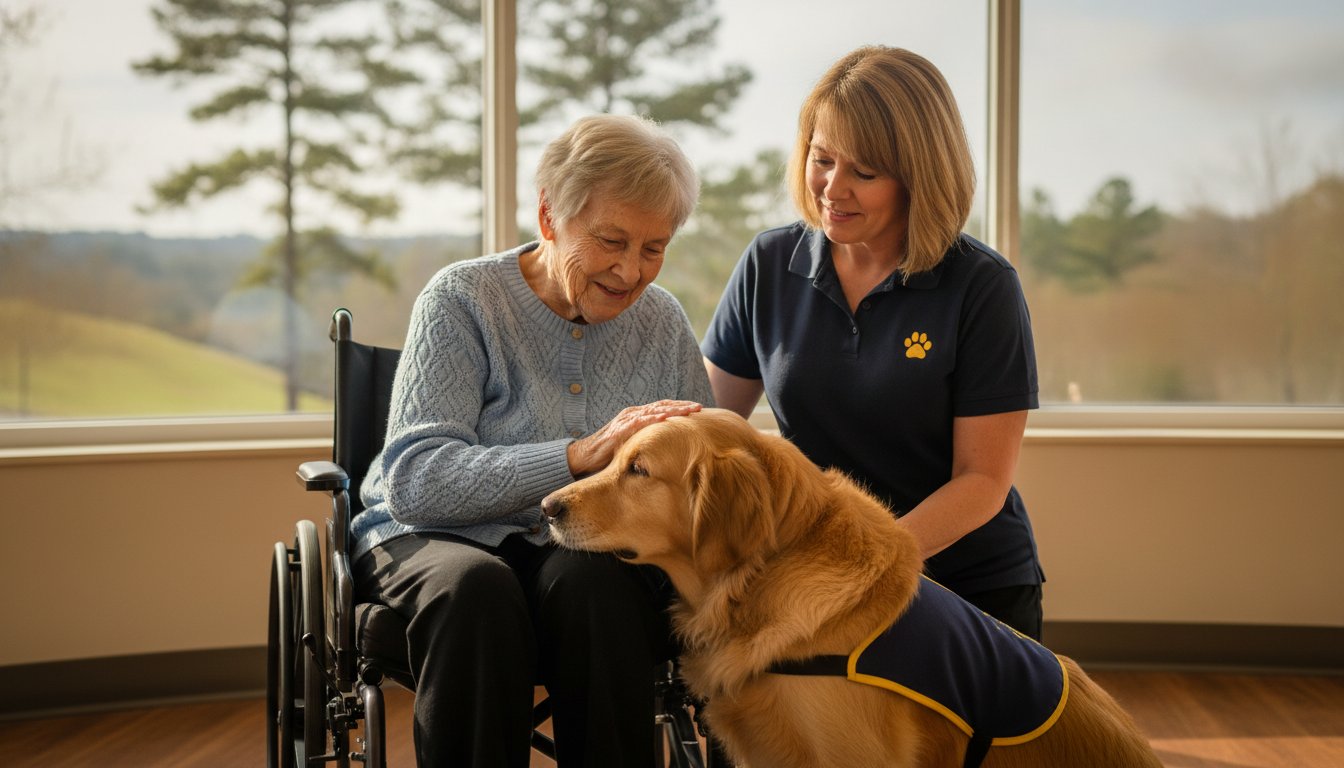
Therapy Dog Training in Bartow County: The 2026 Guide to Certification & Community Impact

Imagine walking into a busy Cartersville hospital with your dog at your side. Instead of pulling toward the sliding doors or shrinking away from a rattling gurney, your companion remains focused and calm, ready to offer comfort to someone in need. Achieving this level of reliability requires special...
Read Blog
Alan Carr
August 16, 2026
🐾 The Problem With “Just Letting Them Grow Out of It”
“He’s just a puppy.” “She’ll grow out of it.” “It’s just a phase.” This is one of the most common and costly pieces of advice dog owners receive.
Read Blog
🐾 Teaching Dogs to Think Before They React
Most behavior problems are not obedience problems. They are impulse control problems.
Read Blog
🐾 Proofing Commands: Why Dogs Fail Outside the Living Room
“He listens perfectly at home.” “The moment we go outside, it’s like he’s never been trained.”
Read Blog
🐾 How to Prevent Resource Guarding in Puppies
Resource guarding does not come out of nowhere. It develops when a puppy learns that people approaching their food, toys, or space is a threat instead of a good thing.
Read Blog
🐾 Why Timing Beats Treat Quantity Every Time
Many dog owners believe better training comes from better treats — bigger pieces, more frequent rewards, higher value food. While rewards matter, timing matters more.
Read Blog
🐾 Homemade Treats for Dogs With Sensitive Stomachs
If your dog has a sensitive stomach, treats can be tricky. Many store bought options contain fillers, artificial ingredients, or rich proteins that trigger upset stomachs, loose stools, or itching.
Read Blog
🐾 Why More Exercise Doesn’t Always Fix Behavior Problems
When dogs misbehave, the most common advice owners hear is simple: “Just exercise them more.” Longer walks. More runs. Extra trips to the park.
Read Blog
🐾 Training for Distractions Instead of Avoiding Them
Many dog owners manage behavior by avoiding distractions. They walk at odd hours. They cross the street. They leave situations early. While this can prevent problems in the short term, it does not actually teach the dog how to cope with the real world.
Read Blog
🐾 Teaching Dogs to Be Neutral Around People and Dogs
One of the biggest misconceptions in dog training is that dogs need to be friendly with everyone and everything they see. In reality, the goal is not friendliness — it’s neutrality.
Read Blog

shortcut your dog's training

Want a professional to train your dog?

Skip the learning curve & leverage our 50+ years of experience to handle your dog's training needs.
Simply click "TRAIN MY DOG" to get started.
TRAIN MY DOG

Frequently asked questions

Is it worth hiring someone to train your dog?

Absolutely! Investing in professional training for your furry friend is like giving them the gift of communication. It's not just about obedience; it's about building a deeper bond. Trained dogs are happier, more confident, and safer companions. Plus, it fosters mutual respect and understanding.

What Type Of Training Methods Do You Use?

Alan’s K9 Academy uses a balanced, customized training approach. We combine positive reinforcement, clear communication, structure, and appropriate training tools based on each dog’s temperament, behavior, and individual needs. Our goal is to create reliable results while strengthening the relationship between dogs and their owners.

How Much Does Your Obedience Training Cost? 

Each of our training programs is customized to the individual dog and owner. We consider your dog’s age, temperament, previous training, behavioral concerns, and your goals before recommending a program. Pricing depends on your dog’s needs and the amount of training required. The best way to receive an accurate recommendation and price is to schedule an evaluation.

Where Do We Train?

Alan’s K9 Academy provides personalized, one-on-one training in clients’ homes and in appropriate real-world environments. Depending on the dog’s needs and progress, training may also take place in backyards, neighborhoods, parks, downtown areas, and pet-friendly stores. These carefully selected environments help dogs develop calm behavior, confidence, social skills, and reliable obedience around everyday distractions.

Do We Offer Payment Plans?

Yes. Financing options may be available through Affirm, Klarna, or LendingUSA, subject to approval and the terms established by each financing provider. Please contact us for current financing information.

Do you take all dogs regardless of age, breed, or issues?

We work with dogs of many breeds, ages, temperaments, and experience levels. Our programs can address obedience needs and behavioral concerns such as insecurity, anxiety, impulse-control problems, hyperactivity, leash reactivity, dog reactivity, aggression, and other challenging behaviors. Because every dog and situation is different, acceptance into a program and the recommended training plan are determined through an evaluation.

Do you offer therapy or service dog training?

Yes. Alan’s K9 Academy offers customized Therapy Dog and Service Dog Training programs. Please contact us to discuss your dog, your goals, and whether one of these programs is appropriate for your needs. To answer this question, we will start by explaining what a service dog does and how a service dog is different from a therapy dog and an emotional support dog. A service dog, as defined by the Americans with Disabilities Act, is a dog individually trained to perform specific tasks and to work with people with disabilities. The work of a service dog must be directly related to the handler's disability. The ADA mandates that service dogs have full public access rights. Therapy dogs are trained to be comfortable in new environments and to interact with different people. They typically have certain personality traits, and they volunteer in clinical settings such as hospitals, schools, and nursing homes. Therapy dogs do not have the same legal right to access service dogs, and although a dog can be certified as a therapy dog through an organization, there are no uniform state or national rules that regulate the certification. Emotional support dogs are not considered service dogs under the ADA. They may be trained for a specific owner, but they are not trained for specific tasks or duties to aid a person with a disability. ESA owners have only limited legal rights, and those typically require a letter of diagnosis from a doctor or psychiatrist. They have certain access when it comes to housing but do not have unlimited access to public spaces.

Why should I work with you instead of a less expensive trainer?

Alan’s K9 Academy is built on more than 35 years of professional dog-training experience from founder and Master Trainer Alan Carr. Our programs are customized to each dog and owner rather than relying on a one-size-fits-all system. We focus on practical, real-world results, clear owner instruction, and continued support through our Life-of-Dog Support Guarantee. Alan’s K9 Academy was also selected as Georgia’s Number One Best of Georgia winner for Pet Training in both 2024 and 2025.