Alan's K9 Academy

Read Our Blog

Our newest blog

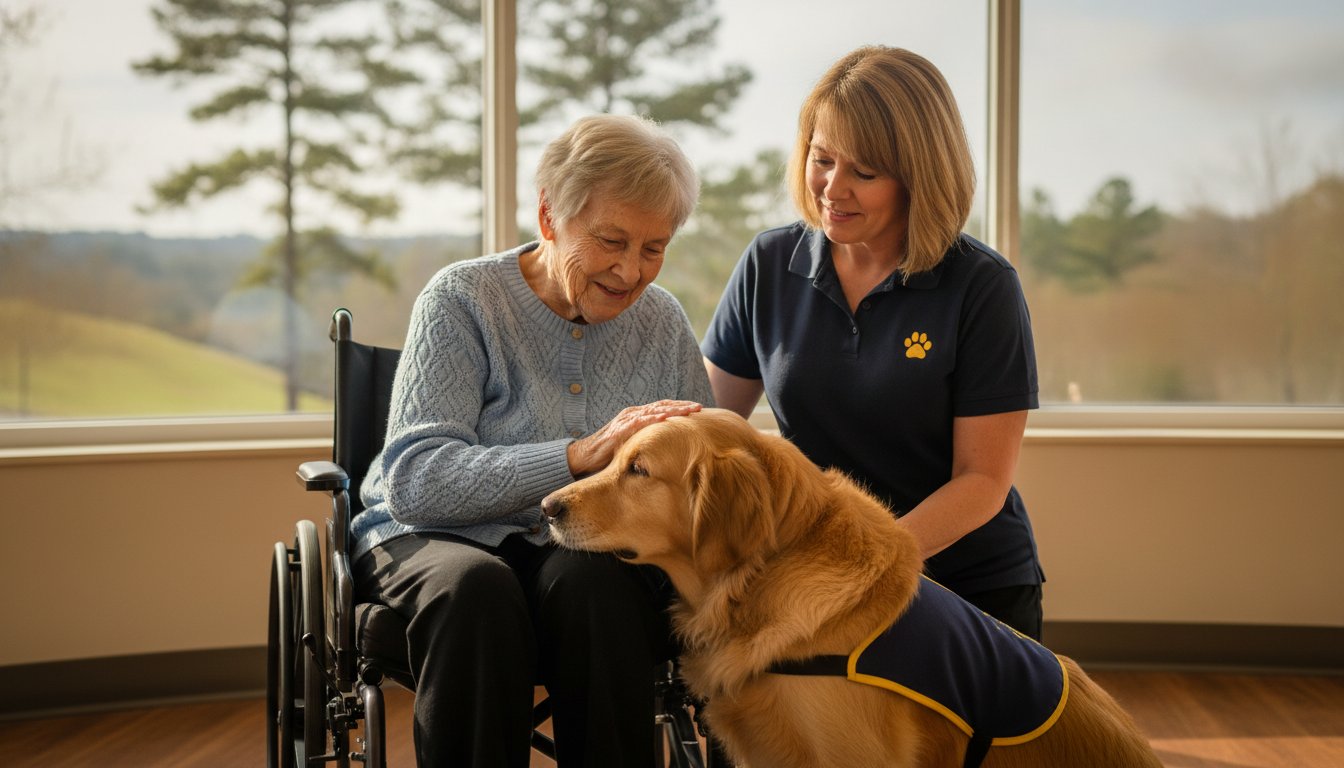
Therapy Dog Training in Bartow County: The 2026 Guide to Certification & Community Impact

Imagine walking into a busy Cartersville hospital with your dog at your side. Instead of pulling toward the sliding doors or shrinking away from a rattling gurney, your companion remains focused and calm, ready to offer comfort to someone in need. Achieving this level of reliability requires special...
Read Blog
Alan Carr
August 16, 2026
How an E-Collar Enhances Positive Reinforcement?
An e-collar is not meant to replace positive reinforcement—it is used as a gentle guide to improve communication and ensure reliability in training. Here’s how it benefits positive reinforcement training:
Read Blog
Why Not All Dogs Should Be Trained on an E-Collar
At Alan’s K9 Academy, we take a balanced and individualized approach to dog training. While e-collars can be an effective tool in certain cases, they are not necessary for every dog. In fact, relying solely on an e-collar for training can be a sign of a trainer’s lack of experience or understanding of more effective, positive reinforcement-based methods.
Read Blog
Debunking Leash Pulling Myths: What You Need to Know!
Leash pulling is a common problem that many dog owners face, but there are several misconceptions that can make it even more challenging to fix. Let’s clear up some of these myths and set the record straight!
Read Blog
Teaching Your Puppy the Basics: Setting the Foundation for Success!
Bringing a puppy into your home is one of the most exciting moments, but it's also the perfect time to start laying the foundation for their future behavior. Teaching your puppy the basics is essential to ensuring they grow into a well-mannered, well-behaved, and happy adult dog. The earlier you start, the better their habits will be as they grow!
Read Blog
TRAINING TIP OF THE DAY: Taking A Puppy On A Walk
Taking a puppy on a walk isn’t just about getting them some exercise—it’s a crucial part of building a strong foundation for obedience! 🐕🚶‍♀️ Whether you're teaching leash manners, exposing them to new environments, or allowing them to explore, walks provide an excellent opportunity for training and bonding.
Read Blog
🐾 Understanding How Your Dog Learns 🐾
Dogs are incredibly intelligent creatures, but their ability to learn and follow commands hinges on clear and consistent communication. Whether you're teaching your dog the basics or addressing more complex behaviors, how you approach training can make all the difference.
Read Blog
How to Make Your Dog Smile Widely!
Is there anything more heartwarming than seeing your dog flash that big, joyful grin? A dog’s smile isn’t just adorable; it’s a clear sign of happiness, contentment, and love. Here's how you can make your dog smile from ear to ear:
Read Blog
Master the "Leave It" Command!
When it comes to dog training, one of the most important commands your dog can learn is the simple yet powerful “leave it” command. This command is not just a nice-to-have; it's an essential skill that can make a significant difference in your dog’s safety, well-being, and overall behavior.
Read Blog
How to Start with Off-Leash Training
Are you looking for a way to give your dog more freedom while still ensuring they listen to you? Off-leash training is the solution! It’s one of the most effective and rewarding training techniques, and here’s why it should be an essential part of your dog’s training journey:
Read Blog

shortcut your dog's training

Want a professional to train your dog?

Skip the learning curve & leverage our 50+ years of experience to handle your dog's training needs.
Simply click "TRAIN MY DOG" to get started.
TRAIN MY DOG

Frequently asked questions

Is it worth hiring someone to train your dog?

Absolutely! Investing in professional training for your furry friend is like giving them the gift of communication. It's not just about obedience; it's about building a deeper bond. Trained dogs are happier, more confident, and safer companions. Plus, it fosters mutual respect and understanding.

What Type Of Training Methods Do You Use?

Alan’s K9 Academy uses a balanced, customized training approach. We combine positive reinforcement, clear communication, structure, and appropriate training tools based on each dog’s temperament, behavior, and individual needs. Our goal is to create reliable results while strengthening the relationship between dogs and their owners.

How Much Does Your Obedience Training Cost? 

Each of our training programs is customized to the individual dog and owner. We consider your dog’s age, temperament, previous training, behavioral concerns, and your goals before recommending a program. Pricing depends on your dog’s needs and the amount of training required. The best way to receive an accurate recommendation and price is to schedule an evaluation.

Where Do We Train?

Alan’s K9 Academy provides personalized, one-on-one training in clients’ homes and in appropriate real-world environments. Depending on the dog’s needs and progress, training may also take place in backyards, neighborhoods, parks, downtown areas, and pet-friendly stores. These carefully selected environments help dogs develop calm behavior, confidence, social skills, and reliable obedience around everyday distractions.

Do We Offer Payment Plans?

Yes. Financing options may be available through Affirm, Klarna, or LendingUSA, subject to approval and the terms established by each financing provider. Please contact us for current financing information.

Do you take all dogs regardless of age, breed, or issues?

We work with dogs of many breeds, ages, temperaments, and experience levels. Our programs can address obedience needs and behavioral concerns such as insecurity, anxiety, impulse-control problems, hyperactivity, leash reactivity, dog reactivity, aggression, and other challenging behaviors. Because every dog and situation is different, acceptance into a program and the recommended training plan are determined through an evaluation.

Do you offer therapy or service dog training?

Yes. Alan’s K9 Academy offers customized Therapy Dog and Service Dog Training programs. Please contact us to discuss your dog, your goals, and whether one of these programs is appropriate for your needs. To answer this question, we will start by explaining what a service dog does and how a service dog is different from a therapy dog and an emotional support dog. A service dog, as defined by the Americans with Disabilities Act, is a dog individually trained to perform specific tasks and to work with people with disabilities. The work of a service dog must be directly related to the handler's disability. The ADA mandates that service dogs have full public access rights. Therapy dogs are trained to be comfortable in new environments and to interact with different people. They typically have certain personality traits, and they volunteer in clinical settings such as hospitals, schools, and nursing homes. Therapy dogs do not have the same legal right to access service dogs, and although a dog can be certified as a therapy dog through an organization, there are no uniform state or national rules that regulate the certification. Emotional support dogs are not considered service dogs under the ADA. They may be trained for a specific owner, but they are not trained for specific tasks or duties to aid a person with a disability. ESA owners have only limited legal rights, and those typically require a letter of diagnosis from a doctor or psychiatrist. They have certain access when it comes to housing but do not have unlimited access to public spaces.

Why should I work with you instead of a less expensive trainer?

Alan’s K9 Academy is built on more than 35 years of professional dog-training experience from founder and Master Trainer Alan Carr. Our programs are customized to each dog and owner rather than relying on a one-size-fits-all system. We focus on practical, real-world results, clear owner instruction, and continued support through our Life-of-Dog Support Guarantee. Alan’s K9 Academy was also selected as Georgia’s Number One Best of Georgia winner for Pet Training in both 2024 and 2025.