%20(620%20x%20150%20px)%20(14).webp)
%20(620%20x%20150%20px)%20(15).webp)

.webp)
_page-0001.webp)
Alan's K9 Academy
Read Our Blog
Our newest blog
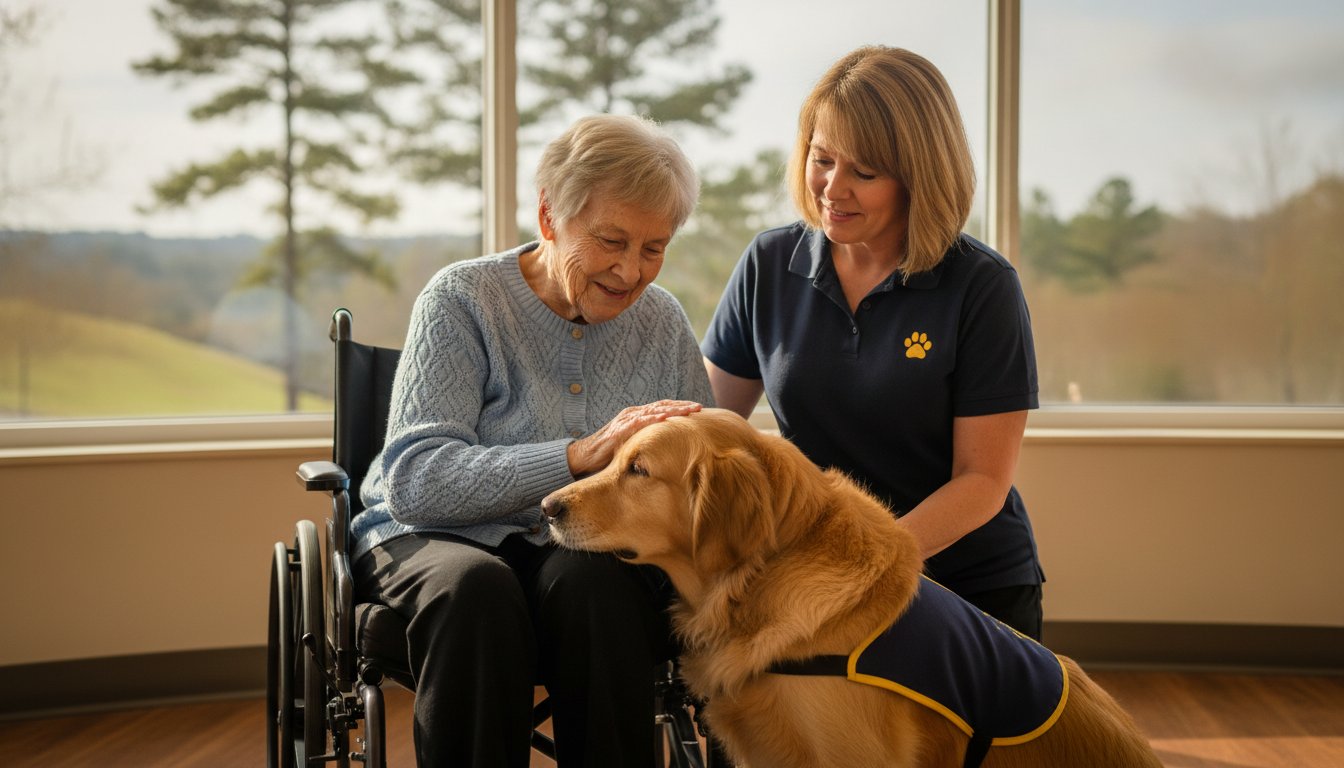
Therapy Dog Training in Bartow County: The 2026 Guide to Certification & Community Impact
Imagine walking into a busy Cartersville hospital with your dog at your side. Instead of pulling toward the sliding doors or shrinking away from a rattling gurney, your companion remains focused and calm, ready to offer comfort to someone in need. Achieving this level of reliability requires special...
Read Blog%20(5).gif)
.png)
Preventing Destructive Chewing: Helping Your Dog Find Appropriate Outlets
Chewing is a natural behavior for dogs—it's how they explore their world, relieve stress, and maintain healthy teeth. However, when chewing turns destructive, it can be frustrating for dog owners, especially when precious furniture, shoes, or personal belongings are at risk. Thankfully, destructive chewing can be managed and prevented with the right training, boundaries, and proper outlets for your dog’s energy.
Read Blog.png)
Fear and Phobias in Dogs: How to Help Your Dog Overcome Common Fears
As dog owners, we want our furry companions to live happy, confident lives, but sometimes our dogs experience fears and phobias that can hinder their well-being. Common fears in dogs include loud noises, unfamiliar environments, certain people, or even specific objects. These fears can be distressing for both the dog and their owners, but with the right approach, many fears can be managed and overcome.
Read Blog.png)
5 Common Recall Mistakes and How Balanced Training Can Help
One of the most important commands to teach your dog is recall—getting your dog to come when called. Recall is not just about obedience; it’s about your dog’s safety and strengthening your bond. However, there are several common mistakes that can hinder progress in training, and understanding them is the key to success. With a balanced approach, mixing positive reinforcement with effective behavioral strategies, your dog will respond to recall with reliability.
Read Blog.png)
Do Dogs Really Smile? Understanding Your Dog’s Happy Expression 🐶✨
As pet parents, we love to see our dogs happy, and one of the most heartwarming sights is when they smile. But have you ever wondered: do dogs actually smile, and what does it mean when they do?
Read Blog.png)
The Importance of Breaks in Dog Training: Why Play Matters
When it comes to dog training, many pet parents focus solely on the discipline and obedience aspect, often overlooking the vital role of breaks and play in the process. While consistent training is essential for good behavior, integrating short breaks and play into the session can significantly improve your dog’s learning experience and overall progress.
Read Blog.png)
Dogs Are Better at Judging Character Than We Are 🐾
Dogs have an extraordinary ability to read human emotions and assess character—often more accurately than we can. This skill is rooted in their evolutionary development, heightened sensory perception, and deep connection to human behavior. 👀
Read Blog.png)
Exercise Requirements for High-Drive Dogs: A Comprehensive Guide 🐾💪
High-drive dogs are known for their boundless energy, intelligence, and enthusiasm for work and play. Without proper exercise and mental stimulation, they can quickly develop behavioral issues. Understanding their exercise needs is crucial for any owner committed to providing a balanced and fulfilling life for their canine companion.
Read Blog.png)
How to Estimate Your Dog’s Age
Trying to determine how old your new dog is? Without a known birthday, pinpointing an exact age is tough. However, you can make an educated guess by examining their teeth, coat, and overall health. No Guaranteed Way to Know for Sure. Unfortunately, there’s no foolproof method to determine a dog’s exact age unless you have some record of their birth. Julie Tasch, Dogtown team lead at Best Friends Animal Society in Utah, explains that while aging a dog precisely isn’t possible, there are certain signs that can help narrow it down. If you’ve adopted a rescue or found a stray, it’s worth investigating these clues so you can provide the right diet and care for their stage of life.
Read Blog.png)
Are You Setting Your Puppy Up for Success?
Every time you take your puppy out for a stroll, you expose them to situations that could shape their behavior and demeanor—for better or worse.It only takes one bad experience—a sudden scare or an unfriendly encounter—to create lasting fear, reactivity, or unwanted habits. But these challenges can be avoided if you take the right steps from the start.
Read Blog