



Training a Dog That Is Not Food Motivated
Food isn’t the only way to reward a dog. Training a dog that is not food motivated works best when you identify what your individual dog values and use it to make learning clear and worthwhile. Play, praise, toys, or access to something your dog wants can all help.If treats aren’t holding your dog’s...

Food isn’t the only way to reward a dog. Training a dog that is not food motivated works best when you identify what your individual dog values and use it to make learning clear and worthwhile. Play, praise, toys, or access to something your dog wants can all help.
If treats aren’t holding your dog’s attention, it can feel as though training has stalled. That doesn’t mean your dog can’t learn. A recent meal, uncertainty about a cue, or unease in the environment can all affect whether food appeals in the moment.
Learn to spot what motivates your dog, make rewards more meaningful, and adjust the setup when your dog seems distracted or worried. A thoughtful, individualized approach can build communication and support progress without relying on treats alone.
Key Takeaways
• Look for rewards your dog genuinely values, including play, toys, praise, or access to something they enjoy.
• Consider whether a recent meal, uncertainty about the cue, or unease in the environment is affecting your dog’s interest.
• Make food more appealing by varying options, and give a worried dog more distance from whatever feels scary.
• Use personalized training support when you need help adapting rewards and methods to your dog’s behavior and learning needs.
Training a dog that is not food motivated
Your dog decides whether a reward is worth pursuing. A treat that excites one dog may leave another looking away. Notice what your dog chooses in everyday moments: a tug toy, a ball, outdoor sniffing, or greeting a familiar person. Then use that preference to make practice more rewarding.
Check why food is not working
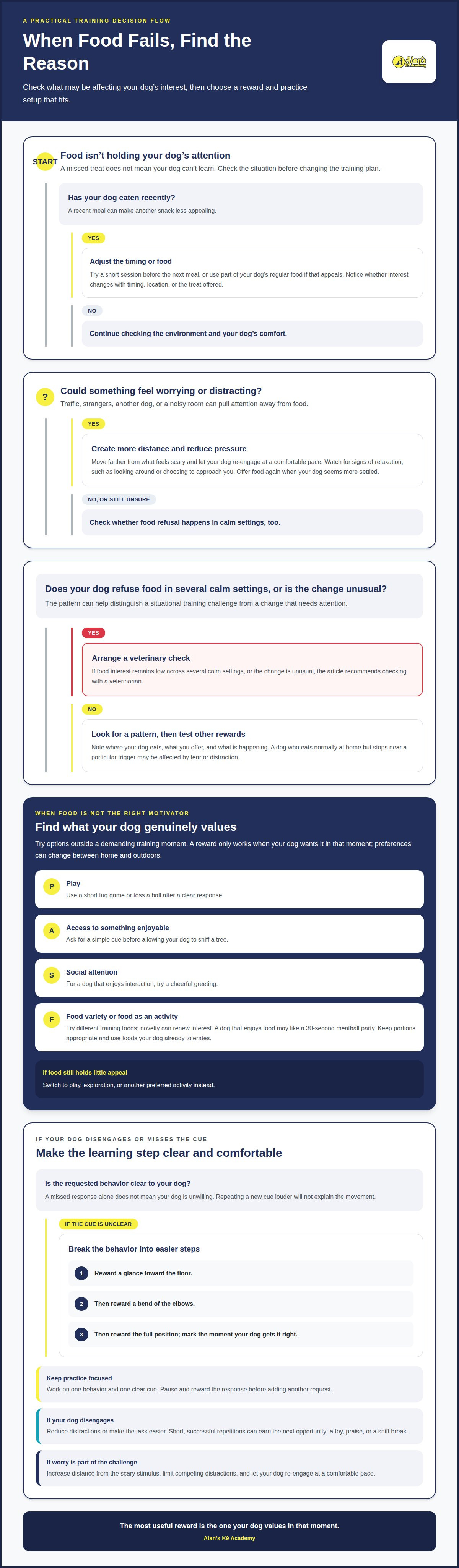
Before changing rewards, consider the situation. A dog that has recently eaten may have little interest in another snack. Try a short session before the next meal, or use part of the dog’s regular food if that appeals. Notice whether interest changes with timing, location, or the treat you offer.
Fear can also suppress appetite. A dog worried about traffic, strangers, another dog, or a noisy room may focus on feeling safe rather than eating. Move farther from the trigger and watch for signs of relaxation, such as looking around or choosing to approach you. Offer food again when your dog seems more settled.
If your dog refuses food in several calm settings, or the change is unusual, arrange a veterinary check. If your dog eats normally at home but stops near a particular trigger, fear or distraction may be affecting training. Note where your dog eats, what you offer, and what is happening to help identify a pattern.
Find the reward your dog values
Try different rewards outside a demanding training moment. Offer a toy, a chance to sniff, gentle praise, or a brief game, then observe what your dog actively seeks. A reward works only if your dog wants it in that moment. Compare options in different settings: a favorite toy at home may matter less outdoors.
Play
Use a short tug game or toss a ball after a clear response.
Access
Ask for a simple cue before allowing a dog to sniff a tree.
Social attention
Reward a dog that enjoys interaction with a cheerful greeting.
Food variety
Try different training foods; novelty can renew interest.
Some dogs enjoy food more as an activity than as a quick bite. For a dog that likes food, a 30-second meatball party can be a playful reward. Keep portions appropriate for your dog and use foods they already tolerate. If food still holds little appeal, switch to play, exploration, or another preferred activity instead.
Make learning clear and comfortable
A dog that doesn’t respond to a cue may not understand what you’re asking. If “down” is new, repeating it louder won’t explain the movement. Return to an easier step: reward a glance toward the floor, then a bend of the elbows, then the full position. Mark the moment your dog gets it right.
Focus each practice session on one behavior and one clear cue. Ask for “sit,” pause, and reward the response before adding another request. If your dog disengages, reduce distractions or make the task easier. Short, successful repetitions show your dog which action earns the next opportunity, whether that’s a toy, praise, or a sniff break.
Use a calm setup when worry is part of the challenge. The National Library of Medicine describes guidelines for low-fear, low-stress environments for patients, staff, and owners. The practical training takeaway is to reduce pressure: increase distance from a scary stimulus, limit competing distractions, and let your dog re-engage at a comfortable pace. It’s easier to read progress when your dog can focus.
When your dog doesn’t perform a requested behavior, consider whether the cue is clear. Your dog may need more practice to understand what you’re asking; a missed response alone doesn’t mean your dog is unwilling to work. Keep teaching the behavior instead of expecting a reward to resolve confusion.
Food interest can also depend on the dog’s condition: a dog that has recently eaten may find additional food less motivating during training. Fearful dogs may not eat because their bodies prepare for danger and digestive activity slows. If these explanations do not apply and the dog still shows little interest in food, the author recommends a veterinary check. This helps keep reward choices in perspective: low interest may reflect timing, fear, confusion about a requested behavior, or an issue that warrants professional attention, rather than a need to keep offering different treats.
Alan's K9 Academy: In-Home Dog Training
Alan's K9 Academy offers In-Home Dog Training to help you work on communication and training in your dog’s everyday environment. This can be useful when treats aren’t holding your dog’s attention, or when distractions at home make it difficult to practice consistently. Training can focus on identifying meaningful rewards and choosing clear steps that fit your dog’s needs.
If fear or another behavior challenge is getting in the way of learning, Behavior Modification can address the behavior alongside training goals. Therapy & Service Dog Training is available for people working on those specific foundations. The right focus depends on what you and your dog are working toward.
Contact Alan's K9 Academy to discuss training support for your dog.
Build a Training Plan That Fits Your Dog
The next step is to turn what you’ve noticed into a routine you can sustain. Choose one behavior to practice, agree on the same cue with everyone in your household, and keep track of which rewards help your dog stay engaged. That shared approach can make everyday practice clearer for both of you.
If you’d like hands-on guidance, Alan's K9 Academy offers In-Home Dog Training, Behavior Modification, and Therapy & Service Dog Training. These options can support different goals, from building useful skills at home to working through behavior challenges or developing a training foundation for a therapy or service dog. Training a dog that is not food motivated can become more manageable when the plan reflects your dog’s needs and the real situations you face.
Contact Alan's K9 Academy for support and take a thoughtful next step toward better communication with your dog.