



Train Your Dog to Be Calm in Public with Gradual Practice
A calm public outing starts away from the crowd, not in the middle of it. Learning how to train a dog to be calm in public means building comfort gradually: begin in a familiar, low-pressure setting, pair new sights and sounds with rewards, and make outings more challenging only while your dog remai...

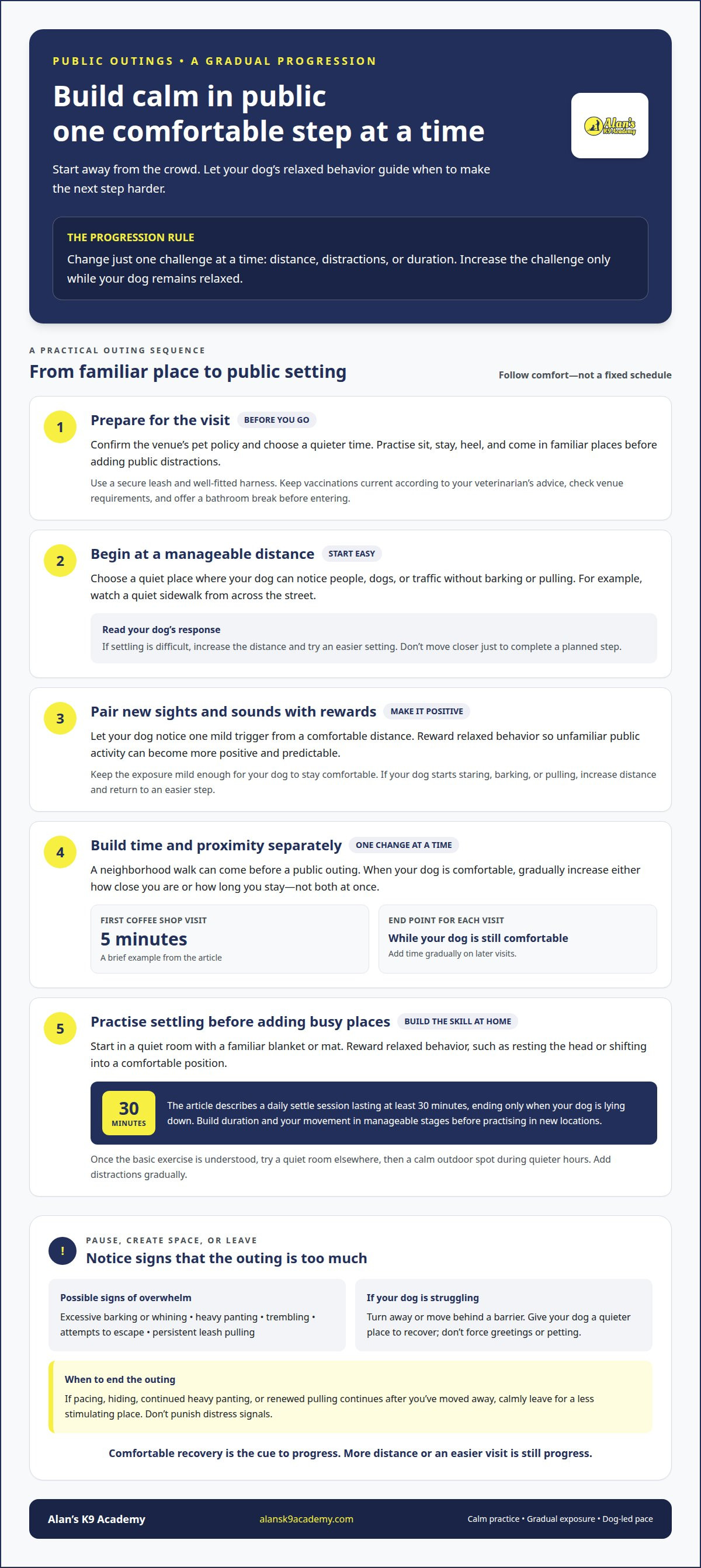
A calm public outing starts away from the crowd, not in the middle of it. Learning how to train a dog to be calm in public means building comfort gradually: begin in a familiar, low-pressure setting, pair new sights and sounds with rewards, and make outings more challenging only while your dog remains relaxed. For a first coffee shop visit, keep it brief, for example, five minutes.
If your dog barks, pulls, or seems unable to settle, every outing can feel like a test. That doesn’t mean your dog can’t learn; it may mean the environment is asking too much, too soon. Short, positive practice gives your dog room to feel safe and helps you respond more clearly.
You’ll learn how to introduce public settings step by step, build positive associations with the things your dog notices, and teach a settle that works beyond home. We’ll also cover signs of overwhelm and when to offer more space or end an outing, so practice stays practical, kind, and suited to your dog.
Key Takeaways
• Choose a starting environment your dog can handle, then increase the challenge as they grow more comfortable.
• Watch for signs of stress and create distance or end the outing instead of forcing an interaction.
• Practice settling in a quiet place first, then help your dog use that skill in busier settings.
• Pair new sights and sounds with rewards to help public places feel more positive and predictable.
Gradual desensitization to public environments
Start in a calm, familiar setting, then add distance, distractions, or time, changing just one thing at a time. Your dog’s relaxed behavior, not a fixed schedule, shows when to make the next step harder.
•
Prepare for Public Visits
Before visiting a dog-friendly business, confirm its pet policy and choose a quieter time. Keep your dog on a secure leash, using a well-fitted harness and a non-slip leash for control. A muzzle isn’t a substitute for distance or training. If your dog needs one for safety, get guidance on choosing and introducing it humanely.
Practice sit, stay, heel, and come in familiar places before adding public distractions. Keep routine vaccinations current according to your veterinarian’s advice, and ask about any venue-specific requirements. A bathroom break before entering a store or restaurant patio can also help prevent accidents.
•
Increase Distance and Duration Gradually
Begin far enough away that your dog can notice people, dogs, or traffic without barking or pulling. For example, watch a quiet sidewalk from across the street, then move closer only while your dog stays relaxed. Keep a secure grip on the leash, and increase the distance again if your dog struggles to settle.
Build time and proximity separately. A neighborhood walk can come before a public outing, and a first coffee shop visit can last five minutes. End while your dog is still comfortable, then gradually add time on later visits. Changing one challenge at a time makes your dog’s behavior easier to read.
• Progress depends on your dog’s comfort and ability to recover after each exposure, not on a set number of days. Repeat an easier visit if your dog needs more practice; increase the challenge only when relaxed behavior returns reliably.
• Get help from a dog trainer when public reactivity makes safe distance or calm practice difficult. Behavior Modification can address the triggers and responses that interfere with outings. A veterinarian can advise on vaccination needs and assess health concerns that may affect your dog’s comfort in public.
Removing a distressed dog from an overwhelming situation
Watch your dog’s behavior and respond before distress escalates. Excessive barking or whining, heavy panting, trembling, attempts to escape, and persistent leash pulling can signal that public distractions feel overwhelming.
• Create space from the trigger. Turn away from an approaching dog or move behind a barrier, then choose a quieter place where your dog can breathe and settle. Don’t force greetings or allow people to pet your dog when they’re uncomfortable. Politely declining is fine; creating distance is a practical response, not a setback.
• Leave if your dog can’t recover. Pacing, hiding, continued heavy panting, or renewed pulling after you’ve moved away are signs to end the outing. Calmly guide your dog toward a less stimulating place, and don’t punish barking or other distress signals. A quiet exit helps keep a difficult moment from becoming more intense.
• Offer a familiar activity once your dog has space. A chew, toy, or a few small treats can make a quiet spot more comfortable, but don’t use food to lure your dog closer to a trigger. Let your dog sniff or rest instead of insisting on a cue or interaction.
• Practice settling at home before adding public distractions. Start in a quiet room with a familiar blanket, and reward relaxed behavior, such as resting their head or shifting into a comfortable position. If your dog gets up, pause and wait for calm to return before rewarding again.
• Introduce one mild distraction at a time. For example, ask a helper to walk past at a distance while your dog rests on the blanket. Reward calm behavior, then make the distraction slightly closer or busier in a later session. If your dog starts staring, barking, or pulling, increase the distance and return to an easier step.
Why should I teach my dog to settle?
A practiced settle gives your dog a familiar way to rest while you pause in public. Build the skill in quiet settings first, then gradually add new locations and distractions.
• Choose a designated spot, such as a blanket or mat, in a quiet room. Let your dog explore it and reward relaxed behavior, including resting their head or shifting their weight. Dogs Trust advises starting settle training somewhere quiet, because distractions make learning harder. Keep your own movements calm and predictable.
• Reward relaxation without turning it into a string of commands. Once your dog is lying down and settled, begin a daily settle session; the session should last at least 30 minutes and end only when your dog is lying down. If your dog gets up, wait quietly for them to settle again before rewarding. The aim is calm rest, not repeatedly asking for “down.”
• Build duration and movement in manageable stages. After your dog can settle while you move around the room, leave for a few minutes at a time, then gradually increase your absence until your dog can rest quietly for 30 minutes. Return calmly, and make the next practice easier if your dog gets up or struggles to settle.
• Take the same mat to new locations only after your dog understands the basic exercise. Try a quiet room elsewhere, then a calm outdoor spot during quieter hours, before choosing a busier setting. Add one distraction at a time, such as a helper walking past. Dogs Trust advises practising in different locations with more distractions once the dog has learned the basic objective.
Building positive associations with public settings
Help your dog connect unfamiliar sights and sounds with safe, rewarding experiences. Keep each exposure mild enough for relaxed behavior, then build gradually.
• Start with one trigger at a comfortable distance, such as watching a shopping cart roll by from across a quiet parking area. Offer a small treat when your dog notices the cart and stays relaxed. If your dog stiffens, barks, or pulls, move farther away before trying again.
• Pair wheels and other unfamiliar objects with something your dog enjoys. Start with a stationary bicycle, then reward calm observation before asking a helper to move it slowly at a distance. Keep each practice brief, and don’t bring the object closer while your dog shows discomfort.
• Use a familiar blanket as a predictable resting spot during practice. Dogs Trust advises offering tiny, bite-size treats while your dog is on lead on the blanket, without speaking. Let your dog choose to sniff, look away, or rest rather than holding their attention on a person or object.
• Repeat successful pairings in different places, changing one detail at a time. For example, practice near a quiet sidewalk before choosing a spot with passing bicycles. Reward relaxed behavior, and end the session or increase distance if your dog can’t disengage. For tailored help building calmer public behavior, get support with your dog’s training.
Focus each practice on a mild version of a trigger, pairing it with a treat or toy to help make the experience positive. Begin at a level your dog can manage, then make changes gradually instead of presenting a stronger version all at once. Gradual exposure to mild triggers, paired with treats or toys, can help build positive associations with public situations. Introduce wheels and other unfamiliar objects gradually, using food rewards to create positive associations.
During public outings, bring a travel mat or familiar blanket as a safe, familiar spot. Let your dog use it while encountering mild triggers, and keep pairing the surroundings with treats or toys. The goal is simple: make public settings part of a pattern of manageable exposure and positive rewards. Repeating that pattern gradually can help your dog become more comfortable with places and objects that once seemed unfamiliar.
Alan's K9 Academy
Alan's K9 Academy can help you turn gradual practice into a plan that fits your dog’s behavior and everyday challenges. If your dog struggles to stay relaxed around people, dogs, or busy public settings, Behavior Modification can address the responses that make outings difficult. In-Home Dog Training and Group Classes can also support practical skill-building, while Therapy & Service Dog Training develops foundations for those specific goals.
Consider professional guidance if you’re unsure how to adjust distance, recognize early stress, or progress without overwhelming your dog. Training can help clarify what to practice and how to adapt when your dog’s behavior changes in real-world settings. Contact Alan's K9 Academy to discuss support for your dog.
Make your next step one your dog can handle
Your next goal doesn’t need to be a crowded patio or a long outing. Choose a manageable situation where you can notice your dog’s response and adjust the plan without pressure. Learning how to train a dog to be calm in public is an ongoing process of adapting practice to your dog, not pushing through discomfort. If progress feels difficult, skilled guidance can help you identify what to change and build a more suitable plan.
Alan’s K9 Academy offers In-Home Dog Training, Behavior Modification, and Therapy & Service Dog Training. These options can support different training needs, including behavior challenges that make public settings stressful. Take the next step when you’re ready to work toward outings that feel more manageable for both of you.
Contact Alan's K9 Academy to discuss support for your dog. Keep the next practice small, thoughtful, and focused on comfort. Progress can begin with one calm moment.
Frequently Asked Questions
How do I get started?
To learn how to train a dog to be calm in public, first identify the situation that most often unsettles your dog. Is it people approaching, traffic noise, or another dog nearby? Practice one trigger at a time and note what your dog does before reacting. This helps you choose a manageable starting point and recognize when the setup needs more distance.
How to deal with Unexpected Situations?
Respond to an unexpected event by calmly creating space, rather than correcting your dog or insisting they stay. If a skateboard suddenly rolls past, turn away and move behind a parked car or another safe visual barrier. Pause until your dog can focus on you again. If they remain distressed, end the outing and try again another day in a calmer setting.
What leash, harness, or muzzle is best for managing a reactive dog in public
Use a secure leash with a well-fitted harness and a non-slip leash for control. A muzzle isn’t a substitute for distance or training. If your dog needs one for safety, get guidance on choosing and introducing it humanely.