



Stop Being Embarrassed by Your Dog's Behavior and Respond Calmly
Your dog’s “guilty” look usually isn’t embarrassment. Dogs don’t experience embarrassment as people do; lowered eyes or a tucked posture are more often signs of stress or appeasement. To stop being embarrassed by my dog's behavior, start by noticing what your dog may be communicating instead of assu...

Your dog’s “guilty” look usually isn’t embarrassment. Dogs don’t experience embarrassment as people do; lowered eyes or a tucked posture are more often signs of stress or appeasement. To stop being embarrassed by my dog's behavior, start by noticing what your dog may be communicating instead of assuming they know they’ve done something wrong.
It’s understandable to feel awkward when your dog barks, grabs something they shouldn’t, or behaves unpredictably in public. But reacting with frustration or embarrassment can add tension without helping your dog learn what to do differently. A calm response gives you a better chance to guide the moment.
This article explains how your reactions can affect your dog, how to respond with calm reassurance and redirection, and how to distinguish perceived guilt from fear, discomfort, or other behavior. You’ll also learn why a quick lick or avoiding eye contact may be your dog’s way of easing tension, not an admission of mischief.
Key Takeaways
• Look at your dog’s body language and the situation before deciding what a “guilty” expression means.
• A calm voice, relaxed posture, and redirection can help lower tension and guide your dog toward a better choice.
• Behaviors such as avoiding eye contact or licking the snout may signal discomfort, not embarrassment.
• For barking, a consistent quiet cue and reward can help your dog learn what behavior you want instead.
• When behavior keeps causing stress, personalized training can help you understand the triggers and build a practical response.
How owners’ reactions affect dogs
Your dog responds to what happens in the moment, not to the embarrassment you feel afterward. A sharp voice, tense posture, or sudden grab can make an already confusing situation feel more threatening. For example, if your dog chews a shoe and you shout after discovering it, your reaction may start to predict tension. It won’t teach your dog which items are appropriate to chew. Respond calmly and guide them toward a better choice.
Consider what your dog may be experiencing before reacting. Grooming can be intense, and a subdued expression afterward may reflect stress or adjustment to having less fur. A puppy chewing during teething needs a suitable chew object, not a scolding for a developmental behavior. Teething-related chewing should subside after 6 months of age. If you catch yourself thinking, “I want to stop being embarrassed by my dog's behavior,” pause and look for the need behind the action.
Your response also affects whether your dog feels safe around people and valued items. Dogs that weren’t properly socialized during their first three months may be more likely to develop fears and phobias. Punishing or threatening a dog over a guarded resource isn’t recommended because it can make the behavior worse. If your dog stiffens over a toy, don’t reach in or escalate the confrontation. Manage access to the item and seek guidance on changing the response safely.
House-training offers another example of how timing and consistency matter. Taking a dog outside 15 to 20 minutes after meals can support house-training. If an accident happens indoors, anger afterward can confuse the dog because it doesn’t connect your reaction with the earlier event. Focus on the routine and notice what happens before accidents, such as missed opportunities to go outside.
Frequent stress-related behavior deserves attention, not punishment. Talk with a veterinarian about possible solutions, which may include medication, calming collars, sprays or diffusers, and supplements. Stress can have many causes, so note when the behavior occurs, what happened just before it, and whether your dog settles afterward. Those details are more useful than labeling your dog stubborn or ashamed.
In the United States, dog-training costs depend on factors such as the training format, the behavior being addressed, and the support involved. The price depends on the case and is given after a quote request.
Instead of thinking, “I want to stop being embarrassed by my dog's behavior,” try, “I can focus on what my dog needs next.” Choose a response you can repeat, such as calmly creating distance or guiding your dog to a suitable activity. This shift can turn an awkward moment into useful information about what your dog needs.
Responding calmly and redirecting behavior
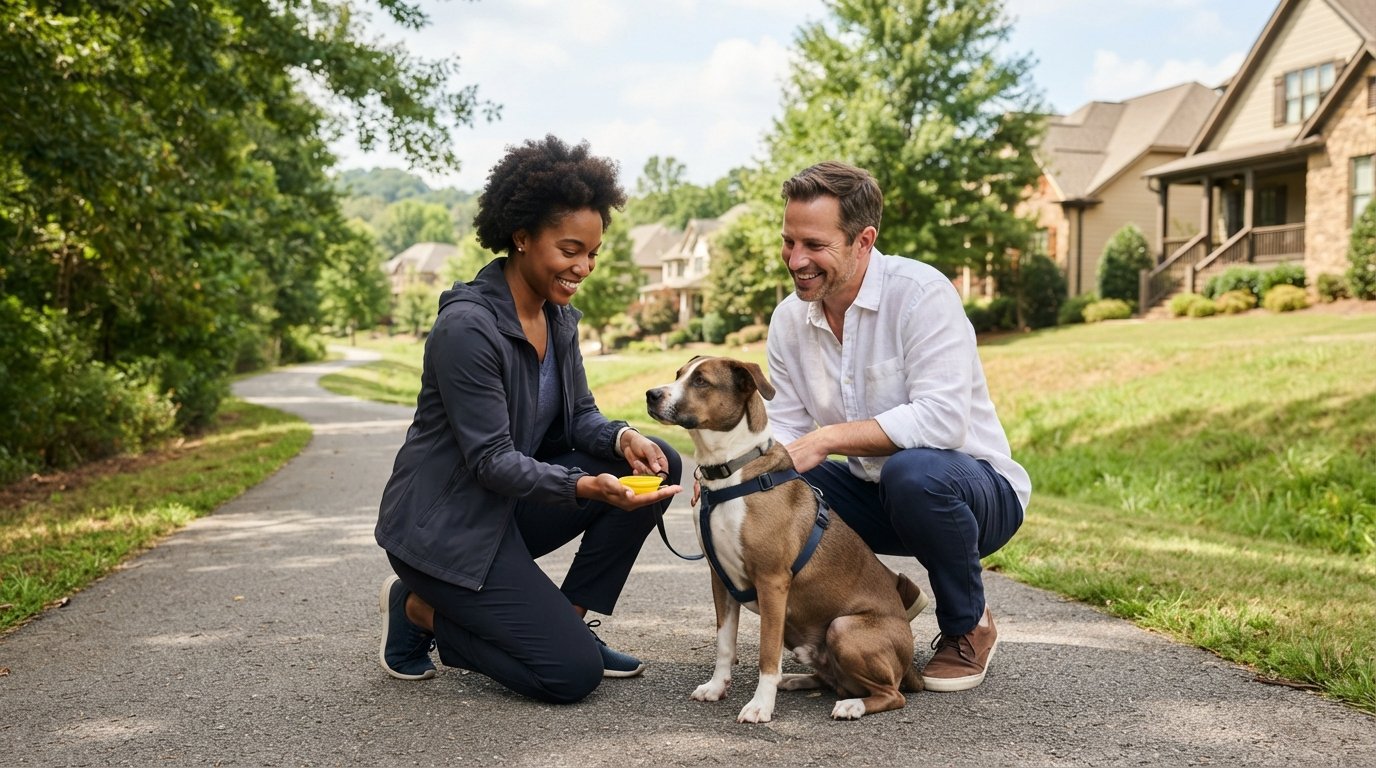
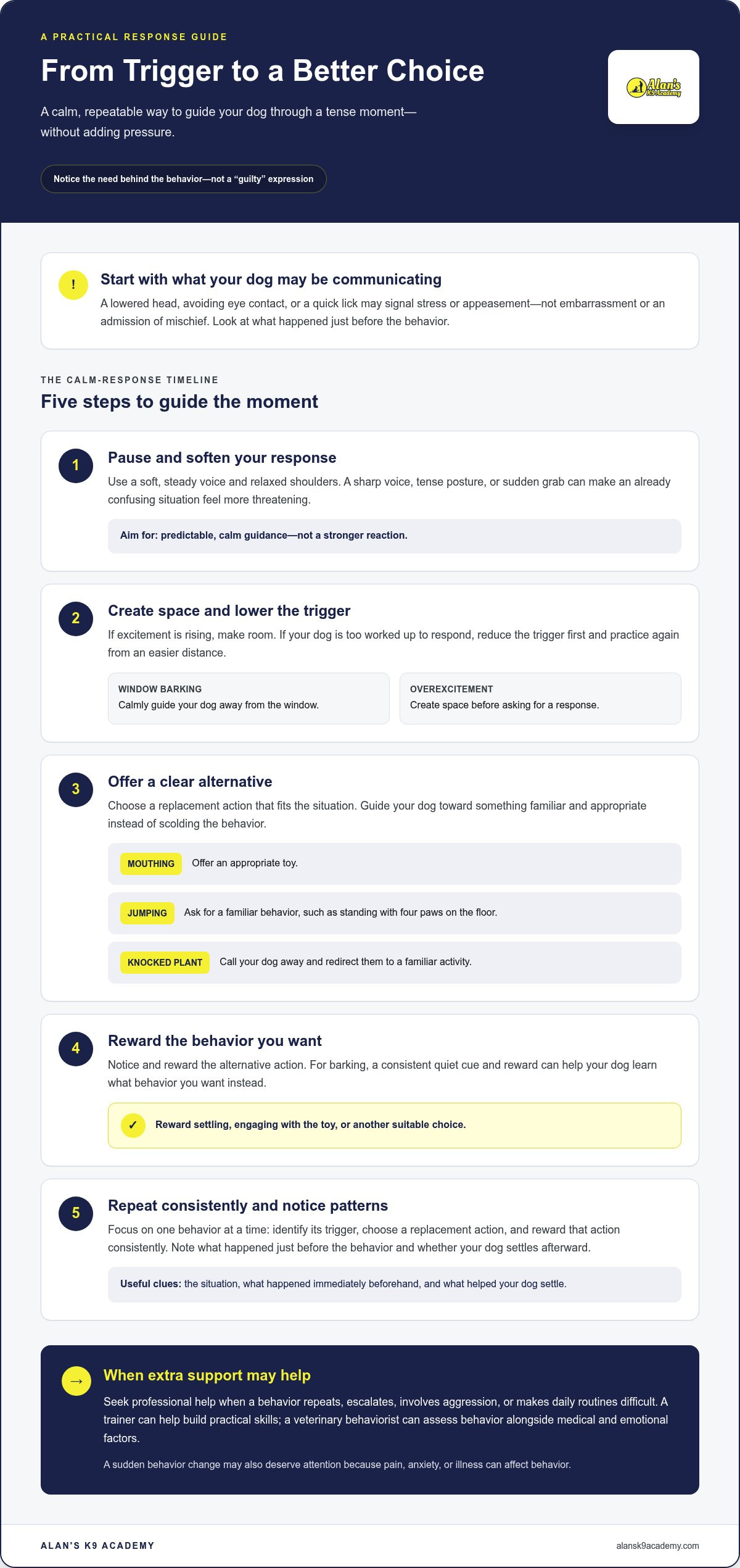
In a tense moment, your dog needs a clear signal, not a stronger reaction. Use a soft voice, relax your posture, and create space if excitement is rising. If your dog jumps on a visitor, turn slightly away, ask for a familiar behavior, then reward four paws on the floor. This offers a clear alternative without adding pressure.
Redirection works best when it fits the situation. If your dog mouths a sleeve, offer an appropriate toy and praise them for engaging with it. If barking starts at the window, calmly guide your dog away and reward them for settling elsewhere. Don’t repeat a cue while your dog is too excited to respond. Reduce the trigger first, then practice again from an easier distance.
When your dog acts sheepish, use a steady voice, relaxed shoulders, and a simple invitation to move with you. For example, call your dog away from a knocked-over plant and redirect them to a familiar activity. Calm reassurance doesn’t mean rewarding every behavior; it helps keep your response predictable while you guide your dog’s next choice.
When should I hire a certified dog trainer or veterinary behaviorist? Seek professional help when a behavior repeats, escalates, involves aggression, or makes daily routines difficult. A trainer can help build practical skills; a veterinary behaviorist can assess behavior alongside medical and emotional factors.
Could pain, anxiety, or another health issue cause my dog's behavior? Yes. Pain, anxiety, or illness may affect behavior, so a sudden change deserves attention. The Centers for Disease Control and Prevention notes that dogs may bite when scared, nervous, unwell, or wanting to be left alone.
How should I respond when strangers judge or criticize my dog? Create space first, then give a brief, calm response such as, “We’re working on it; please give us room.” You don’t need to explain your dog’s history while managing a stressful encounter.
How can I build confidence while training a reactive or poorly behaved dog? Practice in a quiet setting where your dog can notice a trigger without becoming overwhelmed. Reward small successes, such as looking back at you or moving away calmly, and note what helped after each session.
For a more structured response, focus on one behavior at a time: identify its trigger, choose a replacement action, and reward that action consistently. If reactivity or another challenge keeps disrupting home routines, in-home dog training can help you practice with the situations your dog encounters at home.
Behaviors mistaken for embarrassment
A dog’s lowered head after knocking over a cup can look like shame, but dogs don’t experience embarrassment as people do. Behaviors interpreted as embarrassment are usually signs of stress or appeasement. The context matters: a dog may crouch because someone is standing over them, speaking loudly, or moving suddenly. Rather than treating the expression as proof of guilt, notice what happened just beforehand. The same posture can mean different things in different situations.
Small movements can offer clues. A quick nose lick or brief eye flick may be a calming signal, used to ease tension when a dog feels unsure or uncomfortable. For example, a dog might lick its nose when someone leans close for a photo, then turn its face away. That isn’t an admission of wrongdoing. Pause the interaction, give your dog room, and see whether their body relaxes. Consider the whole picture, including posture, movement, and nearby people or objects.
People’s reactions can also shape the story we tell ourselves. If a dog farts and looks startled, the sudden sound may have surprised them. Dogs don’t attach the same social meaning to farting that people do, even if the smell or noise makes us laugh or feel awkward. A startled jump or quick glance toward the dog’s rear doesn’t show that the dog understands the meaning people assign to it. Respond normally, then watch whether your dog settles or seems uncomfortable.
Getting into the trash is another behavior people may label deliberate misbehavior. Foraging is natural and opportunistic for dogs, so a dog that finds food scraps in an open bin shouldn’t automatically be treated as willfully disobedient. Consider what made the trash accessible and rewarding. A loose lid, strong food smell, or reachable wrapper can invite investigation. Secure the bin, remove tempting items, and direct your dog toward an allowed activity. The setup often explains more than a supposed plan to embarrass you.
Use these observations to replace assumptions with useful questions:
After a spill
Did your dog react to your voice or sudden movement?
During close contact
Did a snout lick or eye flick appear as someone leaned in?
After a sudden sound
Did your dog startle, then recover?
Near the bin
Was food accessible, and can you change the setup?
These examples don’t diagnose every behavior. They can help you notice the context before assigning a human meaning. If a behavior repeats, record the trigger and your dog’s response; that pattern can guide a more thoughtful, practical approach.
Distinguishing perceived guilt from fear
Read the situation before interpreting your dog’s expression. Note what happened just beforehand, who was nearby, and how your dog moved. A dog who looks subdued after a mistake may be responding to your voice, posture, or approach. That reaction alone doesn’t show whether they understand the event as wrongdoing. Compare the behavior with the setting and your dog’s usual responses. A relaxed dog may recover quickly; a worried dog may continue avoiding contact.
Look for a cluster of signals rather than one gesture. A tucked tail, pinned-back ears, trembling, freezing, or leaning away can suggest fear or discomfort. For example, if your dog retreats when someone reaches toward a dropped object, give them space instead of reaching closer. Notice whether they return to normal when the person steps back. A change linked to distance or movement can reveal what feels threatening.
Consider pain, too. A dog that trips and then looks subdued while people laugh may be frightened by the reaction or hurt from the fall. Watch for limping, guarding a body part, reluctance to move, or unusual sensitivity to touch. Don’t assume your dog is embarrassed because the moment seems funny to people. Stop the activity and prevent others from crowding them. A sudden behavior change or signs of injury warrant veterinary attention.
Fear can also create a safety risk. According to the Centers for Disease Control and Prevention, dogs may bite when scared, nervous, unwell, or wanting to be left alone. If your dog stiffens, growls, retreats, or tries to hide, don’t force petting or corner them. Calmly move people away and give your dog a clear exit. Respect these signs as warnings, rather than reasons to punish.
Use this quick assessment after an uncomfortable incident:
Recall the trigger
Did a sudden sound, close approach, fall, or unfamiliar person come first?
Check the body
Is your dog moving freely, or showing tension, limping, or withdrawal?
Allow space
Step back and see whether your dog settles without pressure.
Track the pattern
Note where the behavior occurs and what changes it.
One observation is only a snapshot. If the same response appears around a particular person, object, or handling situation, that pattern provides more useful information. Share those details with a professional when the behavior persists or creates a bite risk. A careful account of triggers and body language can help distinguish fear from a reaction people simply interpret as guilt.
Pet parents can base their interpretation on the circumstances and their dog’s body language. Subdued behavior after people laugh may signal fear or pain, not embarrassment.
Excessive barking
Barking can be an alert, a request for attention, or a response to a trigger. The sound alone doesn’t tell you which. A dog barking at the front window may react to passersby, while barking near an empty food bowl may have another cause. Notice the setting, what happens before the first bark, and what follows. That pattern helps you choose a response instead of reacting to the noise or feeling embarrassed. If you’re thinking, “I want to stop being embarrassed by my dog's behavior,” start by identifying what your dog is responding to.
For a simple “quiet” exercise, one approach is to allow two or three barks, say “quiet,” then offer a treat. Timing matters: reward your dog when the barking pauses, even briefly, so the quiet moment earns the reward. If your dog keeps barking, don’t shout over them. Raising your voice may add to an already exciting moment. Give the cue calmly and reward the response you want.
Practice where your dog can notice a trigger without becoming too distracted to learn. If a delivery truck sets off barking, start farther from the window or in a quieter room. Ask for “quiet,” then reward a pause. As your dog responds in that easier setting, practice around the trigger in manageable conditions. Penn Vet Working Dog Center notes that early training in a positive learning environment can mitigate problems.
Notice what happens after barking, too. If barking at the door reliably brings people close, the behavior may continue because it gets a response. Instead, teach an alternative, such as going to a mat when the doorbell rings. Practice the sequence without visitors first: ring the bell, cue the mat, and reward your dog for staying there. Keep practice calm and repeatable rather than waiting for a stressful arrival.
A short record can reveal why barking persists. Note the trigger, your dog’s response, and what happened next. A dog barking at squirrels may need more distance from the window; a dog barking during greetings may need a predictable arrival routine. If barking is frequent or difficult to manage, in-home dog training for barking can help you work on the behavior in its real setting. Learning to stop being embarrassed by my dog's behavior can begin with a practical plan for one recurring trigger.
Progress means more than silence. Notice whether your dog can pause, turn toward you, or settle after a trigger appears. Reward those useful responses consistently. If an approach increases excitement, make the setup easier and reduce the trigger’s intensity. This keeps practice achievable and helps you see what supports your dog’s focus.
Alan's K9 Academy: In-Home Dog Training
Alan's K9 Academy offers In-Home Dog Training and Behavior Modification for owners facing recurring barking, reactivity, or other difficult behavior at home. Working in your dog’s familiar environment can help focus training on the routines and situations you want to change. The academy uses personalized, balanced, humane methods to address your dog’s needs and help you practice a clearer response.
Consider professional guidance when a behavior keeps disrupting daily life, feels unsafe, or is hard to manage consistently on your own. Therapy & Service Dog Training and Group Classes are also available for different training goals. Training is a partnership, and understanding the triggers is a useful place to begin.
Contact Alan's K9 Academy to discuss training, or visit alansk9academy.com.
Choose a Calmer Next Step
The next time a difficult moment happens, treat it as information, not a verdict on you or your dog. Choose one situation to observe, such as greetings at the door or barking near a window. Notice what sets it off, what helps your dog settle, and which response you can repeat. Small, consistent choices can make future outings and home routines more manageable.
Learning how to stop being embarrassed by your dog's behavior starts with replacing self-consciousness with a plan. If you’d like hands-on support, Alan's K9 Academy offers In-Home Dog Training and Behavior Modification for behavior challenges, along with Therapy & Service Dog Training for those goals. The right support can help you build skills around the situations that matter in your daily life.
Contact Alan's K9 Academy to discuss a helpful next step. You and your dog can keep learning together, one calm response at a time.
Frequently Asked Questions
Why do I feel embarrassed by my dog's behavior in public?
Public attention can make your dog’s barking, pulling, or jumping feel like a judgment of your handling. You may compare your dog with calmer dogs nearby or worry that strangers see the behavior as intentional. Try separating the event from your identity as an owner. A dog struggling in a busy setting needs support and practice; one difficult outing doesn’t define your relationship or your ability to help.
How can I stay calm when my dog barks, jumps, or pulls on walks?
Choose a simple response before you leave home so stress doesn’t force you to improvise. For pulling, pause in a safe place and wait for slack in the leash before moving again. For jumping, turn your body away and greet your dog only when they’re settled. If barking rises, move farther from the trigger. A familiar plan helps you focus on the next useful action instead of nearby onlookers.
What training techniques help reduce embarrassing dog behaviors?
Teach a replacement behavior that’s easier for your dog than the unwanted one. For door greetings, practice going to a mat; for leash pulling, reward walking beside you. Keep practice manageable, then work on the skill in different settings so your dog can use it beyond the living room. Ask everyone at home to use the same cue and reward to make expectations clearer.
What should I do if my dog behaves badly at a restaurant, park, or store?
Prioritize space and safety over staying to prove your dog can cope. At a restaurant, choose a spot away from foot traffic and leave if your dog can’t settle. At a park, move away from crowded paths or other dogs. In a store, step outside if your dog becomes overwhelmed. Keep the visit short, then practice in an easier setting before trying that environment again.