%20(620%20x%20150%20px)%20(14).webp)
%20(620%20x%20150%20px)%20(15).webp)
.webp)
_page-0001.webp)
.webp)
One-on-One Dog Training: Personalized Coaching for Real-Life Results
What if your dog’s toughest behavior happens somewhere generic advice doesn’t address? One on one dog training brings coaching into your home and everyday routines, so you can work on the skills that matter in real life.If you’ve tried tips that haven’t stuck, you’re not alone. It can be hard to kno...
%20(5).gif)
What if your dog’s toughest behavior happens somewhere generic advice doesn’t address? One on one dog training brings coaching into your home and everyday routines, so you can work on the skills that matter in real life.
If you’ve tried tips that haven’t stuck, you’re not alone. It can be hard to know what to practice or how to respond consistently, especially when your dog is distracted or finds a group setting difficult. Personalized, hands-on guidance gives you time to focus on your dog’s needs and learn your part in building clearer communication.
At Alan’s K9 Academy, Master K9 Trainer Alan Carr brings over 35 years of professional dog instruction experience to personalized in-home training and behavior modification using balanced, humane methods. You’ll learn what private coaching involves, when it may suit your goals, and how to practice useful skills in daily routines. We’ll also compare training formats and offer practical ways to choose an approach that fits your dog’s behavior and environment.
Key Takeaways
• Identify the everyday goals you want to work on, from puppy foundations to behavior support, so coaching can focus on your dog’s needs.
• One on one dog training follows a practical cycle: set a goal, learn a skill, practice it, and review what’s changing.
• Compare private coaching, group classes, and solo practice by considering your dog’s needs, the training environment, and the distractions involved.
• Choose one or two home routines to discuss with your trainer, and help everyone in the household use consistent cues and expectations.
• Personalized coaching is available to dogs and owners in Cartersville, Bartow County, and North Atlanta.
What Is One-on-One Dog Training, and Who Can Benefit?
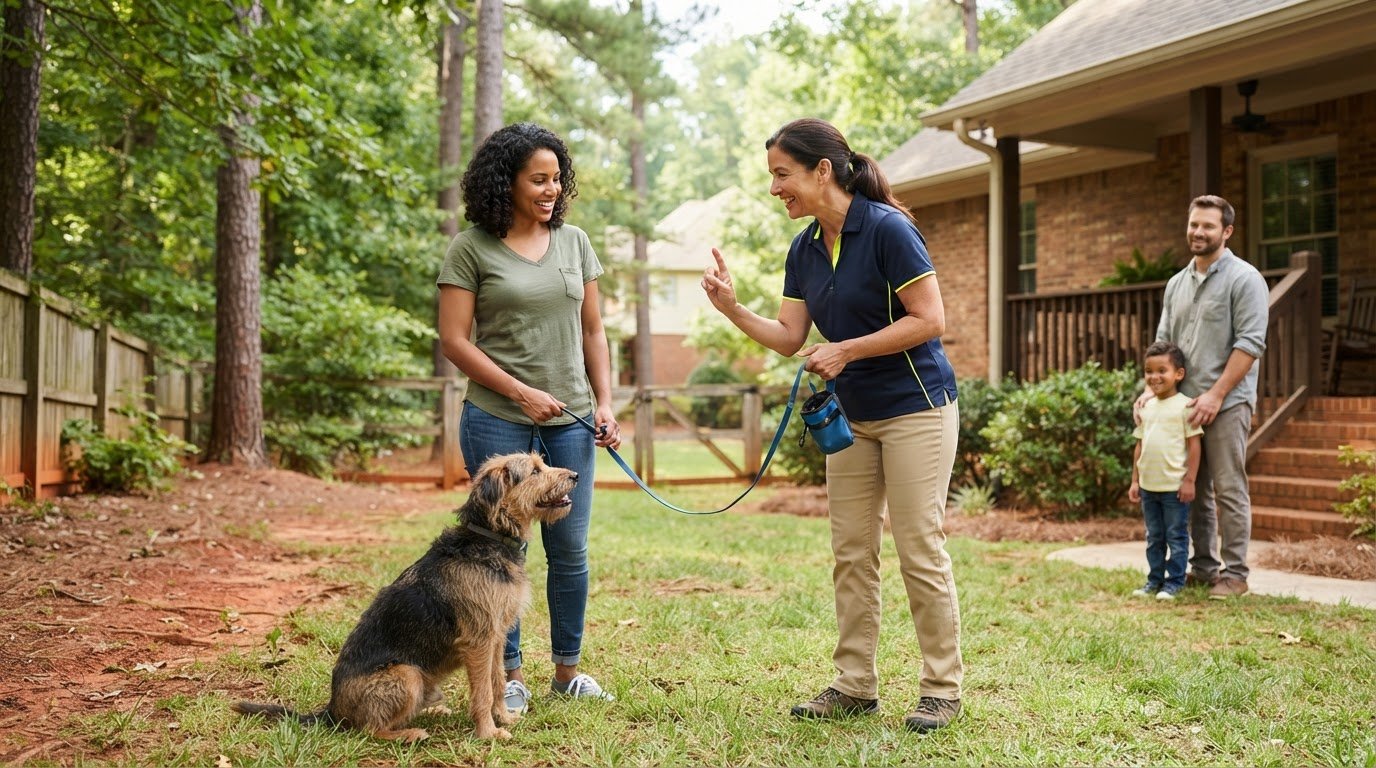
One on one dog training is individualized coaching for a dog and owner, with instruction focused on their goals, needs, and everyday environment. The trainer guides the work while the owner learns how to communicate with the dog and practice skills between lessons. The aim is practical learning, not a one-size-fits-all routine.
Personal coaching can turn a broad concern into a specific training goal. Instead of trying advice that doesn’t fit, you and the trainer can look at what happens at home, which cues your dog already understands, and where practice tends to break down. At Alan’s K9 Academy, Master K9 Trainer Alan Carr brings over 35 years of professional dog instruction experience to personalized, hands-on coaching.
Which training goals can private coaching address?
Training goals may change as a dog grows or a family’s needs shift. Individual coaching can focus on skills such as:
• Puppy foundations, including early obedience and household manners.
• Everyday obedience, such as responding to cues and greeting people more calmly.
• Reliable responses around real-life distractions, with off-leash reliability as a goal where appropriate.
• Behavior modification for more complex concerns, including aggression or anxiety.
Therapy or service dog goals can also begin with foundation training. These foundations help develop useful skills, but they are not a promise that a dog will meet every role’s requirements. The right focus depends on the individual dog, the owner’s goals, and consistent practice over time. Dog training methods vary, and a trainer can explain the approach and how it relates to the skills you’re working on.
When might individualized lessons suit a dog and owner?
Private coaching may suit you if you want guidance shaped around your dog’s temperament, current skills, or home routines. It also gives you room to discuss a specific situation, such as pulling toward the door, struggling to settle when visitors arrive, or losing focus when another dog is nearby. The trainer can observe the context and help you practice a useful response.
A familiar setting may make it easier for some dogs to focus before you work on skills around more distractions. Private lessons are not the only option: group classes offer practice around other dogs, while individualized lessons give focused attention to a particular dog-owner goal. Choose the format that fits the skill you’re working on and where your dog needs support. Progress varies with the dog, the goal, and regular practice, so expect a learning process rather than a fixed outcome.
How One-on-One Dog Training Builds Skills Through Coaching and Practice
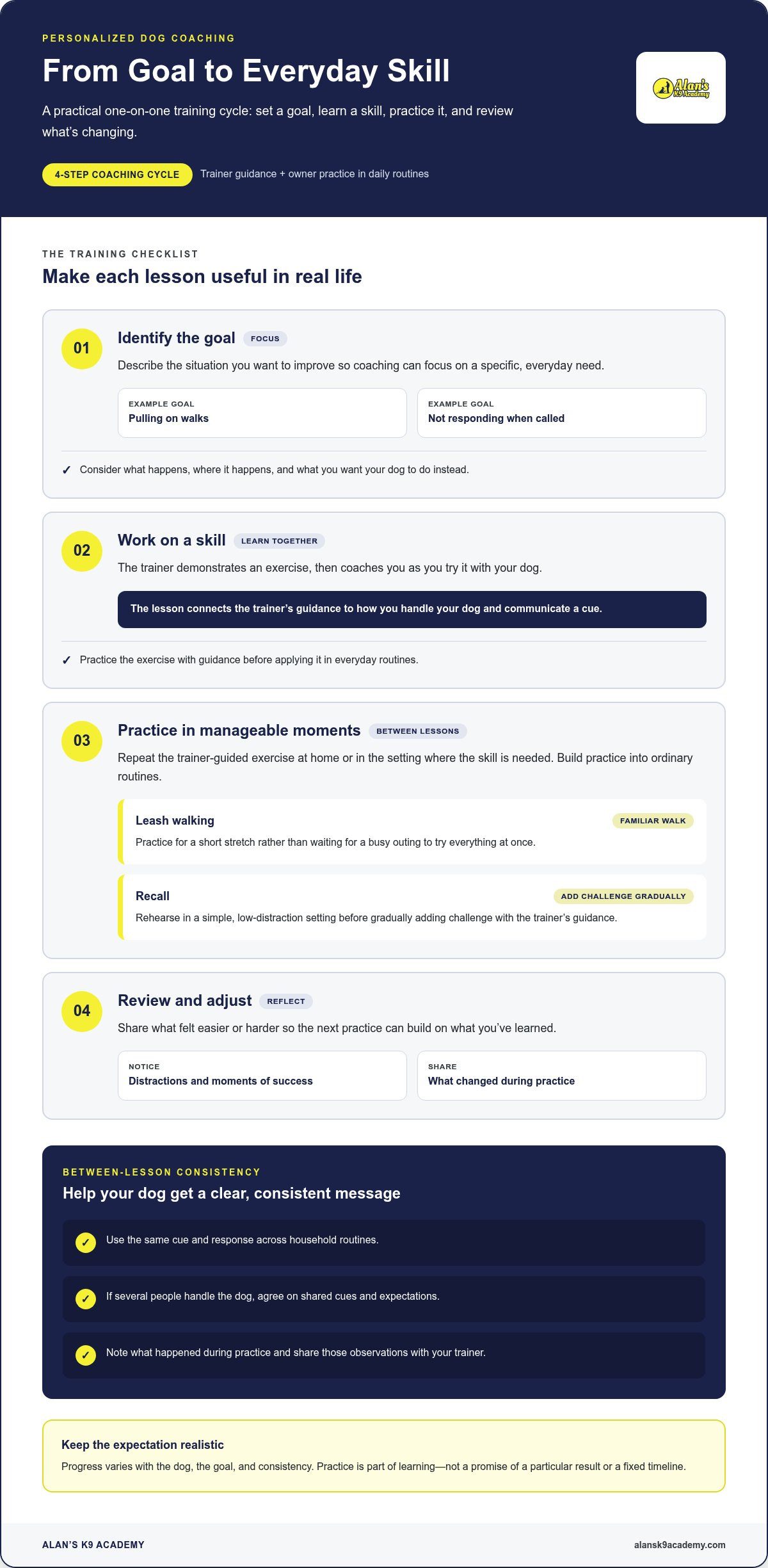
Personal coaching works best when a lesson connects to what you and your dog do every day. Follow a clear cycle: define a goal, learn a skill, practice it together, then review what’s changing. The trainer observes how you handle your dog and gives you guidance to use in ordinary routines.
Identify the goal.
Describe the situation you want to improve, such as pulling on walks or not responding when called.
Work on a skill.
The trainer demonstrates an exercise and coaches you as you try it with your dog.
Practice.
Repeat the trainer-guided exercise in manageable moments at home or in the setting where the skill is needed.
Review and adjust.
Share what felt easier or harder so the next practice can build on what you’ve learned.
Consider leash walking. A lesson might focus on how you hold the leash, when you give a cue, and how you respond when your dog moves ahead. Then practice for a short stretch during a familiar walk instead of waiting for a busy outing to try everything at once. Recall practice can follow a similar pattern: rehearse the response in a simple, low-distraction setting before gradually adding challenge with the trainer’s guidance.
Owner practice helps a dog encounter the same cue, handling response, and expectations across the routines and settings where a skill should be useful. Your trainer provides direction, and your everyday interactions give you opportunities to apply it. Progress varies with the dog, the goal, and consistency, so practice is part of learning rather than a promise of a particular result.
How does a trainer tailor coaching to the dog?
Coaching starts with your objective and the context around it. A trainer considers your dog’s current behavior, what you hope to change, and how your home environment or daily routines affect practice. If the goal is a calmer greeting at the door, for example, the exercise should reflect that situation and give you a clear role. The plan can adapt as you and your dog learn, without relying on a fixed timeline.
What does the owner practice between lessons?
Look for manageable opportunities to repeat the exercise, and keep cues and expectations consistent across household routines. If several people handle the dog, agree on the same cue and response so the dog receives clearer communication. Note what happened during practice, including distractions and moments of success, and share those observations with your trainer. This in-home dog training guidance can help you think about how lessons connect with your home environment.
To explore personalized coaching for your dog, learn about training with Alan's K9 Academy and choose an everyday goal to work on first.
One-on-One Dog Training vs. Group Classes and Practicing Alone
Choosing a training format means matching the setting and level of guidance to the skill you want to build. One on one dog training lets a trainer focus on a specific dog-owner goal, while group classes and independent practice offer different learning opportunities.
Consider the differences:
Private coaching
The trainer can focus directly on your dog and your handling, with exercises shaped around a particular goal. In-home lessons also let you work in the surroundings where a behavior or routine occurs.
Group classes
You and your dog practice with other dogs and people present. That shared setting offers opportunities to work on manners and respond to cues around distractions.
Practicing alone
You can reinforce familiar skills in everyday routines. Without a trainer observing, however, it may be harder to spot handling habits or know how to adjust an exercise when your dog struggles.
Each format has a role. A group setting can help with practice around other people and dogs, while private coaching makes space for a home-specific concern or individual training objective. Solo practice keeps learning active between lessons, but works best when you have a clear exercise and know how to respond if the situation changes.
When can private lessons be the better starting point?
A home-specific issue may be easier to address where it happens. For example, if your dog becomes unsettled when someone approaches the front door, coaching at home lets you discuss the routine and practice a suitable response in context. Individual lessons can also help when you want to focus on one goal and need guidance for moments when your dog becomes distracted or confused. They don’t guarantee faster progress; your dog’s needs and practice still matter.
When can group classes complement individualized training?
Group classes add a different kind of practice: following cues while other dogs and people are nearby. This can help with everyday manners and learning to focus amid activity. A class may complement individualized coaching when your dog is ready to work in a shared setting, but it doesn’t have to replace private lessons. The right mix depends on the skill, the dog, and the environment. Explore this North Atlanta dog obedience training guide for more on building practical reliability.
To choose a starting point, name the situation you want to improve, then consider where your dog needs to practice. If the challenge is tied to a home routine or needs close attention, private coaching may be a useful first step. If your goal involves responding around other dogs and people, structured group practice may fit. The decision doesn’t have to be either-or: choose the format that fits your current objective, then adjust as your dog’s skills develop.
How to Get More from One-on-One Dog Training at Home
Before a lesson, choose one or two everyday goals to discuss. Be specific: “walks feel difficult” is a starting point, but noting that your dog pulls as you leave the driveway gives the trainer a clearer picture. Focused goals keep one on one dog training connected to the routines you want to improve, while leaving room to tailor exercises to your dog.
It can also help to note what happens before and after the behavior. Record the setting, who is present, what your dog does, and how you respond. You don’t need a perfect record. A few observations can reveal useful patterns and help your trainer understand where a skill is breaking down.
Choose a routine
Pick a familiar moment, such as getting ready for a walk or preparing a meal, where you can practice a trainer-guided skill.
Keep cues clear
Agree on the words and expectations used by everyone who handles the dog.
Practice in small opportunities
Repeat the exercise when the situation is manageable instead of waiting for a difficult moment.
Share what you notice
Bring questions and challenges to coaching so the approach reflects your experience at home.
Consistency doesn’t mean every practice moment will go smoothly. If your dog loses focus, note what was happening and discuss how to adjust the exercise. Calm repetition and clear communication can help you understand your dog’s responses without changing cues each time something feels difficult.
How can owners keep practice consistent?
Attach a short, trainer-approved exercise to a routine you already do. You might practice a cue before clipping on the leash, or reinforce a calm response before setting down a food bowl. Use the same cue and response each time, and ask household members to follow the shared plan. If practice feels awkward or your dog struggles, tell the trainer instead of pushing through without guidance.
What if the main concern involves challenging behavior?
Aggression or anxiety may call for specialized behavior modification, not just general obedience practice. Describe what happens as clearly as you can: where the behavior occurs, what seems to happen beforehand, and how your dog responds. These details help the trainer address the concern in context. For more perspective on behavior concerns, see this dog behavioral training guide.
Bring your notes, questions, and everyday goals into personalized in-home coaching with Alan's K9 Academy. Explore in-home dog training and take a practical first step toward clearer communication with your dog.
One-on-One Dog Training in Cartersville and North Atlanta: Your Next Step
Individualized coaching may suit you if you want help with a specific goal, need guidance that reflects your dog’s behavior, or want to practice in the home environment where a challenge occurs. You bring your observations and take part in the training; the trainer provides professional direction and helps shape practice around your dog and daily life. It’s a partnership, with progress depending on the dog, the goal, and consistent work between lessons.
Whether you’re working on foundational skills or seeking support for a behavior concern, think about what you’d like to change in an ordinary week. A clear starting goal gives coaching a practical focus. You don’t need to arrive with all the answers. Sharing what you’ve tried and what feels difficult helps the trainer understand your needs.
What makes Alan's K9 Academy’s coaching personal?
Alan's K9 Academy provides personalized in-home dog training and behavior modification for dogs and their owners. The coaching uses balanced, humane methods and is tailored to the dog’s goals and home environment. Master K9 Trainer Alan Carr brings over 35 years of professional dog instruction experience to his work. The academy is an award-winning professional dog training company, helping owners build communication and practice skills.
How can local owners take the next step?
Alan's K9 Academy serves Cartersville, Bartow County, and communities across North Atlanta. In-home coaching lets local owners work on relevant goals with professional guidance in the dog’s home setting. Your participation matters: you’ll share what you notice, learn how to handle exercises, and continue practicing skills that fit your routines. That hands-on role connects training to daily life with your dog.
If you’re weighing private coaching against group classes or solo practice, choose based on your goal and where your dog needs help using the skill. A focused home concern may call for individualized attention; group classes offer a shared setting for practice around other dogs and people. Neither format is automatically right for every dog. Start with the approach that matches your current objective and gives you a clear way to participate.
Ready to explore personalized support for your dog? Explore one-on-one dog training with Alan's K9 Academy and take the next step toward practical, real-life coaching.
Turn Your Next Training Goal into a Starting Point
You don’t need to solve every challenge at once. Pick one moment in your day you’d like to make easier, and consider what you want your dog to do instead. That intention gives your first conversation about one on one dog training a clear, useful focus.
Think about what you’ve noticed, what you’ve already tried, and what feels hardest to manage. Sharing those details helps make the next step personal to you and your dog. From there, you can begin building a practical plan and work on one skill at a time. Steady practice creates more opportunities for understanding in the routines you share.
Ready to move from wondering what to try to getting personalized guidance? Explore one-on-one dog training with Alan’s K9 Academy and take a positive next step for you and your dog. Progress starts with a goal you can work toward together.
Frequently Asked Questions
Is one-on-one dog training worth it for a first-time dog owner?
Yes, one on one dog training can help a first-time owner understand a dog’s responses and establish household routines. A coach can help you practice everyday skills, such as waiting at the door or settling while you prepare a meal. Alan’s K9 Academy serves owners in Cartersville, Canton, Woodstock, Marietta, Rome, Acworth, Kennesaw, Sandy Springs, Roswell, Alpharetta, Powder Springs, Dallas, Hiram, Jasper, Cumming, Holly Springs, Ball Ground, and Milton.
Can one-on-one dog training help an older dog learn new behaviors?
Yes, an older dog can work on new skills, and coaching can be adapted to the dog’s experience and comfort. You might focus on a useful everyday behavior, such as waiting calmly before getting out of the car or responding to a familiar cue in a new setting. Share what your dog already knows and what seems difficult. That context helps the trainer choose suitable exercises without assuming every dog learns at the same pace.
How often should I practice with my dog between training sessions?
Follow the practice plan your trainer recommends for your dog and goal, rather than relying on a universal schedule. Short, focused opportunities can fit naturally into routines, such as asking for a calm response before clipping on the leash. Stop and note what happened if your dog becomes frustrated or disengaged. At your next lesson, share how practice went so the trainer can help adjust the exercise to suit your dog.
Can private dog training help with leash reactivity?
Private coaching can help address leash reactivity through behavior modification tailored to your dog’s responses and walking environment. Tell the trainer what tends to happen, including the setting, distance, and type of distraction. Until you have a plan, avoid deliberately moving closer to a trigger to test your dog. A trainer can guide you on appropriate practice and ways to work toward calmer, more manageable walks.
What should I do if my dog behaves differently during training than at home?
Describe the difference to your trainer and note the details: where it happens, who is present, what comes just before the behavior, and what you do next. A dog may respond differently when a familiar person, routine, or distraction changes. If useful and safe, bring a brief video of the home behavior, or write down a recent example. Those observations can help the trainer shape practice around the situation you want to address.
Does the owner need to participate in one-on-one dog training?
Yes, the owner’s active participation is a core part of private coaching. You’ll practice handling your dog while the trainer guides you, so you can learn how to give cues and respond to your dog. No previous training experience is needed to begin. If another household member regularly walks or feeds the dog, share the same cues and routines with them to make daily communication clearer.
Can one-on-one dog training and group classes be used together?
Yes, the formats can complement each other when they serve different goals. Private coaching may focus on an individual concern, while a group class provides structured practice around other dogs and people. For example, you might work on a specific home routine privately, then use a class to practice familiar cues amid activity. Your trainer can help you decide which skills are ready for a group setting and how to adapt practice.