%20(620%20x%20150%20px)%20(14).webp)
%20(620%20x%20150%20px)%20(15).webp)
.webp)
_page-0001.webp)
.webp)
One-on-One Dog Coaching: Personalized Training That Works in Real Life
What if better behavior starts with a plan for the moments when your dog actually needs help? If general advice hasn’t carried over to walks, visitors, or your daily routine, you’re not alone. One on one dog coaching gives you individualized guidance, with practice shaped around your home, your conc...
%20(5).gif)
What if better behavior starts with a plan for the moments when your dog actually needs help? If general advice hasn’t carried over to walks, visitors, or your daily routine, you’re not alone. One on one dog coaching gives you individualized guidance, with practice shaped around your home, your concerns, and the people who share responsibility for your dog.
Progress also depends on what happens between sessions. A trainer can demonstrate a skill, but you and your household need a clear, manageable way to practise it in real situations. Personalized coaching supports the human side of training, too.
In this article, you’ll learn what private coaching can address, how to reinforce skills at home, and what to consider when choosing professional help. For families in Cartersville, Bartow County, and the North Atlanta Metro area, Alan’s K9 Academy offers personalized in-home training and behavior modification using balanced, humane methods. The goal is practical guidance you can carry into everyday life, one step at a time.
Key Takeaways
• Use one on one dog coaching to focus on a specific behavior goal instead of applying generic advice to every situation.
• Build skills step by step: choose a priority, learn an exercise, practise between sessions, and share what you observe.
• Compare your dog’s needs with the kind of focused guidance you want before deciding whether individual coaching is a good fit.
• Help your trainer tailor the plan by honestly sharing household routines, triggers, and previous training attempts.
• When exploring local options, discuss your goals and home context with a professional, including Alan’s K9 Academy for in-home training and behavior modification in its service area.
What One-on-One Dog Coaching Can Change in Everyday Life
It’s frustrating when general advice sounds simple but doesn’t hold up at home or on a busy walk. You may have practised on your own and still be unsure what to change. One-on-one dog coaching is trainer-guided instruction tailored to a dog, their owner, and the goals they’re working toward. Instead of relying on generic tips, you focus on what happens in your dog’s everyday situations.
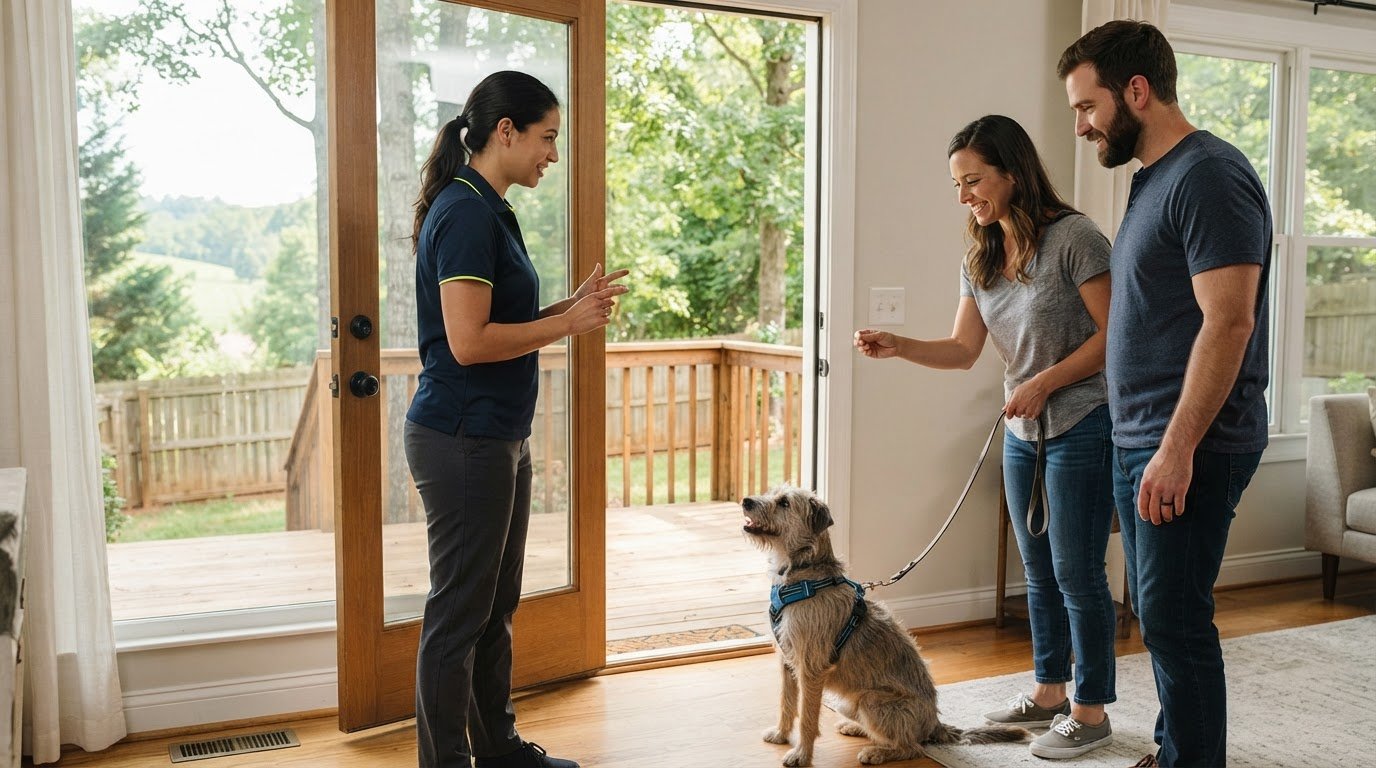
With in-home instruction, a trainer can observe the routines and surroundings that shape your dog’s behavior: the doorway where greetings get hectic, the sounds that prompt barking, or the point when a leash walk becomes difficult. That context can help the trainer adapt explanations and exercises to your dog and household. It also gives you an opportunity to practise skills where you’ll use them. You remain an active part of the work; personalized coaching doesn’t mean someone else does the practice for you.
Training develops through learning and repetition. Operant conditioning describes how consequences influence behavior; understanding this learning process helps explain why timing and consistent responses matter. A trainer can guide you in noticing useful moments to reinforce a behavior and adapting practice to your dog.
What makes private dog coaching different from general advice?
Advice found online or shared by a friend can offer ideas, but it can’t account for your household’s schedule, your dog’s responses, or how family members handle the same situation. In private coaching, a trainer can observe you and your dog, offer feedback, and adjust the guidance if an exercise doesn’t fit your routine. You then practise between sessions to help make the skills part of daily life.
Which everyday goals can one-on-one coaching support?
Coaching can focus on practical goals such as puppy foundations, obedience, leash manners, recall, off-leash reliability, and household manners. A suitable starting point depends on your dog, your priorities, and the situations you want to improve. For example, you might work on calmer greetings at home or practise recall in manageable steps before adding distractions.
Aggression or anxiety may call for specialized behavior modification and individualized guidance. Discuss the behavior and its context with a professional rather than assuming a general exercise will suit every dog. Alan’s K9 Academy provides personalized in-home training and behavior modification using balanced, humane methods. For a wider overview of home-based instruction, read this guide to professional in-home dog training.
How One-on-One Dog Coaching Builds Skills Beyond the Session
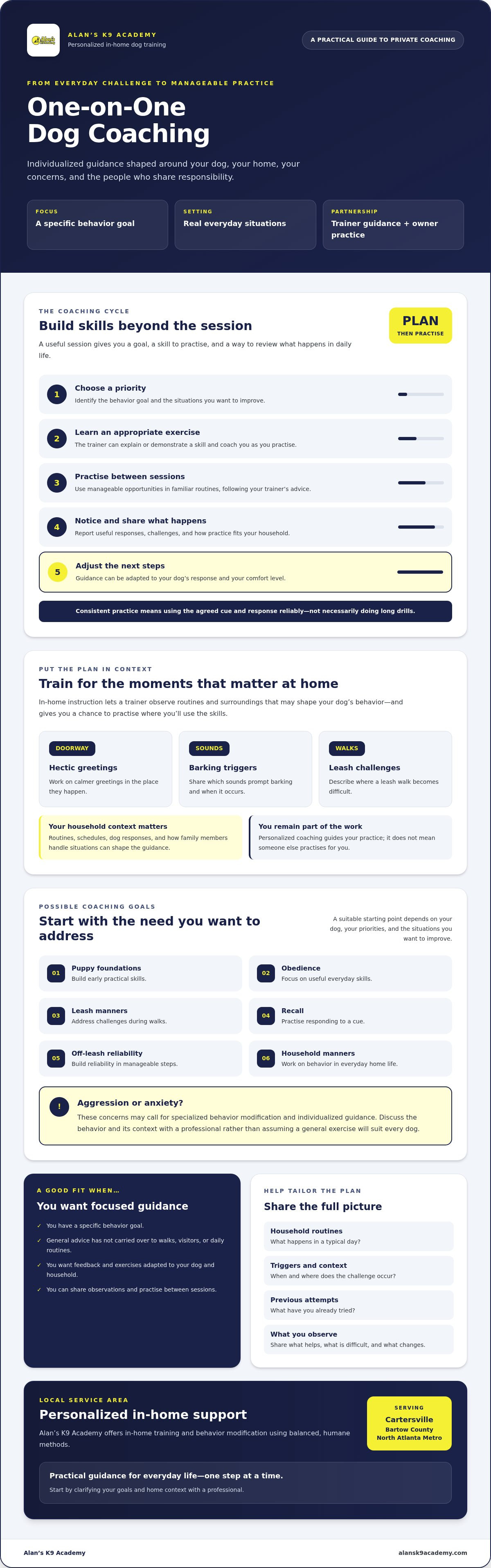
A useful coaching session should give you more than something to try while the trainer is there. The aim is to understand a goal, learn an appropriate skill, practise it in manageable steps, and review what happens in daily life. That cycle makes one on one dog coaching a partnership: the trainer guides the process, and you bring observations from home back to the conversation.
What happens during a personalized coaching session?
A session may begin with a conversation about what you’d like to change and when the challenge occurs. The trainer can observe a relevant situation, explain or demonstrate an exercise, and coach you as you practise with your dog. If your dog finds the exercise difficult or you feel unsure about handling it, the trainer can adjust the guidance to suit your dog’s response and your comfort level.
That flexibility matters when behavior concerns are stressful for both dog and owner. The American Veterinary Medical Association has discussed potentially problematic behaviors in a veterinary-care context, underscoring the value of communicating clearly about what you’re seeing and seeking suitable professional guidance.
How can owners reinforce training between sessions?
Ask your trainer which exercise to practise, how to recognize a useful response, and when to pause or make the task easier. Then look for appropriate opportunities in familiar routines instead of waiting for a perfect training setup. For example, you might practise a trainer-recommended cue during a calm moment at home before trying it with more distractions. Keep practice manageable and follow the trainer’s advice about what is suitable for your dog.
Consistent owner practice gives a dog repeated opportunities to learn a skill and helps it become more familiar in everyday situations. Consistency doesn’t require long drills. It means using the agreed cue and response reliably, then sharing honest feedback so the next steps can be adjusted.
Choose one priority
Focus on the skill or situation your trainer has asked you to work on.
Practise thoughtfully
Use appropriate moments in your routine and stop if your dog or you are struggling.
Record observations
Note what happened, what helped, and any questions to raise at the next session.
Coordinate at home
Share cues and agreed routines with household members so everyone responds consistently.
Progress is easier to assess when you can describe specific moments, rather than simply saying that practice went well or poorly. If you’re exploring in-home guidance, learn more about Alan’s K9 Academy’s dog training and discuss whether its personalized training suits your goals.
Is One-on-One Dog Coaching the Right Fit for Your Dog and Goals?
The right training format depends on what you want to work on, where the challenge occurs, and how your dog responds to the learning environment. One on one dog coaching can suit you if you want focused guidance on a particular goal. Group classes can also be valuable for some dogs and owners; private coaching isn’t automatically the right choice for everyone.
Which goals are a strong starting point for private lessons?
Start with a goal you can describe and observe. Instead of “be better behaved,” you might want your puppy to settle on a mat, your dog to walk with a looser leash, or your recall cue to work in a particular setting. A trainer can help you set priorities and choose a suitable first step.
| Owner’s need | Possible coaching priority |
|---|---|
| New puppy at home | Foundations such as responding to cues and settling into household routines |
| Walks feel difficult | Leash manners and skills for situations on your usual routes |
| Recall feels unreliable | Practising the recall cue at an appropriate level for your dog |
| Everyday routines are stressful | Clear household expectations, such as calmer greetings or waiting at a doorway |
Owners also seek help with behaviors such as mouthing, nipping, and destructive chewing, which the ASPCA discusses in its guide to Common Dog Behavior Issues. A specific, observable goal gives you and the trainer a practical place to begin.
When should behavior challenges receive specialized guidance?
Aggression, anxiety, or other complex behavior concerns may call for behavior modification tailored to the dog and situation. Share what you’ve observed with a qualified professional and ask what kind of support may be appropriate. Online information can introduce general concepts, but it can’t assess your individual dog or provide a diagnosis. Training guidance also doesn’t replace veterinary medical care when health concerns may be involved.
Private coaching isn’t a shortcut where the trainer creates lasting change alone. The trainer can demonstrate and guide; you and your household need to participate and practise the agreed skills. If behavior concerns are your main reason for seeking help, explore this guide to dog behavioral training guidance as you consider your next steps.
How to Get More from One-on-One Dog Coaching at Home
Good follow-through starts with a clear picture of daily life, not a perfect training record. One on one dog coaching is most useful when you and your trainer can connect a specific goal to the routines, people, and situations your dog experiences. Be open about what’s been difficult, what you’ve already tried, and what feels realistic for your household to practise.
How should you set a useful first coaching goal?
Choose one observable challenge to discuss first. “Make walks easier” is a helpful starting point, but you can make it more specific by explaining when and where the difficulty occurs and what a more manageable walk would look like. Include relevant context such as your dog’s routine, common triggers, who usually handles the dog, and which approaches you’ve tried. These details help the trainer understand the situation instead of guessing.
You don’t need to solve every concern before training begins. Tell the trainer what matters most to your household, then work together to set priorities based on your dog’s needs and circumstances. A focused first goal makes it easier to understand what to practise and which observations will help guide the next conversation.
How can a household stay consistent after a lesson?
After you’ve learned an exercise, agree with the trainer on the cue, the response you’re practising, and how household members can support the same expectation. Keep responsibilities simple. For example, decide who will practise and identify ordinary moments in the routine when the exercise is appropriate. Brief, attentive practice may be easier to sustain than adding a complicated training schedule to an already busy day.
Use a short note on your phone or a shared household record to capture useful details: the situation, what your dog did, which cue you used, and what you’d like to ask. This isn’t about grading yourself. It gives your trainer concrete information to help adjust the guidance. If the behavior is complex or practice feels unsafe or overwhelming, pause and ask the trainer how to proceed instead of trying a new approach on your own.
Personalized in-home training takes your household context into account, but the plan works best when everyone understands their role. If you’re ready to discuss your dog’s goals and routines with a professional, explore in-home dog training with Alan’s K9 Academy.
Find Personalized Dog Coaching in Cartersville and North Atlanta
Choosing a local trainer is an opportunity to connect your dog’s goals with guidance that takes your home life into account. Before reaching out, identify the main skill or behavior you want help with, note where and when it occurs, and consider who in your household will practise. That context gives a trainer a clearer starting point and helps you ask whether the approach fits your needs.
Alan’s K9 Academy provides personalized in-home dog training and behavior modification in Cartersville, Bartow County, and the North Atlanta Metro area. Founded by Master K9 Trainer Alan Carr, the academy draws on more than 35 years of professional dog instruction experience. Its balanced, humane approach supports one on one dog coaching shaped around the dog, owner, and training goals, without promising a particular outcome.
What can local owners discuss with Alan’s K9 Academy?
Owners can discuss goals related to communication and obedience, puppy foundations, and off-leash reliability. Because instruction takes place in the home, you can also explain the routines and challenges you’d like guidance to address. If obedience is your focus, explore this guide to real-world dog obedience training for more detail.
For aggression, anxiety, or other complex behavior concerns, describe what you’ve observed and ask whether specialized behavior modification may be suitable. Share the situations that bring on the behavior, any previous training attempts, and what you hope will become easier. A professional can use this information to discuss appropriate guidance; owners remain active participants in practice between sessions.
What is a helpful next step for finding a coaching fit?
When you get in touch, share your location, your dog’s main goal, and the relevant household context. Ask what kind of instruction may suit that goal and what your participation will involve. Confirm that service is available for your specific location and discuss how practice at home can support the work. Clear expectations help you decide whether the coaching approach feels right for your family.
If personalized guidance for your dog and household sounds like a good next step, contact Alan’s K9 Academy to discuss one-on-one dog coaching.
Take the Next Step Toward Everyday Progress
Reliable behavior grows from clear goals, tailored guidance, and practice that fits real life. One on one dog coaching can help you focus on what matters most for your dog, while your participation and consistent household routines carry the learning beyond each session. Choose a practical starting point, share the context honestly, and work with a trainer to identify suitable next steps.
Alan’s K9 Academy offers personalized in-home training and behavior modification in Cartersville, Bartow County, and North Atlanta. Founded by Master K9 Trainer Alan Carr, the academy draws on more than 35 years of professional dog instruction experience to guide dogs and owners toward meaningful skills, without promising a particular outcome.
Contact Alan’s K9 Academy to discuss your dog’s training goals and explore whether personalized guidance fits your household. With a clear plan and steady practice, you can move forward together, one useful step at a time.
Frequently Asked Questions
What is one-on-one dog coaching?
One-on-one dog coaching is personalized instruction for you and your dog, guided by a trainer and focused on goals that matter in daily life. The trainer can observe how you work together, explain and demonstrate skills, then coach you as you practise. Unlike general advice, the guidance can take your dog’s responses and household routines into account. You’ll still play an active role by practising agreed skills between sessions.
Is one-on-one dog coaching better than group classes?
Neither format is automatically better; the right fit depends on your goals, your dog, and the learning environment that suits you both. Individual coaching offers focused attention for specific skills or household concerns. Group classes provide a shared learning setting where dogs and owners practise together. Consider what you want to work on, how your dog responds around other dogs, and whether individual guidance or group practice better suits your needs.
Can one-on-one dog coaching help with aggression or anxiety?
It may provide tailored guidance for aggression, anxiety, or other complex behavior concerns through specialized behavior modification. Share what you observe, when it happens, and any previous training attempts with a qualified professional so they can discuss suitable support. Online information can’t assess or diagnose your individual dog, and training doesn’t replace veterinary medical care. If you’re concerned about your dog’s health or behavior, consult the appropriate professional.
How often should you practise after a dog training session?
Follow the practice plan your trainer recommends, since the right amount depends on the skill, your dog’s responses, and the situation. Aim for manageable, consistent practice in appropriate everyday moments instead of pushing through a long session when either of you is struggling. Note what you practised, how your dog responded, and any questions that came up. Share those observations with your trainer to help guide next steps.
What should I expect during an in-home dog coaching session?
Expect to discuss your goals and household routines, then focus on relevant situations and practical guidance for you and your dog. The trainer may demonstrate an exercise, observe your dog’s response, and coach you as you practise. Guidance can be adjusted to your dog and your comfort level. Session details can vary, so ask the trainer what to expect and how to prepare when arranging instruction.
Does one-on-one dog coaching work for puppies?
Yes, individual coaching can support puppy foundations and early obedience. You can discuss practical goals such as responding to cues, building communication, and fitting training into your household routines. A trainer can help you choose an appropriate starting point and show you how to practise. Progress depends on your puppy, the goals you set, and consistent owner participation; no training approach can promise the same outcome for every dog.
Does Alan’s K9 Academy offer one-on-one dog coaching near Cartersville?
Alan’s K9 Academy provides personalized in-home dog training and behavior modification in Cartersville, Bartow County, and the North Atlanta Metro area. Its stated service locations include Canton, Woodstock, Marietta, Rome, Acworth, Kennesaw, Sandy Springs, Roswell, Alpharetta, Powder Springs, Dallas, Hiram, Jasper, Cumming, Holly Springs, Ball Ground, and Milton. Contact the academy to discuss your dog’s goals and confirm service availability for your location.