



North Fulton Puppy Classes for Obedience and Manners
North Fulton puppy classes teach obedience, everyday manners, leash skills, and polite greetings through practice in a group setting. For the AKC S.T.A.R. Puppy test, puppies must attend a puppy or basic training class for at least 6 weeks before the instructor administers it.It’s natural to want mo...

North Fulton puppy classes teach obedience, everyday manners, leash skills, and polite greetings through practice in a group setting. For the AKC S.T.A.R. Puppy test, puppies must attend a puppy or basic training class for at least 6 weeks before the instructor administers it.
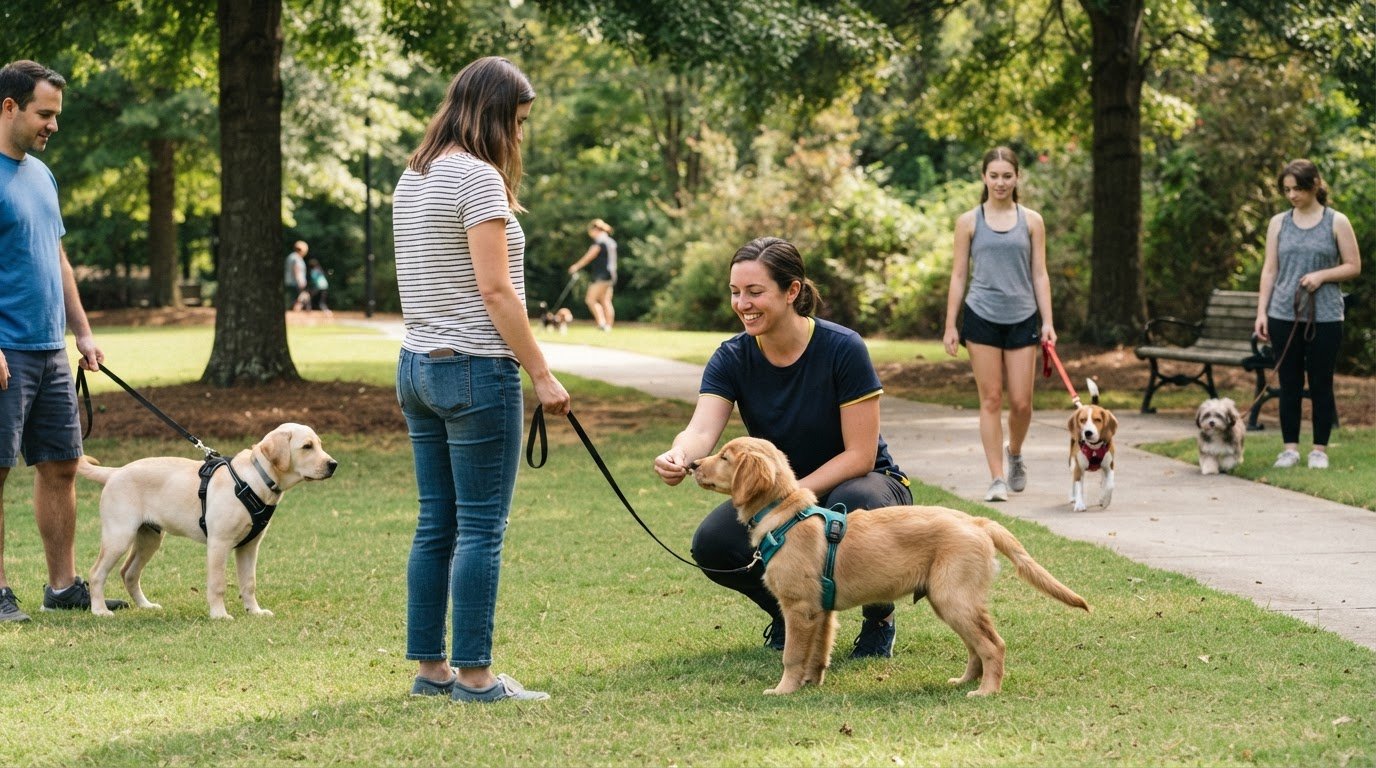
It’s natural to want more than a puppy who follows cues at home. You want those skills to hold up around other dogs, people, and the distractions of a class. This article explains what puppies can learn in group classes, how instructors build practical manners, and why Peachtree Corners is a useful local focus for families comparing class options.
You’ll learn what to expect from leash and greeting practice, how a group setting can support learning, and how to choose a next step that fits your puppy. Clear expectations make it easier to practice consistently and build skills for everyday life.
Key Takeaways
• See how puppy classes turn basic cues into everyday manners through structured practice around people and other dogs.
• Learn what to look for in a Peachtree Corners group class, including how its schedule and class focus can shape your choice.
• Understand how calm leash practice and guided greetings help puppies build more polite habits in social settings.
• Find out when group learning may suit your puppy and when individualized training support may better address specific needs.
Dog obedience and manners
Basic obedience training gives puppies and owners a structured way to practice everyday skills. A cue should lead to a clear action: “sit” before greeting a visitor, “come” when called, or settle on a mat while someone eats. Repeating these moments helps make obedience useful beyond class. Owners also learn how timing, consistency, and calm communication shape their puppy’s learning and strengthen their relationship.
For the AKC S.T.A.R. Puppy test, puppies must attend a puppy or basic training class for at least 6 weeks before the instructor administers the test. After a puppy passes the course test, owners receive an application to send to AKC for enrollment in the AKC S.T.A.R. Puppy Program. This gives North Fulton puppy classes a clear connection to a named training milestone, while daily manners remain the practical goal.
A well-rounded basic obedience class can introduce skills such as:
• Responding to a name and orienting toward the owner.
• Sitting or lying down when cued.
• Staying briefly in position while the owner takes a step.
• Coming when called in a controlled setting.
• Waiting calmly instead of jumping to reach a person.
These exercises build gradually. An instructor might first reward a puppy for looking toward the owner, then practice the cue with mild distractions. If the puppy can sit in a quiet moment but struggles near another dog, that difference becomes clear. Owners can practice at an easier distance before adding more distraction.
Obedience is more than a list of commands. Manners mean using skills in real situations, such as pausing before a greeting or settling while someone opens the door. Group lessons also let owners see how puppies respond to the same exercise. That feedback can help you identify what your puppy understands and what needs more practice.
Group puppy classes in Peachtree Corners
When comparing North Fulton puppy classes, review each class’s schedule, focus, and enrollment details against your puppy’s needs. These practical details help you decide whether the format is a good fit.
Class Size and Trainer Qualifications
Class size depends on enrollment and venue, so a schedule alone won’t tell you how much individual coaching puppies receive. Look for clear instruction, humane handling, and demonstrations you can repeat. For example, an instructor might guide one puppy through settling while another practices a cue. These details help you decide whether group training suits your puppy.
Age and Vaccination Requirements
Each class sets its own age range and vaccination requirements. Age, vaccine history, health, and the venue’s contact with other dogs all matter when considering readiness. Bring records if requested and follow the class’s entry instructions. Ask your veterinarian about timing, since contact with other dogs can carry infectious-disease risks for puppies who haven’t completed vaccinations.
Socialization and Obedience Options
Some courses focus on calm exposure to people, dogs, sounds, and handling; others emphasize cues and household manners. A class may cover both through supervised social experiences and exercises such as responding to a name or settling near distractions. Positive reinforcement rewards desired actions, such as turning toward an owner instead of pulling toward a playmate. Review the lesson focus to see which skills are included.
Locations and Class Venues
A listed puppy class meets from 10:00 am to 11:00 am, October 18-December 6, 2026. The October 2026 class is full, and interested participants can join the waitlist. Family Dog 101 meets from 11:15 am to 12:15 pm on those dates. Class venues may include training centers, pet stores, or veterinary clinics. For enrollment, follow the organizer’s registration process; bring a leash, rewards, and any requested records. Structured group instruction with Alan's K9 Academy can help owners practice skills with their puppies.
Leash manners and polite greetings
A puppy that pulls toward a neighbor or jumps at the door needs clear, repeatable cues for what to do instead. Leash manners and polite greetings can teach the puppy to walk near the handler, pause, and approach people calmly. In group training, nearby dogs and people provide distractions for practicing those skills.
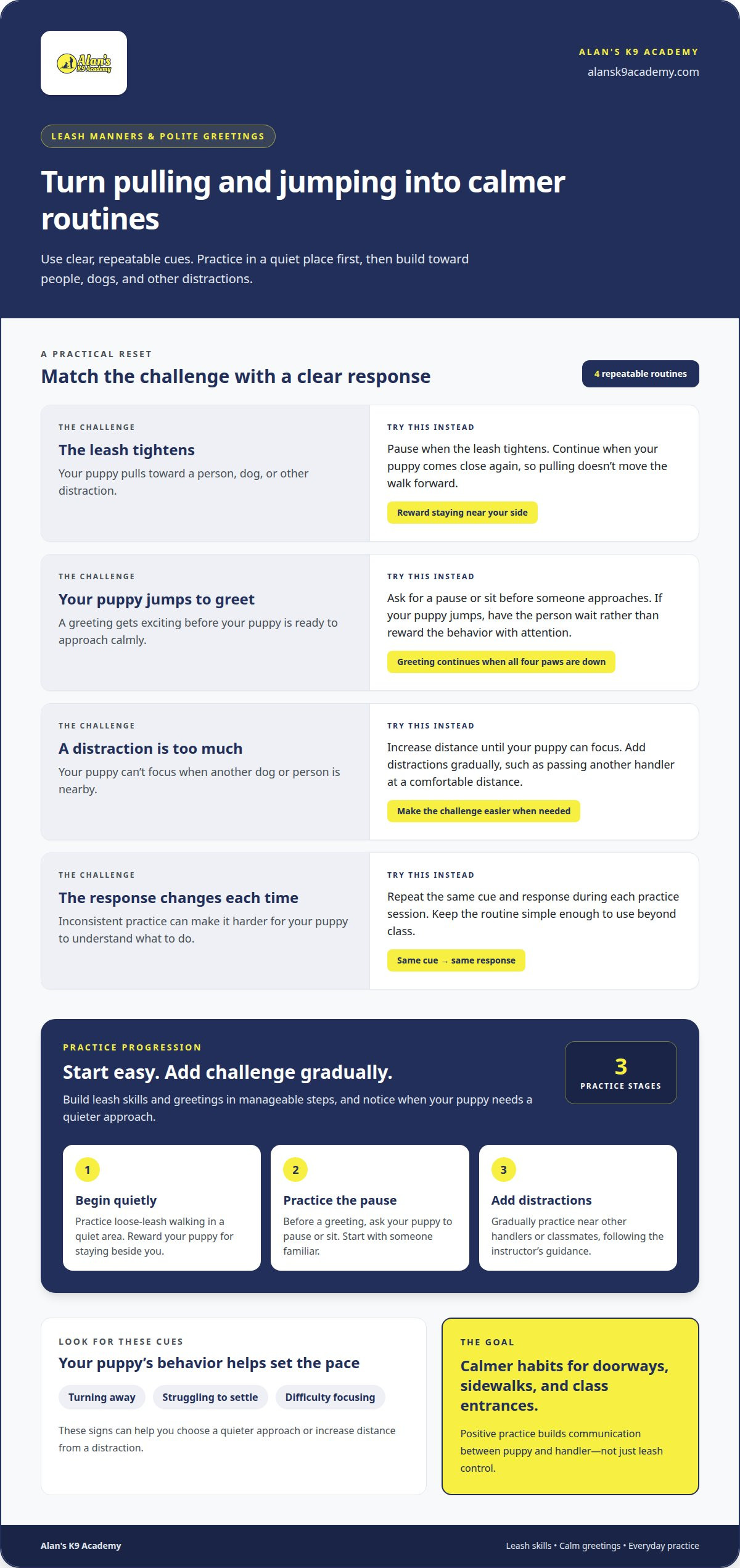
For loose-leash practice, start in a quiet area. Reward your puppy for staying beside you, and pause when the leash tightens. Continue when the puppy comes close again, so pulling doesn’t move the walk forward. Add distractions gradually, such as passing another handler at a comfortable distance. This step-by-step approach helps you spot what triggers pulling and adjust the challenge.
Greetings also benefit from a simple routine. Ask your puppy to pause or sit before someone approaches. If the puppy jumps, the person can wait rather than reward the behavior with attention. When all four paws are on the floor, the greeting can continue. Practice first with someone familiar, then with a classmate, following the instructor’s guidance. These manners can make doorways, sidewalks, and class entrances easier to manage.
• Keep the leash slack and reward the puppy near your side.
• Pause before greetings, then invite a calm approach.
• Increase distance when the puppy can’t focus around a distraction.
• Repeat the same cue and response during each practice session.
Positive practice builds communication between puppy and handler, not just leash control. A class can help you read body language, such as a puppy turning away or struggling to settle, and choose a quieter approach. These skills support everyday outings and can lay a foundation for activities such as agility, where dogs work with handlers around movement and distractions. Effective instruction makes each exercise clear enough to practice beyond class.
What puppy training classes are available in North Fulton, Georgia?
North Fulton families can look for group classes that combine puppy foundations, basic obedience, and supervised practice around other dogs. A local Peachtree Corners listing identifies a puppy class and Family Dog 101, giving owners two class formats to consider. The right fit depends on your puppy’s current skills and the situations you want to handle more smoothly.
A puppy-focused class can introduce name response, settling, leash handling, and calm exposure to people and dogs. Family Dog 101 offers a broader starting point for household manners, such as waiting at a doorway or relaxing while visitors arrive. Ask what each course practices during class, then match those exercises to your daily routine. A puppy who pulls toward every passerby may benefit from structured leash practice, while one who struggles to settle may need exercises around calm behavior.
Compare course descriptions by their teaching goals, not just their names. Check whether lessons include owner coaching, demonstrations, and practice with distractions. A group setting offers opportunities to learn around other dogs, but you should also leave with clear steps to repeat between sessions. If your main goal is social confidence, look for planned, supervised exposure. For household obedience, seek practical cues and manners that apply at home.
• Choose puppy foundations for early skills and guided social practice.
• Consider a family-dog course for broader everyday manners.
• Look for a clear lesson plan and coached owner practice.
• Match class exercises to a real challenge, such as greeting guests.
Before enrolling, review the course focus, session schedule, venue, and registration process. Peachtree Corners is one local option; class locations and schedules vary across North Fulton communities. A clear goal helps you choose a useful starting point and track what your puppy practices. Discuss your puppy’s training goals and take a practical next step.
Individual training may also be worth discussing when you want coaching tailored to your puppy. One client said Dolly was responding to 4-5 commands within one training session. Another client said they worked with trainer Julia for five sessions, and trainer Julia had worked closely with owner Alex Sessa for over 4 years.
Alan's K9 Academy: Group Classes
Alan's K9 Academy offers Group Classes for puppies learning obedience, leash skills, and polite manners around people and other dogs. Shared practice gives owners a chance to work on real-life distractions while building consistent communication with their puppy.
If your puppy needs support tailored to behavior at home, In-Home Dog Training or Behavior Modification may be a better fit. Therapy & Service Dog Training is available for families pursuing those specific foundations. The right approach depends on the skills you want to build and the challenges affecting daily life.
Contact Alan's K9 Academy to discuss your puppy's training needs.
Choose a Training Path That Fits Your Puppy
Your next step is to choose support that matches the behavior you want to build and where your puppy needs practice. North Fulton puppy classes can be a starting point for learning alongside other dogs, while individual needs may call for a different training format. The goal is a plan that fits your puppy’s temperament, your household routines, and the skills you want to strengthen.
Alan's K9 Academy also offers In-Home Dog Training for support in your home, Behavior Modification for behavioral challenges, and Therapy & Service Dog Training for those specific goals. You can discuss which direction best fits your puppy and your family without needing to have every training goal figured out first.
Contact Alan's K9 Academy to talk through your puppy’s needs and possible next steps. With thoughtful guidance and consistent practice, you can keep building a stronger partnership with your dog.