%20(620%20x%20150%20px)%20(14).webp)
%20(620%20x%20150%20px)%20(15).webp)
.webp)
_page-0001.webp)
.webp)
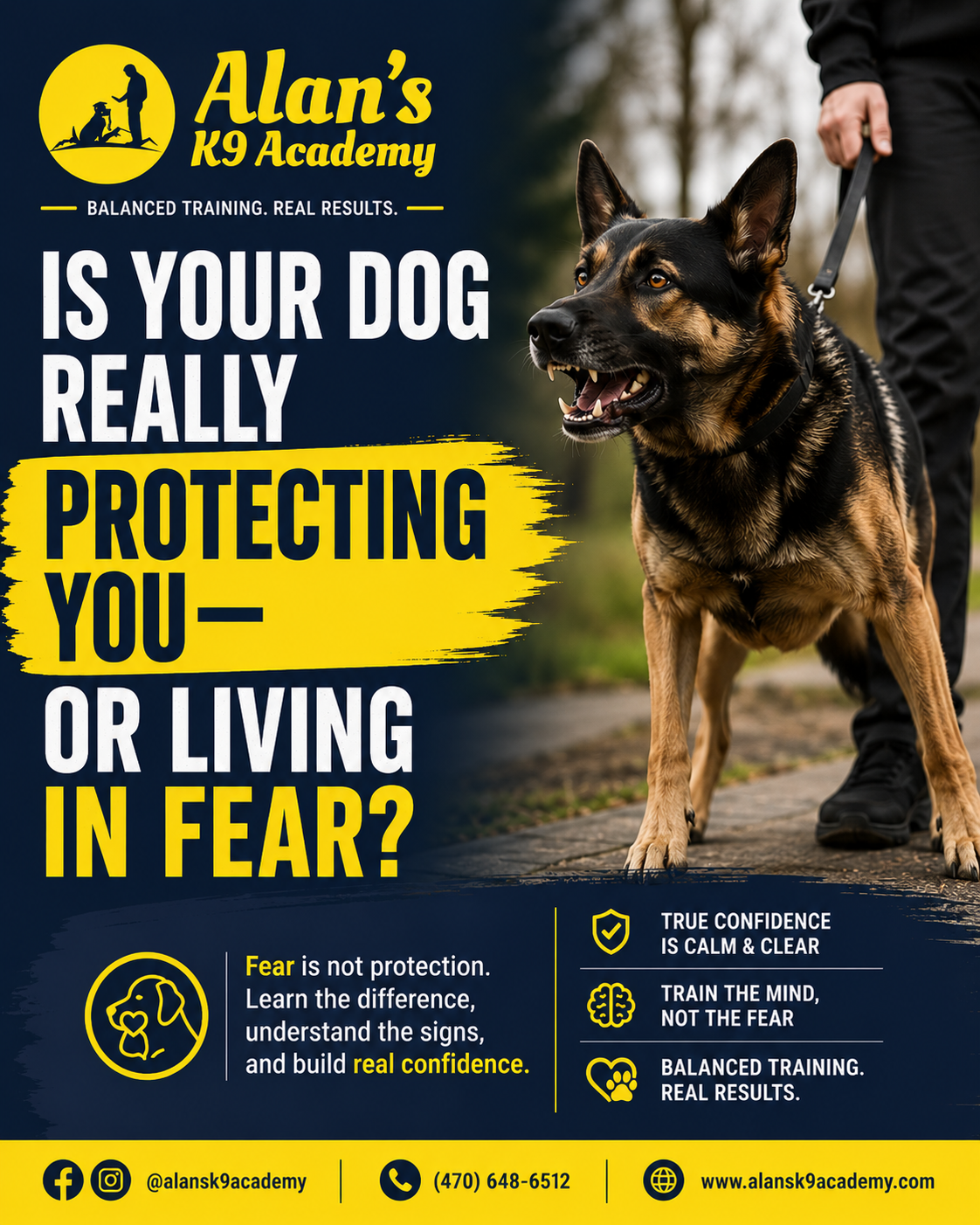
Is Your Dog Really Protecting You — Or Living in Fear?
Many dog owners believe their dog is being “protective” when they bark, growl, lunge, or react aggressively toward people approaching them. While that may occasionally be true, in many cases the behavior actually comes from fear, anxiety, and insecurity rather than genuine protection instincts. Understanding the difference can completely change how you help your dog live a calmer, happier life.
%20(5).gif)
At Alan’s K9 Academy, we work with reactive and anxious dogs every single day. As an award-winning dog training company voted #1 for the last two years, we’ve helped countless families better understand their dogs and overcome serious behavioral challenges through proper training, structure, and management.
Some of the dogs we’ve worked with were even facing euthanasia before their families found the right guidance and training plan.
Why Reactive Dogs Stay Close to Their Owners
When a dog reacts aggressively as someone approaches their owner, it often isn’t because they are “guarding” their person like a trained protection dog.
More commonly, the dog feels safest near their owner and becomes fearful when another person enters that space. If someone attempts to move between the dog and owner, the dog may panic and try to create distance through barking, growling, lunging, or snapping.
In behavioral practice, dogs described as “protective” are frequently reacting to perceived threats rather than intentionally defending a person.
This reframing is important because it helps owners recognize what their dog is truly experiencing emotionally.
If you believe your dog is simply being protective, the behavior may seem flattering or even desirable. But when you realize your dog is actually terrified, stressed, and emotionally overwhelmed, it becomes clear that their quality of life is suffering.
Protection Behavior vs Fear-Based Aggression
True protection work is:
- Trained
- Controlled
- Context-specific
- Stable under pressure
Fear-based aggression is usually:
- Emotional and reactive
- Triggered by stress or insecurity
- Generalized across situations
- Influenced by the dog’s internal anxiety state
This distinction matters.
When fear-driven behavior is mistaken for loyalty or protection, dogs are often repeatedly exposed to situations that overwhelm them emotionally. Every stressful exposure can strengthen the association that people, environments, or movement toward their owner are dangerous.
Over time, the dog’s anxiety and reactivity can intensify.
Chronic Anxiety Impacts Your Dog’s Health
Anxiety doesn’t just affect behavior — it affects the entire body.
Long-term stress can:
- Suppress the immune system
- Increase inflammation
- Worsen pain and discomfort
- Disrupt sleep
- Reduce overall quality of life
Many reactive dogs live in a constant state of tension and hypervigilance. This ongoing stress creates a cycle where emotional distress contributes to physical discomfort, and physical discomfort can make reactive behavior even worse.
At Alan’s K9 Academy, we often see major behavioral improvements when dogs receive both proper training and support for their overall wellness.
Why Some Owners Look Beyond Traditional Anxiety Medications
Conventional medications can sometimes help severe anxiety cases, but many pet owners are also concerned about side effects such as:
- Sedation
- Digestive issues
- Low energy
- Personality changes
- Long-term health concerns
In some situations, medications suppress symptoms without addressing the underlying imbalance contributing to chronic stress and inflammation.
That’s why many dog owners are exploring natural wellness options alongside professional training.
Understanding the Endocannabinoid System (ECS) in Dogs
Dogs naturally have an Endocannabinoid System (ECS), which plays a role in regulating:
- Mood
- Stress response
- Pain perception
- Sleep
- Inflammation
- Overall balance within the body
CBD interacts with CB1 and CB2 receptors that support the ECS, potentially helping dogs regulate stress more effectively and break free from the anxiety-pain cycle.
For reactive dogs, this added support may help improve emotional stability and relaxation during training and everyday life.
How CBD May Help Reactive Dogs
Many dog owners report positive results using CBD to support dogs struggling with:
Separation Anxiety & Fearful Behavior
CBD may help dogs feel calmer during:
- Thunderstorms
- Fireworks
- Car rides
- Vet visits
- Being left alone
- Exposure to unfamiliar people or environments
Chronic Inflammation & Joint Discomfort
Pain and inflammation can contribute to irritability and reactivity. Supporting mobility and comfort may improve both physical wellness and behavioral stability.
Full Body Wellness Support
Some pet owners also use CBD to support:
- Immune health
- Gut balance
- Cognitive function
- Recovery
- Healthy aging
- Better sleep quality
Combining Proper Training With Wellness Support
At Alan’s K9 Academy, we believe real transformation happens when owners address both behavior and overall wellness together.
Through proper management, structured training, confidence-building exercises, and emotional support, many reactive dogs can learn to feel safe and stable again.
Adding wellness support alongside training may help dogs become more receptive, relaxed, and emotionally balanced throughout the rehabilitation process.
We’ve personally seen incredible changes in dogs that once struggled with severe fear, anxiety, and reactivity.
A Recommended Wellness Product for Reactive Dogs
One product many pet owners have had success with is Happy-Furever™ CBD Oil for Dogs from Paw Origins.
Their CBD formula is designed to support calm behavior, mobility, relaxation, and overall wellness by naturally supporting the dog’s Endocannabinoid System.
Combined with proper training and structure, many owners report significant improvements in their dog’s anxiety levels, comfort, and quality of life.
To learn more, read reviews, or place an order, visit: https://paworigins.com
Final Thoughts
If your dog reacts aggressively when people approach you, it doesn’t automatically mean they are trying to protect you. In many cases, they may actually be struggling with fear, insecurity, or chronic anxiety.
Recognizing the emotional root of the behavior is one of the most important steps toward helping your dog heal and thrive.
With the right combination of professional training, management, patience, and wellness support, reactive dogs can absolutely improve and live happier, healthier lives.
At Alan’s K9 Academy, helping dogs and families overcome these challenges is what we do every day.