



How to Stop a Dog from Chasing Cars Through Reward Training
Reward the behavior you want before your dog reaches the point of chasing. To learn how to stop a dog from chasing cars, start where your dog can watch a passing car calmly, then reward that calm attention and build up gradually. Practice heel away from traffic first, moving closer only when your do...

Reward the behavior you want before your dog reaches the point of chasing. To learn how to stop a dog from chasing cars, start where your dog can watch a passing car calmly, then reward that calm attention and build up gradually. Practice heel away from traffic first, moving closer only when your dog can sit and watch cars pass calmly.
It’s understandable to feel tense when a car appears and your dog suddenly lunges or pulls. The urge to react quickly is real, but training works better when your dog is calm enough to notice you and accept a reward.
This guide explains how small steps, reward-based practice, and counter-conditioning can help change your dog’s response to cars. You’ll also learn how to manage the environment and when personalized behavior-modification training can help you address the challenge safely and consistently.
Key Takeaways
• Begin far enough from traffic that your dog can sit and watch cars pass calmly, then move closer gradually.
• Reward calm attention and other behaviors you want to see, so your dog has a clear alternative to chasing.
• Build skills in manageable stages, practicing heel and recall with low distractions before adding moving vehicles.
• Use counter-conditioning at a distance and speed where your dog can stay relaxed, take a treat, and watch a car.
1. How Can I Stop My Dog From Chasing Cars?
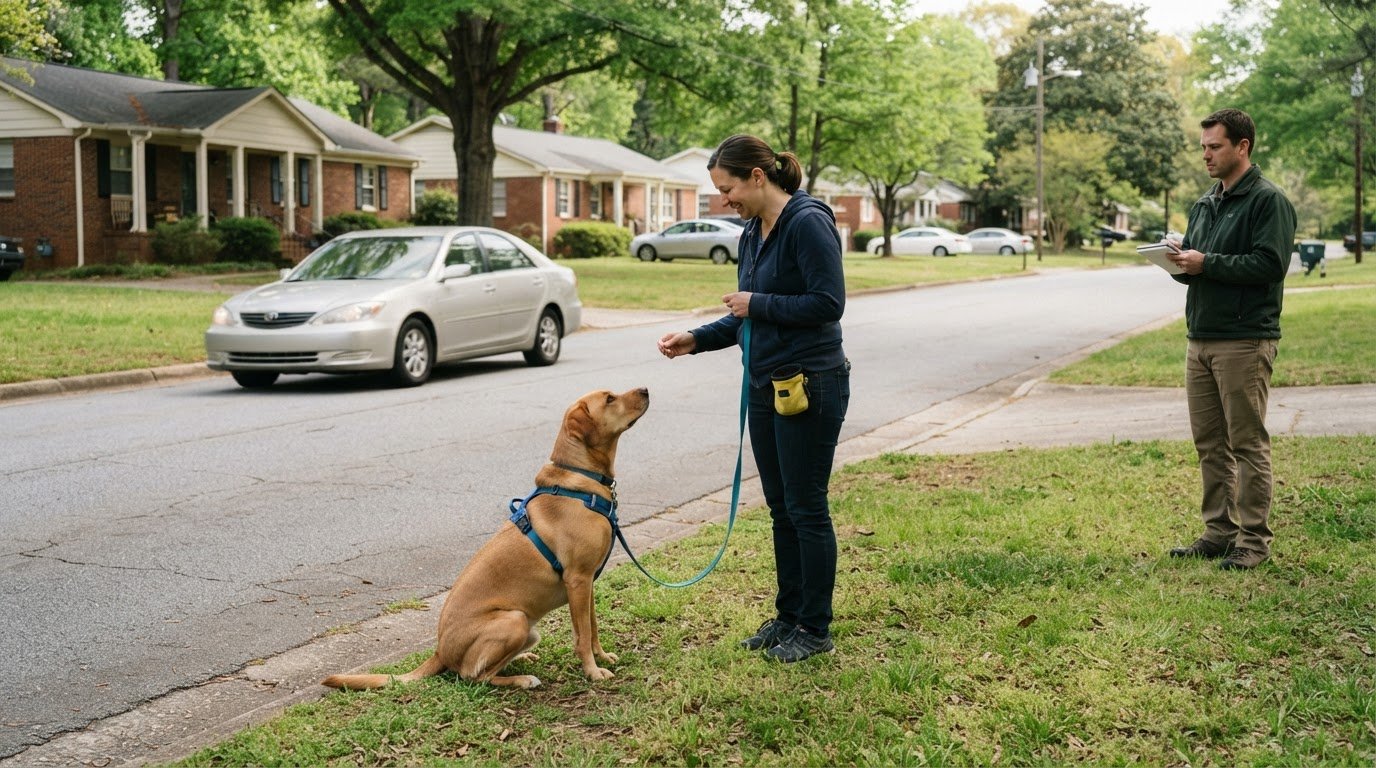
Start far enough from traffic that your dog can sit, watch a car pass, and remain calm. Reward that response, then repeat with another passing car. Move closer only after your dog has watched several cars without lunging, barking, or refusing a treat. If your dog reacts, increase the distance and make the next practice easier.
Dogs may chase cars because fast movement triggers a chase response or excitement. To teach heel, first practice walking beside you in a quiet, low-distraction place. Reward your dog for staying near you and responding to a cue. Then practice where cars are visible from a safe distance. The trainer says heel work around moving cars can often be completed in one training session, after the skill is introduced away from traffic.
There isn't one best leash, harness, or barrier for every dog. Use a leash on walks, and manage exits with closed doors and gates; a baby gate or exercise pen can add a barrier at the front door. On walks, keep your dog secured and create space from approaching cars rather than letting your dog reach the roadside. A healthy dog should also get a daily walk of at least 30 minutes.
Build reliable recall and “leave it” away from traffic first, rewarding your dog for turning back or disengaging from a distraction. Recall practice can progress to a 50-foot long line, beginning with low-level distractions. Don't test either cue near moving cars until your dog responds consistently in easier settings. A passing vehicle is too risky for a first practice.
How long does it take? Progress depends on your dog’s response, the distance needed to stay calm, and consistent practice, so don’t assume one session is enough. Chasing can put your dog in a vehicle’s path and endanger people nearby. If your dog gets loose near traffic, don’t run into the road or chase toward cars. Call calmly from a safe place, and avoid drawing your dog toward moving vehicles.
2. Rewarding desired behavior
A reward teaches your dog which choice works. Near a passing car, mark the moment your dog looks toward you, keeps all four paws on the ground, or watches without pulling. Give the treat promptly while that calm behavior is happening. If the reward comes after lunging, your timing may accidentally reinforce the wrong action.
Choose a reward your dog will readily accept in that setting. A small, soft treat may work better than a toy when cars are moving nearby. If your dog ignores food, barks, or strains toward the road, increase the distance or reduce the visual distraction. Reward a response your dog can manage rather than competing with an overwhelming view of traffic.
Reward calm behavior in small, clear moments. For example, give a treat when your dog notices a car and then turns back to you. You can also reinforce a loose leash, a brief pause, or staying beside you as the vehicle passes. Use one consistent marker, such as “yes,” just before delivering the reward. The marker helps connect the desired action with what follows.
As your dog succeeds, gradually ask for calm behavior for a little longer before rewarding. Keep the criteria achievable: reward a brief glance away from the car before expecting longer attention. Don’t lure your dog closer to traffic with food; reward from a safe position instead. If excitement rises, make the next repetition easier and reward an earlier, calmer choice.
Bring in a certified dog trainer or veterinary behaviorist when chasing persists, intensifies, or makes safe practice difficult. A professional can observe your dog’s response and shape a plan around the triggers and behaviors involved. For tailored behavior modification, structured guidance can help turn reward timing into a consistent training approach.
3. Breaking training into small steps
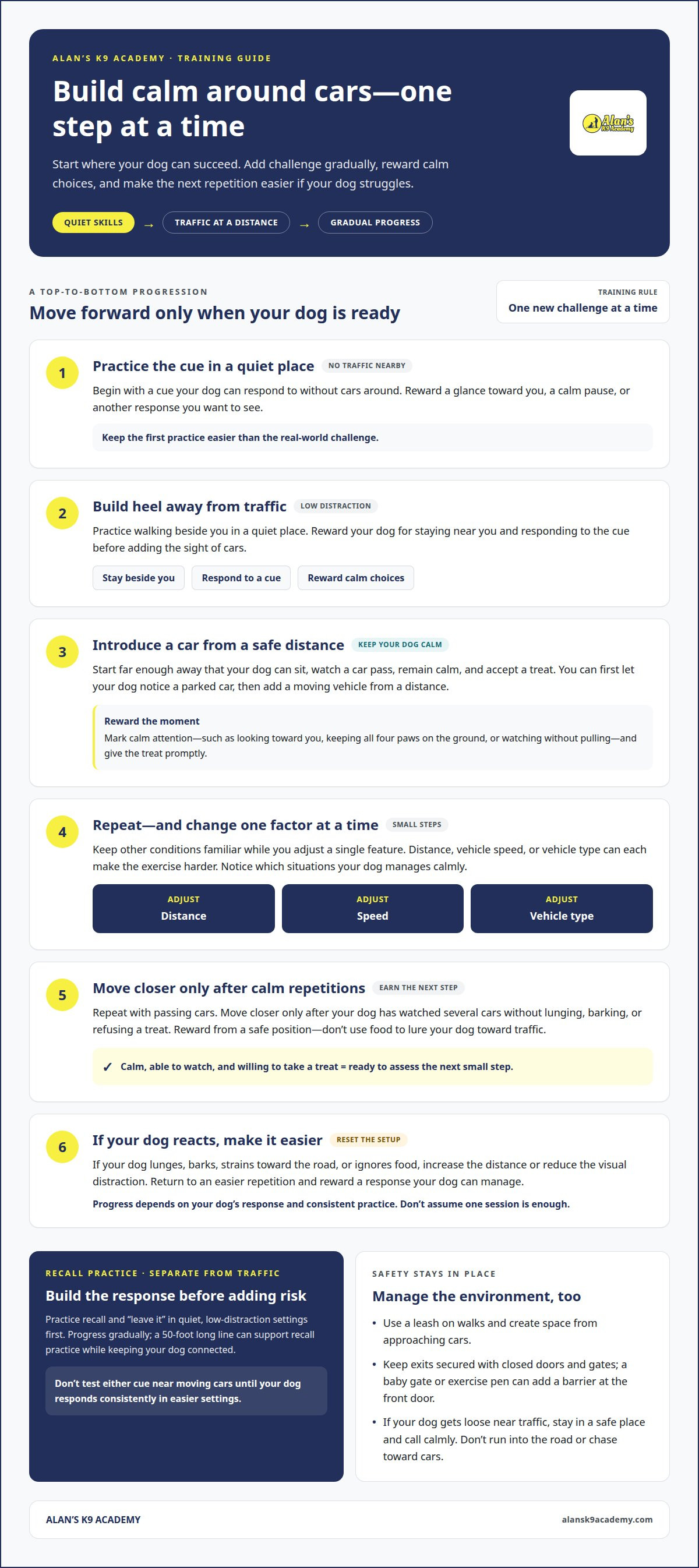
Make each practice session easier than the real challenge. Start in a quiet place where your dog can respond to a cue without traffic nearby. For example, reward a glance toward you, then practice walking beside you before adding a distant car. Build on skills your dog already understands instead of testing several new skills at once. A gradual plan for how to stop a dog from chasing cars makes each new challenge easier to assess.
Next, add one new distraction while keeping everything else manageable. Your dog might first watch a parked car, then notice a moving vehicle from a distance. If your dog stays engaged, continue. If attention shifts to chasing, return to an easier setup. This gives your dog another chance to succeed instead of repeating a difficult exercise.
Cars don’t all trigger the same response. If your dog reacts more strongly to a fast vehicle, adjust the car’s speed or practice with a different type of vehicle. Keep the other conditions familiar while changing that one factor. This helps reveal whether speed, size, sound, or movement makes the exercise harder, giving you useful clues about how to stop a dog from chasing cars.
Build recall separately from the sight of traffic. Start in a quiet, low-distraction area, then add mild distractions as your dog responds reliably. A 50-foot long line can support recall practice while keeping the dog connected during training. Begin with low-level distractions, then increase the challenge gradually instead of expecting a recall amid moving cars.
Use a clear progression: respond to your cue indoors, respond outdoors without cars, then practice with traffic visible at a distance. Change only one feature at a time, such as distance, vehicle speed, or vehicle type. If your dog struggles, make the next repetition simpler. Consistent small steps help build skills that can transfer to more distracting places.
Keep notes after each practice: the vehicle type, your dog’s response, and which cue worked. For example, record whether your dog could turn away from a slow car but struggled with a larger vehicle. These observations help you choose the next manageable step without advancing before your dog is ready.
4. Counter-conditioning to reduce car chasing
Counter-conditioning changes what a car predicts for your dog. Instead of anticipating a chase, your dog learns that a passing vehicle signals something pleasant. Begin at a distance and with a vehicle speed that lets your dog sit, take a treat, and remain calm while watching. If your dog can’t eat or settle, increase the distance or choose a slower, less distracting vehicle.
Set up practice in a driveway where you can choose a safe position and move farther away if needed. As a car appears, offer a treat while your dog watches calmly. Keep the treat connected to the car’s presence rather than asking your dog to approach the road. When the vehicle passes, pause the treats until the next calm viewing opportunity.
You can practice this counter-conditioning exercise in your driveway more than once a day. Keep each repetition simple: notice the car, remain calm, receive a treat. Several manageable repetitions are more useful than staying outside until your dog becomes overexcited. If barking, pulling, or fixation begins, end that repetition and create more distance before trying again.
Watch your dog’s body language during each pass. A loose posture, willingness to take food, and brief attention back to you suggest the setup is manageable. A stiff body, intense staring, or refusal of a treat means the vehicle is too close or moving too quickly. Adjust one factor at a time, such as distance or car speed, so you can see which change helps.
As calm responses become consistent, make the exercise slightly more challenging. You might gradually shorten the distance or practice with a different type of vehicle, while keeping your dog able to sit and eat. Don’t rush the change: return to an easier setup if calm behavior breaks down. For practical help applying counter-conditioning to car chasing, get guidance for your dog’s behavior.
Alan's K9 Academy: In-Home Dog Training
Alan's K9 Academy can help when car chasing persists despite careful reward practice or makes everyday walks difficult. In-Home Dog Training provides hands-on support in the setting where your dog’s routines and triggers occur, while Behavior Modification focuses on addressing challenging responses such as chasing.
Training can break the behavior into manageable steps, from responding to cues away from traffic to practicing calm responses around passing cars. The plan can account for your dog’s reactions, the vehicles that trigger them, and the environments where you need safer, more reliable behavior. That structure helps you build practical skills without moving faster than your dog can manage.
If you’d like personalized support with your dog’s car-chasing behavior, contact Alan's K9 Academy.
Build safer habits one practice at a time
Progress starts with a plan you can repeat in real situations. Notice which vehicles challenge your dog, choose a manageable training setting, and adjust the next practice based on your dog’s response. A calmer choice around traffic is worth reinforcing, even when it lasts only briefly. Those small moments can help create a more reliable routine for both of you.
If you’re still working out how to stop a dog from chasing cars, personalized guidance can help turn training principles into a plan suited to your dog and daily environment. Alan's K9 Academy offers Therapy & Service Dog Training alongside its dog-training programs, and its team can help you consider the right next step for your behavior-training needs.
Contact Alan's K9 Academy to discuss support for your dog. With a thoughtful plan and consistent practice, you can move toward safer, calmer walks together.
Frequently Asked Questions
Q & A: How Can I Stop My Dog From Chasing Cars?
Prevent your dog from reaching the roadway while you build an alternative to chasing. Before a walk, choose a route with room to turn away, and decide which cue you’ll use if a car appears unexpectedly. For example, cue your dog to turn with you toward a quiet driveway. If you can’t safely manage your dog near traffic, seek hands-on training support.
How do I train a dog to stop chasing cars using positive reinforcement?
Use rewards to strengthen a specific alternative action, such as turning toward you when a vehicle becomes visible. Mark that choice immediately with a consistent word, then deliver the treat close to your side. If your dog is too focused to respond, make the situation easier rather than repeating the cue. This keeps the reward connected to the behavior you want.
What commands help prevent a dog from chasing cars?
“Heel,” “come,” and “leave it” can each support safer choices, but they serve different purposes. Heel asks your dog to stay beside you, come calls your dog back, and leave it cues your dog to disengage from something tempting. Practice each cue in separate, low-distraction settings first. Keep your dog leashed near traffic; a verbal cue shouldn’t replace physical control.
What leash, harness, or fence is best for a dog that chases cars?
There isn’t one best leash, harness, or barrier for every dog. Use a leash on walks, keep doors and gates closed, and consider a baby gate or exercise pen at the front door.