



How to Prepare for Introducing Your Dog to a New Baby
The first greeting should be calm, gradual, and never forced. Training for introducing a dog to a new baby starts before the baby comes home: prepare your dog for changes in routine, practice settling in a safe space, and build positive associations with baby sounds and scents. At home, have another...

The first greeting should be calm, gradual, and never forced. Training for introducing a dog to a new baby starts before the baby comes home: prepare your dog for changes in routine, practice settling in a safe space, and build positive associations with baby sounds and scents. At home, have another adult help, give your dog room to observe from a comfortable distance, and keep dog and baby supervised and safely separated whenever needed.
It’s natural to wonder how your dog will respond to a new baby’s sounds, unfamiliar smells, and movements around the home. Introducing a dog to a new baby takes preparation: gradual practice can help you manage changes and recognize when your dog needs space. This guide covers practical steps before the baby arrives, signs of stress, gentle sound-and-scent practice, and a thoughtful plan for the first introduction. You’ll also learn how to keep the household calm while your dog and baby adjust at their own pace.
Key Takeaways
• Introduce nursery changes and baby equipment gradually so your dog has time to investigate and adjust before the baby arrives.
• Watch for stress signals such as lip licking, avoiding interaction, whale eye, or freezing, and give your dog a quiet place to settle.
• Build positive associations with baby sounds and scents through calm, brief practice paired with treats or meals.
• Plan the first greeting with another adult’s help, keep the leash loose, and let your dog observe without being pressured to approach.
• Use in-home dog training or behavior modification for tailored support if your dog struggles with the changes or shows concerning behavior.
What Are the Warning Signs of Stress?
Check how your dog responds to nursery changes, baby sounds, and close contact. Act early when you notice discomfort: create distance and offer a quiet place before an uneasy moment escalates.
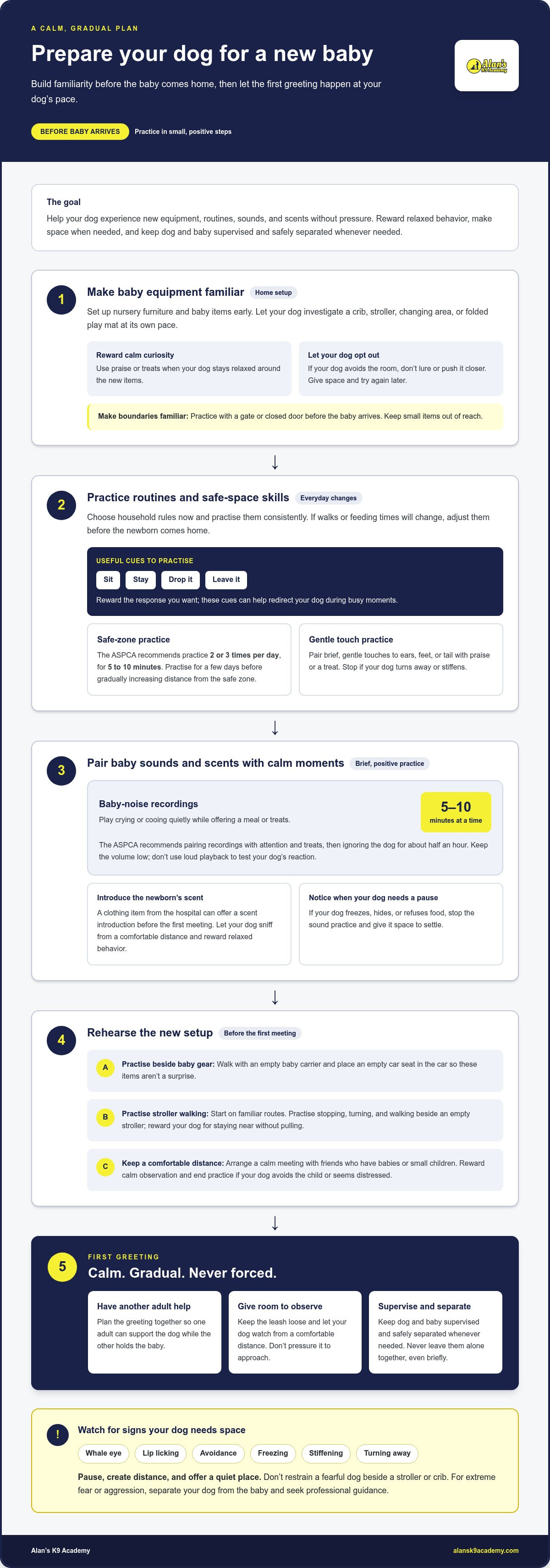
• Set up nursery furniture and baby products before the newborn arrives. Let your dog investigate a crib, stroller, or folded play mat at its own pace. Reward calm curiosity with praise or treats, and keep small items out of reach. Notice how your dog reacts when equipment moves or unfamiliar smells enter the home. If your dog avoids the room, don’t lure or push it closer; give it space and try again later.
• Watch for subtle stress signals, not just barking or growling. The ASPCA lists signs of canine anxiety that include whale eye, lip licking, avoidance, and freezing. Your dog may turn its head, stiffen, or stop taking a treat when the baby approaches. Pause the interaction and let the dog move away. Don’t restrain a fearful dog beside a stroller or crib, as being unable to retreat can intensify its distress.
• Offer your dog a quiet, safe place whenever it seems stressed. Use a familiar bed, gated area, or quiet room, and let the dog settle without following it. Separate the dog from babies and toddlers whenever you can’t actively supervise. Never leave them alone together, even briefly. When your baby becomes mobile, watch closely for signs of worry. Scooting and crawling can change how your dog experiences the child’s movement and proximity.
• Introduce baby sounds at a level your dog can tolerate. Play a recording of crying or cooing quietly while offering a meal or treats, then stop if your dog freezes, hides, or refuses food. The ASPCA recommends playing baby-noise recordings for 5 to 10 minutes at a time with attention and treats, then ignoring the dog for about half an hour. Keep sessions calm; don’t use loud playback to test your dog’s reaction.
• Help your dog adjust by pairing baby-related smells and routines with positive, predictable experiences. A clothing item from the hospital can introduce the newborn’s scent before their first meeting. Let your dog sniff from a comfortable distance, then reward relaxed behavior. If stress follows another event, such as visitors arriving or a disrupted routine, give your dog time to settle before bringing the baby nearby.
• Treat fear or aggression as a reason to change the plan, not as behavior to punish. Separate the dog from the baby and seek professional guidance if your dog shows extreme fear or aggression. Contact a veterinarian if your dog’s behavior changes after the baby arrives. Teach children to respect animals and handle them gently; don’t expect a dog to tolerate rough handling. These steps can support a safer adjustment as your household changes.
How Can You Prepare Before the Baby Arrives?
Start preparing well before the due date so your dog can learn new routines gradually. Practise changes at home before the baby arrives, not during the first busy days together.
•
Prepare the Dog for Baby-Related Changes at Home
Set up baby furniture early, including the crib, stroller, and changing area. Let your dog explore these items calmly, and reward relaxed behavior. Practice with gates or a closed door to make limits around the nursery familiar. The ASPCA recommends safe-zone training two or three times per day, for 5 to 10 minutes. Practice for a few days before gradually increasing distance from the safe zone.
•
Prepare the Dog for Touch and Movement
Help your dog get comfortable with gentle touches to its ears, feet, and tail. Pair each brief touch with praise or a treat, and stop if your dog turns away or stiffens. Practise moving near the dog’s toys, food bowl, and water bowl without taking them. Keep the practice controlled; never let a toddler handle the dog roughly or use training to make the dog tolerate uncomfortable contact.
•
Prepare the Dog Before the Baby Arrives
Choose household routines and rules now, then practise them consistently. If walks or feeding times will change, adjust them before the newborn comes home. Practise “sit,” “stay,” “drop it,” and “leave it,” rewarding the response you want. These cues can help redirect your dog during busy moments. If your dog has shown aggression or anxiety, discuss it with your veterinarian during a pre-baby check-up.
Hire a trainer experienced with babies and children when your dog struggles with new routines, touch, or household boundaries. Seek professional guidance before the baby arrives if aggression or intense fear is part of your dog’s history. A veterinary behaviorist can also help assess behavior concerns. Customized in-home dog training can help you practise household skills in the setting where you’ll use them.
•
Prepare the Dog for the First Meeting
Practise walking beside an empty baby carrier and place an empty car seat in the car so these items aren’t a surprise. Arrange a calm meeting with friends who have babies or small children, keeping enough distance for your dog to stay relaxed. Reward calm observation, and end the practice if your dog avoids the child or seems distressed. These rehearsals help you plan the first greeting around your dog’s comfort.
Using a leash during the first greeting
• If you plan to walk your dog and baby together, practise leash walking before the baby arrives. Start on familiar routes, then practise stopping, turning, and walking beside an empty stroller. Reward your dog for staying near you without pulling. If stroller wheels, neighborhood noises, or passing friends distract your dog, increase the distance and practise again when your dog can focus.
• Check the leash and collar or harness before bringing your dog near the newborn. Make sure the equipment is in good condition and fits securely, then hold the leash without wrapping it around your hand. Leave enough length for a relaxed curve. A tight leash can make a worried dog feel trapped, so create distance and calmly move away rather than pulling the dog toward the baby.
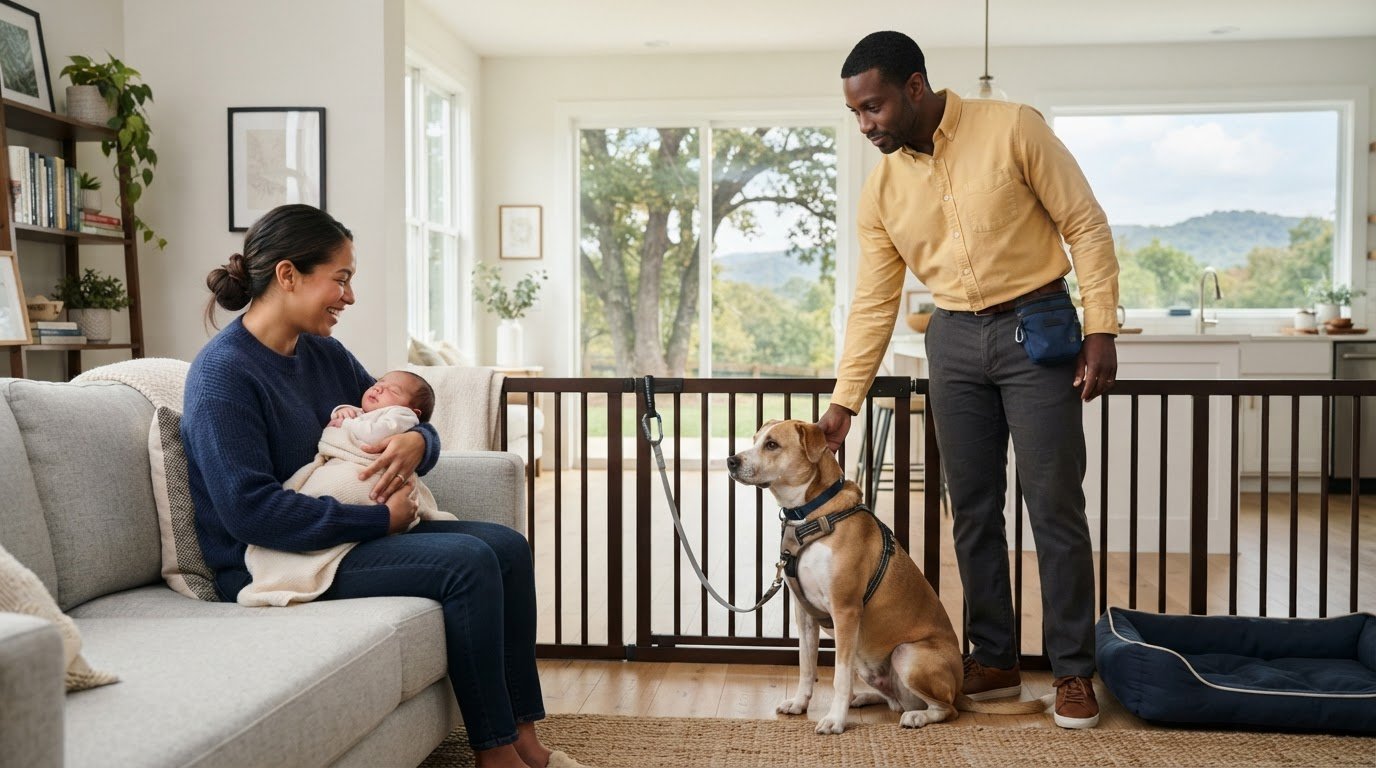
• Have another adult help with the first greeting. One person can carry the baby while the other handles the dog, leaving both adults free to focus. Greet your dog separately first if excitement could lead to jumping. Once the dog has settled, bring the baby into view while keeping the leash loose and the room quiet.
• Start at a distance where your dog can observe without feeling crowded. A curious dog can view the baby from about six feet away. Ask for “sit” or “stay” only if your dog already responds comfortably to those cues. Watch for stiffness, turning away, or fixating. If your dog seems uneasy, increase the distance and calmly end the greeting.
• Let your dog choose whether to look or move closer; don’t guide its nose toward the baby. Praise calm behavior, such as glancing at the newborn and then looking back at you. Keep the leash slack, and avoid tight restraint if the dog hesitates. A leash helps the handler guide movement, but it doesn’t replace close adult supervision or a safe barrier.
• Keep the first meeting brief and end it while your dog is still settled. If crying, sudden movement, or other noises change your dog’s behavior, calmly create more space. Don’t scold a growl or other warning signal. Separate the dog from the baby and seek professional guidance if fear or aggression appears. If your dog has a history of aggression toward people, have one adult supervise the dog and another supervise the baby, or keep the dog in a safe room.
Acclimating the dog to baby sounds and scents
Introduce one sensory change at a time, pairing it with food, praise, or calm attention. Watch your dog’s response and adjust each practice session to help it stay relaxed.
• Choose a recording of crying, cooing, or other baby sounds, then play it quietly during a meal. The ASPCA recommends playing baby-noise recordings for 5 to 10 minutes while giving your dog attention and treats. Begin at a volume that lets your dog eat comfortably. If your dog stops eating, hides, or freezes, pause the recording and try again later at a lower volume.
• Repeat the sound exercise in different calm moments, such as during a relaxed training session or while your dog rests nearby. Keep each practice within the ASPCA’s 5-to-10-minute range, and pair the sounds with something enjoyable. After playing a recording, the ASPCA recommends ignoring your dog for about half an hour. This gives your dog time to settle without continued attention.
• Introduce baby smells separately from sound recordings so you can tell which change affects your dog. While a parent is still at the hospital, a family member can bring home an item of the baby’s clothing. Place it where your dog can sniff without being crowded. Reward calm investigation, and put the item away if your dog avoids it or becomes tense.
• Introduce the scent of baby lotion or powder in a small, controlled way. Put a little on your hands, then offer a treat or relaxed petting if your dog stays comfortable. Don’t apply products directly to your dog or bring a scented hand close to its face. The goal is to pair the new smell with a pleasant moment, not to make your dog tolerate contact.
• Practise with one new sound or smell at a time, then observe your dog’s body language. Relaxed eating, sniffing, or returning to rest suggests your dog can continue the exercise. Lip licking, avoidance, freezing, or refusing food means you should stop and create space. Note which sounds or smells prompted a reaction so you can practise them more gently.
• Keep sensory practice separate from the newborn’s first meeting. A clothing item from the hospital can introduce the baby’s scent before the baby comes home, but it doesn’t replace supervised introductions. Keep your dog’s safe resting area available, and let it move away from recordings or scented items. Build familiarity gradually while allowing your dog to disengage.
Bringing the baby home and making introductions
• Arrange for another adult to help when you bring the baby home. One adult can carry the baby while the other greets the dog, reducing excitement and the chance of jumping. If your dog needs time to settle, keep the baby in a separate room and greet the dog first. A calm, familiar welcome gives you a better chance to observe your dog before introducing anything new.
• Set up the introduction so your dog has room to observe. The baby can remain in someone’s arms, a car seat, or a crib while the dog watches from a comfortable distance. Don’t force the dog to approach, sniff, or stay nearby. If your dog looks away or moves off, let it disengage. A relaxed dog may show little interest in the newborn; that indifference can mean it doesn’t feel threatened.
• Ask the dog to sit or lie down before the person holding the baby sits. Keep the interaction gentle and brief, then praise calm behavior without crowding the dog. If you’re introducing more than one pet, bring them in one at a time. This makes it easier to notice each animal’s body language and respond if one becomes uncomfortable.
• Supervise the dog and baby at all times, even during a quiet moment. Never leave them alone together, even for a second. Use a gate, closed door, or exercise pen to create separation when you can’t focus on both. If the dog is in an exercise pen, provide appealing toys and keep the baby safely out of reach.
• Separate the dog from the baby if you see fear, aggression, or a growl. Don’t punish growling; it signals that your dog needs more space. Keep them apart and contact a veterinarian immediately if the dog shows fear of or aggression toward the baby. If your dog has a history of aggression toward people, have one adult supervise the dog and another supervise the baby, or keep the dog in a safe room.
• Build a practical plan for the first days at home, including who handles the dog during feeding, visitors, and baby care. Some families have their dog stay with a familiar relative for the first day or two after the baby comes home. If you need hands-on help adapting your introduction plan to your dog’s behavior, get support preparing for the first meeting.
Alan's K9 Academy: In-Home Dog Training
Alan's K9 Academy can help you build practical household skills before your baby arrives. In-Home Dog Training lets you work on cues, boundaries, and routines in the setting where you’ll use them. If your dog shows fear, aggression, or difficulty adjusting to baby-related changes, Behavior Modification can address those behavior concerns with a personalized plan.
Consider professional support if you’re unsure how to manage introductions safely or your dog struggles to stay relaxed around baby equipment and sounds. You’ll bring your real home-life challenges into training and practise steps that fit your family. For guidance tailored to your dog and household, contact Alan's K9 Academy.
Build a Confident Start for Your Growing Family
Turn preparation into a routine your household can maintain. Decide who will supervise the dog, where the dog can rest, and what you’ll do if either your baby or dog needs space. A shared plan helps everyone act consistently, especially during busy moments. Training for introducing your dog to a new baby can also address the behaviors and routines your family needs to work on.
Alan's K9 Academy offers In-Home Dog Training and Behavior Modification for families seeking support with household routines or behavior concerns. Therapy & Service Dog Training is also available for those pursuing those specific training goals. Choose the kind of guidance that fits your dog and your family’s needs.
Contact Alan's K9 Academy to discuss a thoughtful training plan. With steady practice and clear boundaries, you can help your dog and baby begin this new chapter safely and calmly.
Frequently Asked Questions
How Do You Prevent Jealousy?
Keep your dog’s access to attention predictable instead of making every interaction depend on the baby’s presence. For example, offer a food puzzle while you feed the newborn, and maintain a familiar walk or play routine when possible. Reward your dog for settling nearby, but don’t require it to stay beside you. A gradual routine can help your dog learn what to expect without competing for contact.
How Should You Handle the First Meeting?
Keep the greeting calm, brief, and easy to end. Ask visitors to wait until the dog and baby have had a quiet introduction, so extra voices and movement don’t add pressure. Have one adult focus on the dog and another on the baby. If either needs a break, calmly end the interaction and try again during a quieter part of the day.
How can I keep my dog safe around kids?
Set clear household rules and supervise children around dogs. Separate your dog from kids during meals and snacks, when reaching for food could lead to contact or knock a child down. Put your dog in a safe room if visiting children or adults make it uneasy. If a sitter is caring for your child, ask them to keep the child and pets apart.
How should I introduce the new baby to my dog?
Let your dog adjust to the baby’s presence without demanding interaction. During a calm feeding, reward your dog for resting at a comfortable distance to help it associate the baby’s presence with a pleasant experience. Keep the baby supported by an adult or safely placed in a crib or car seat. If your dog chooses to disengage, let it.
Is it safe to leave my dog alone with the baby?
No. Never leave dogs and babies alone together, even for a second. Use a closed door, secure gate, or exercise pen whenever you can’t actively supervise both. Separate them before answering the door or stepping away to prepare a bottle. Even when the baby is asleep and the dog is quiet, an adult must supervise their interaction.
Should I punish my dog for growling at the baby?
No. A growl warns that your dog needs more distance, so calmly separate the dog and baby instead of scolding or punishing it. Don’t try to make the dog approach again at that moment. If the dog shows fear or aggression toward the baby, keep them completely apart and contact a veterinarian immediately.
What Is the "Scent Introduction" Trick?
It’s a gradual way to let your dog explore the newborn’s smell before meeting the baby. While a parent is still at the hospital, someone can bring home an item of the baby’s clothing. Let the dog sniff it from a comfortable distance, then reward calm interest. Don’t push the item toward the dog or insist it investigate.