



How to Keep Dog Training Skills Sharp Through Practice
A dog stays reliable through practice, not a one-time lesson. Knowing how to keep dog training skills sharp means reinforcing recall with rewards, revisiting familiar obedience cues at home, and gradually building focus around distractions through short, regular sessions. A professional trainer keep...

A dog stays reliable through practice, not a one-time lesson. Knowing how to keep dog training skills sharp means reinforcing recall with rewards, revisiting familiar obedience cues at home, and gradually building focus around distractions through short, regular sessions. A professional trainer keeps cues concise and ends each session with a behavior the dog already knows, so practice finishes on a confident success.
It’s understandable to expect learned skills to work everywhere, but a dog may respond differently as the setting and distractions change. Consistent, thoughtful practice helps keep familiar behaviors useful in everyday life. This article explains how a trainer can reinforce recall, maintain obedience at home, introduce real-world distractions gradually, and use clear commands that are easier for a dog to recognize.
Key Takeaways
• Learn how professional reward-based recall practice can support a more dependable response in safe, controlled settings.
• See how trainers refresh familiar home behaviors while strengthening clear communication between dog and handler.
• Understand why practicing around distractions works best when the challenge grows gradually.
• Discover how short, distinct cues can make expectations easier for dogs to recognize.
1. How a professional trainer reinforces recall for safety
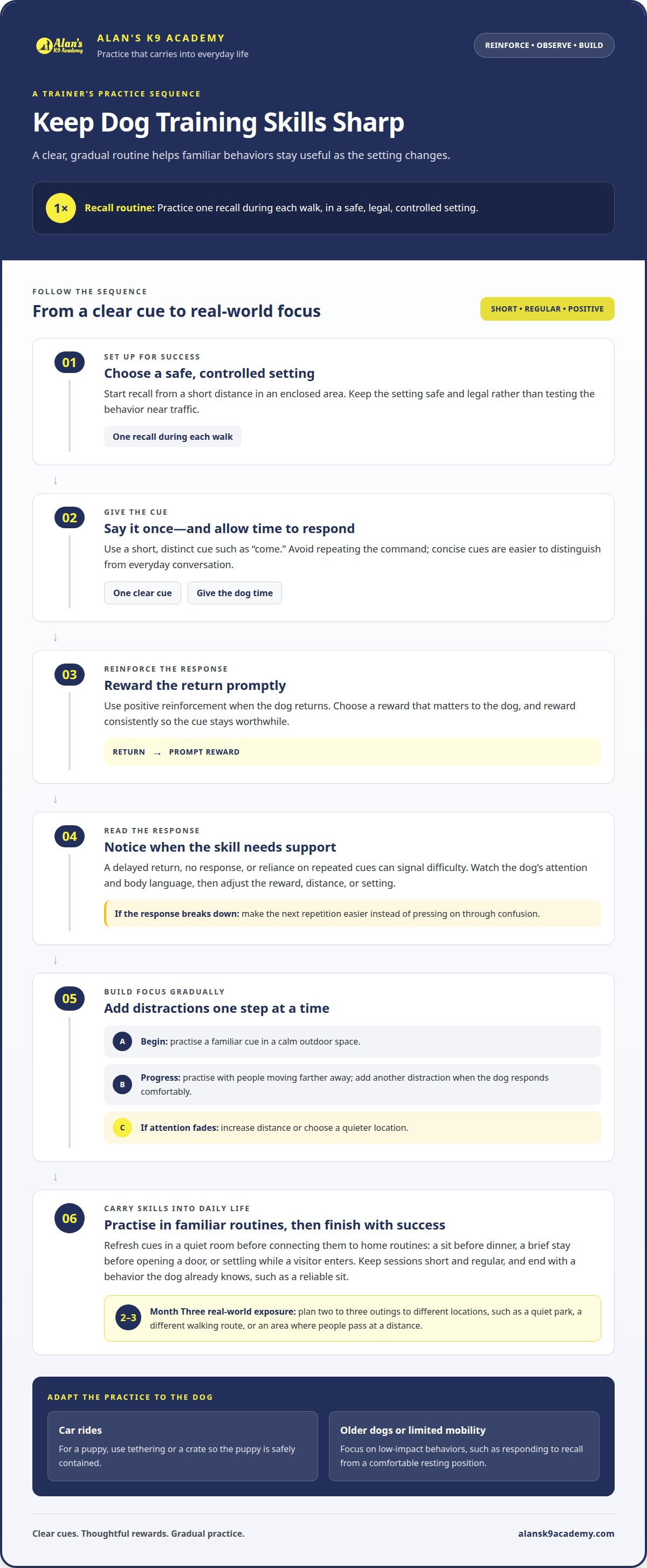
A professional trainer reinforces recall with positive reinforcement, rewarding the dog promptly when it returns. The reward should matter to the dog, making the cue worthwhile. For maintenance, practice one recall during each walk in a safe, legal, controlled setting. For example, call the dog from a short distance in an enclosed area rather than testing the behavior near traffic. Learning how to keep dog training skills sharp starts with noticing whether the dog responds to one clear cue.
How often should a professional practice dog training skills to maintain them? A useful routine includes short, regular practice, with one recall during each walk. A practical way to keep dog training skills sharp is to match session length to the dog’s engagement rather than continuing until attention fades. End each session with a familiar success, such as a reliable sit, so the final repetition feels clear and positive.
A trainer can spot difficulty by watching the dog’s response: a delayed return, no response, or reliance on repeated cues suggests the skill needs support. Common mistakes include repeating the recall command and rewarding inconsistently, which can make the cue less clear. A professional can identify where the response breaks down and adjust the reward, distance, or setting. Consider a refresher when recall becomes unreliable during controlled practice, especially when safety depends on a prompt return.
Car rides need their own calm, safe routine. For a puppy, a trainer recommends tethering or crating during car rides so the puppy is safely contained. With older dogs or dogs with limited mobility, practice can focus on low-impact behaviors, such as responding to a recall cue from a comfortable resting position. A trainer can keep practice brief and use an easy, familiar behavior between repetitions, maintaining engagement without demanding unnecessary movement.
2. How a professional trainer maintains home obedience and handler control
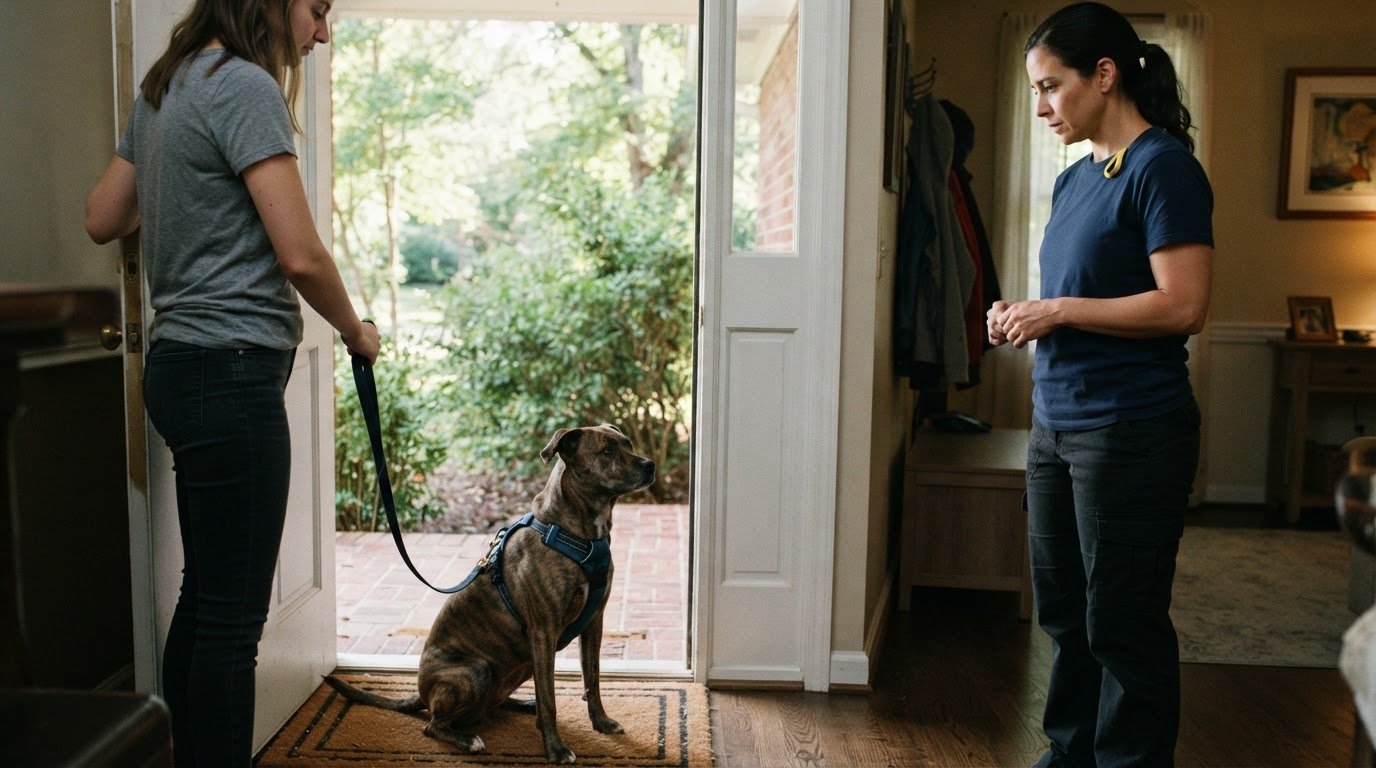
At home, a trainer checks whether familiar cues still work in everyday situations, not just during a quiet lesson. A dog might sit before dinner, wait at a doorway, or settle while a visitor enters. These examples show whether obedience carries over into daily routines. Dogs can learn basic commands at any age, so a trainer can refresh foundations with puppies, adult dogs, and older dogs.
How should a professional refresh a dog's recall, stay, and leash manners? Practise each behavior in a quiet room first, then connect it to a relevant routine. For a stay, begin with a brief pause before opening a door; assess leash manners during a calm walk. Give one command and allow the dog time to respond instead of repeating the cue.
Clear handling matters. Choose distinct cue words because commands that sound alike can blur together. If “sit” and another cue sound similar, the dog may hesitate or guess. Also assess whether the dog responds when the handler stands several feet away. Practising at a distance reveals whether the behavior depends on the handler being close.
New tricks start in a quiet room, where household noise and movement are easier to manage. Once the dog understands the behavior there, the trainer can practise it during familiar home routines. The handler’s timing, posture, and consistency all affect how clearly a cue lands. For structured support with home routines, professional obedience guidance can help identify which skills need a refresh and how to practise them meaningfully.
3. How a professional trainer builds obedience under distraction
A dog that follows a cue in a quiet room may struggle when a squirrel crosses the path or a bicycle passes. A professional trainer treats these as different practice conditions, not proof that the dog has lost the skill. The trainer observes what draws the dog’s attention, how quickly it can refocus, and whether it responds to a familiar cue. Those details help shape the next practice setting.
Increase distractions gradually. Begin with a familiar obedience cue in a calm outdoor space, then practise while people move farther away. If the dog stops responding, reduce the challenge by increasing distance or choosing a quieter location. This gives the dog a chance to succeed before the environment becomes more demanding. Watch the dog’s body language and response, adjusting the session instead of pressing on through repeated confusion.
Real-world exposure needs variety, too. During the real-world exposure focus, plan two to three outings to different locations in Month Three. A trainer can use those outings to practise known behaviors in settings such as a quiet park, a different walking route, or an area where people pass at a distance. Each location offers a different mix of sounds, movement, and smells, so obedience gets tested beyond one familiar backdrop.
Keep expectations specific in each setting. For example, practise a sit near a quiet path before asking for a stay while someone walks past. If the dog responds comfortably, introduce another distraction; if attention fades, make the next repetition easier. This gradual progression helps distinguish a skill that needs more practice from a setting that is simply too difficult. Careful observation helps build focus while keeping each outing manageable.
4. How a professional trainer uses concise commands instead of sentences
Choose short command words that carry clearly, even when a dog is focused elsewhere. “Sit,” “stay,” and “come” each identify a specific behavior, while a sentence such as “Can you please sit down now?” adds words without clarifying the request. Concise cues stay distinct from everyday conversation. Avoid familiar household words that people say often, so ordinary chatter is less likely to sound like a command.
Sound matters, too. Commands that resemble one another can be hard for a dog to distinguish, especially during an active situation. Review the cue set for overlapping sounds and choose distinct words for different behaviors. For example, if two cues begin with the same sound, choose a clearer alternative for one. This makes each instruction easier to recognize and reduces guesswork.
How you deliver a cue matters. Say the chosen word clearly, then watch the dog’s response rather than adding a string of explanations. If the dog hesitates, consider whether the cue is familiar, the setting is distracting, or the handler’s timing is clear. For example, return to a quieter setting and assess the same cue before increasing the challenge. Keep the words consistent while changing the practice conditions.
Concise commands also help handlers stay coordinated. A trainer can explain which cue means “wait” and when to use it, so family members avoid giving conflicting instructions. During a session, the trainer can point out extra phrases that blur the cue and model a simpler alternative. Clear wording gives the dog a more consistent signal across people and situations, making practice easier to understand.
For hands-on guidance with clear cues and consistent handling, get professional command coaching.
Alan's K9 Academy
Alan's K9 Academy helps owners maintain training skills with professional guidance matched to the dog’s behavior and everyday needs. If recall has become inconsistent, home obedience feels uneven, or distractions make familiar cues difficult, In-Home Dog Training can address skills in the settings where they matter. Behavior Modification offers support when specific behaviors interfere with reliable practice. For dogs working toward therapy or service roles, Therapy & Service Dog Training can support relevant foundation skills.
A professional can assess how the dog responds, identify where practice needs adjustment, and help create a clear path forward. This is useful when repeated practice hasn’t restored consistency or the training goal has changed. Contact Alan's K9 Academy to discuss professional support for your dog’s training.
Build a Practice Plan That Fits Your Dog
Training maintenance works best when it reflects the dog in front of you. Changes in routine, household, or environment can affect which skills need attention, so start by identifying a meaningful goal for your dog. Knowing how to keep dog training skills sharp isn’t about expecting perfect responses every time. It’s about keeping communication clear and practice relevant as everyday needs evolve.
If you’re unsure which behaviors to prioritize, or your dog’s responses have become harder to rely on, professional guidance can help shape a plan around those needs. Alan's K9 Academy offers In-Home Dog Training, Behavior Modification, and Therapy & Service Dog Training to support different training goals. Choose the kind of support that fits your situation, then take the next step at a pace that feels right for you and your dog.
Contact Alan's K9 Academy today to discuss your dog’s training needs. With a clear goal and thoughtful professional support, you can keep building a stronger partnership together.
Frequently Asked Questions
What exercises can a professional use daily to keep a dog's basic obedience skills sharp?
A professional can weave familiar cues into everyday transitions, such as waiting calmly before entering a room or settling while the handler prepares a meal. The trainer chooses exercises that match the dog’s current goals and observes how reliably the dog responds in ordinary routines. This reveals which behaviors remain useful and which need a tailored refresher, without turning every interaction into a formal lesson.
How can a professional practice dog cues in different locations and around distractions?
A professional selects locations with manageable, relevant challenges and observes the dog’s response before changing the setting. For example, a trainer might assess a familiar cue in a quiet outdoor space before introducing nearby movement or unfamiliar sounds. If the dog struggles to focus, the trainer adjusts the environment or distance. This approach helps identify which conditions support reliable responses and where more structured practice would help.
How does a professional use rewards and reinforcement to maintain dog training?
A professional identifies what the individual dog finds rewarding and delivers it promptly after the desired behavior. A dog may respond to food, play, or social interaction, so the trainer observes what sustains engagement and tailors reinforcement accordingly. Personalized guidance is available to dog owners in Cartersville, Canton, Woodstock, Marietta, Rome, Acworth, Kennesaw, Sandy Springs, Roswell, Alpharetta, Powder Springs, Dallas, Hiram, Jasper, Cumming, Holly Springs, Ball Ground, and Milton.