%20(620%20x%20150%20px)%20(14).webp)
%20(620%20x%20150%20px)%20(15).webp)
.webp)
_page-0001.webp)
.webp)
How to Fix Dog Food Aggression: Safe Steps for 2026
What if the safest way to fix dog food aggression is to stop testing whether your dog will tolerate you near the bowl? If you’re worried someone could be bitten, or unsure whether approaching or taking the food will make things worse, your concern is understandable. Guarding can feel alarming, but i...
%20(5).gif)
What if the safest way to fix dog food aggression is to stop testing whether your dog will tolerate you near the bowl? If you’re worried someone could be bitten, or unsure whether approaching or taking the food will make things worse, your concern is understandable. Guarding can feel alarming, but it isn’t a reason to punish your dog or force a confrontation.
Safer progress starts by preventing conflict, then changing what mealtimes predict. This guide will help you recognize signals such as freezing, hard staring, growling, or snapping, and understand why they matter. You’ll learn practical ways to create space around meals, what to avoid, and how gradual behavior modification can build more positive associations with people nearby.
Every dog and household is different, so there’s no guaranteed quick fix. If guarding is intense, escalating, or difficult to manage safely, individualized professional support can help you choose a realistic plan. Alan's K9 Academy provides personalized in-home dog training and behavior modification, drawing on more than 35 years of professional dog instruction experience. The goal is clearer communication and safer mealtimes for everyone.
Key Takeaways
• Learn to distinguish food guarding from a diagnosis or character flaw, and notice behaviors that may signal rising risk.
• Understand how a dog’s surroundings and routines can shape guarding, without assuming one cause explains every dog.
• See why reaching for the bowl or testing your dog’s tolerance can increase risk, and what safer boundaries look like.
• Explore practical ways to fix dog food aggression by separating safe meal management from gradual behavior change.
• Recognize when bite history, children, guarding of other items, or worsening behavior calls for individualized professional support.
How to Recognize Dog Food Aggression and Assess the Risk
Does mealtime leave you watching the bowl as carefully as your dog does? It’s stressful to worry that a family member might get bitten, especially when advice about approaching or removing food seems contradictory. Start with safety, not a test. Food guarding describes behavior a dog uses around food to protect access to it. It isn’t, by itself, a diagnosis or proof that your dog is bad, spiteful, or trying to control the family. Understanding the signals helps you decide what to do next.
Dogs may show very subtle changes before they growl or snap. A dog might hover over the bowl, lower their head, freeze with food in their mouth, or keep a hard gaze on someone nearby. They may eat faster as a person approaches, shift to block access, or become still and tense. Some dogs move away with food; others remain close and warn people off. The pattern can change with the distance, person, setting, or meal, so one quiet meal doesn’t prove every situation is safe.
What does food guarding look like before a bite?
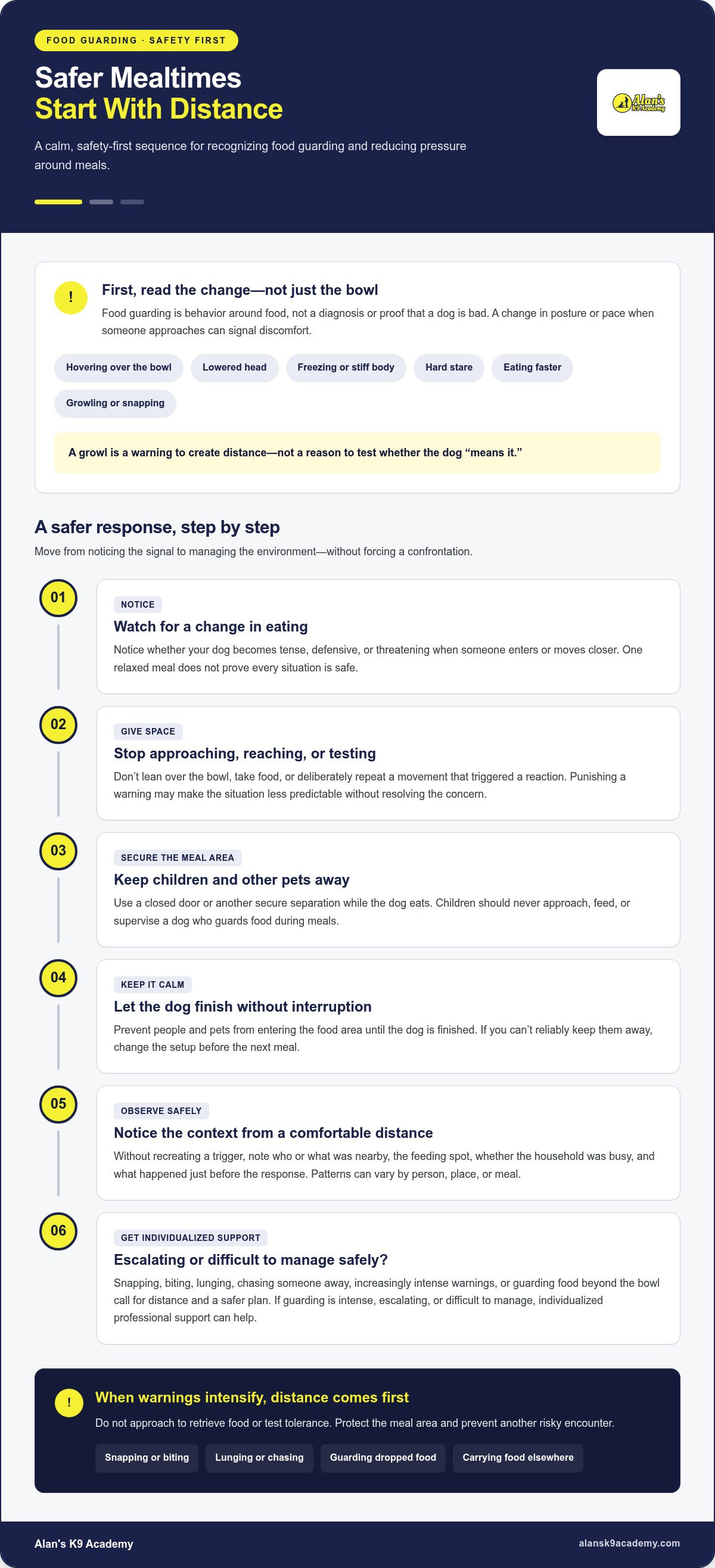
Watch for a change from your dog’s usual eating posture or pace when someone enters the room or moves closer. A brief pause, a stiff body, a fixed stare, or a head lowered over the bowl can all signal discomfort. A growl is a warning to create distance, not an invitation to test a boundary or see whether the dog “means it.” Punishing that warning may make the situation less predictable without resolving the underlying concern.
Ordinary eating stays relaxed when someone passes; eating that becomes tense, defensive, or threatening makes approaching unsafe. To understand what’s happening, observe only from a distance where your dog remains comfortable. Don’t lean over the bowl, reach toward the food, or deliberately repeat a movement that has triggered a reaction. Resource guarding can involve different valued items, as described in Resource guarding on Wikipedia, but focus your notes on the food-related situations you can observe safely.
When does food guarding need immediate safety changes?
Take snapping, biting, lunging, chasing someone away, or increasingly intense warnings seriously. So is guarding that extends beyond the bowl, such as protecting food dropped on the floor or carrying food to another location. These signs don’t tell you exactly why your dog is guarding, but they do mean people shouldn’t approach to retrieve food or test tolerance. If the behavior is escalating, prioritize distance and prevent access to the meal area.
Children should never approach, feed, or supervise a dog who guards food during meals. Even a child who understands the rules may move suddenly or miss a warning signal. Use a closed door or another secure separation to keep children and other pets out while the dog eats, and let the dog finish without interruption. If you can’t reliably keep people and pets away from the food area, change the setup before the next meal. That safety-first step gives you room to assess what’s happening and plan how to fix dog food aggression without creating another risky encounter.
Why Dogs Guard Food: Understand the Behavior Before Trying to Change It
Once you’ve noticed a guarding response, the next question is often, “Why is my dog doing this?” There may not be one clear answer. Food can be valuable, and a dog’s response may reflect individual temperament, past experiences, current surroundings, or a mix of factors. Understanding possible influences can help you make safer choices, but it can’t diagnose your dog or tell you exactly what they’ve experienced.
What can make food feel valuable or uncertain to a dog?
Dogs differ in what they value and how strongly they protect it. One may be comfortable eating with people nearby but tense when another pet approaches. Another may react to a particular food, feeding spot, or person. Competition for access, interruptions during meals, or an unpredictable routine may also contribute to uncertainty around food.
These are possibilities, not a checklist that reveals a dog’s history. A dog who guards food hasn’t necessarily been neglected, deprived, or taught to behave this way. Dogs with varied backgrounds can show guarding, and a caring home doesn’t make the behavior impossible. Avoid blame. Focus instead on what happens around meals now, and make changes that reduce pressure rather than deliberately challenging the dog.
How do context and body language help explain a guarding episode?
Look at the full scene, not just the growl or stiff posture. From a safe distance, note who or what was nearby, where the dog was eating, whether the household was busy, and what happened just before the response. Did another pet enter the room? Was someone reaching for a dropped piece of food? Did the meal happen in a different location or at an unusual time? These details can help reveal patterns without requiring you to recreate a trigger.
A dog may respond differently to familiar adults, visitors, children, or other animals. They may also be comfortable in one feeding spot but uneasy in another. That variation doesn’t make a warning meaningless; it shows why assumptions based on a single meal can lead to unsafe decisions.
Context explains the guarding response more usefully than labeling the dog “aggressive.” The label alone doesn’t tell you what situations are difficult, what distance the dog needs, or what changes could lower risk. Understanding those factors isn’t the same as excusing unsafe behavior or accepting preventable risk. You can take the dog’s response seriously while still working toward safer routines and individualized behavior change.
If the pattern is hard to interpret or affects everyday household safety, personalized dog behavior modification can help you make sense of the real-life context and build clearer communication with your dog. That thoughtful understanding is a practical foundation for efforts to fix dog food aggression, without treating one approach as right for every dog.
Food Aggression Myths: What Not to Do for Bowl Guarding
It’s natural to want to know that you can safely approach your dog’s bowl. But a dog who guards food doesn’t need to prove they’ll tolerate someone taking it. Reaching in to “teach a lesson” can turn a tense moment into a confrontation, putting hands close to the dog’s mouth and making the food feel even less secure.
During meals, leave the dog undisturbed. Keep people and other pets out of the feeding area, and avoid cornering the dog or repeatedly moving closer to see how they react. If you need to collect the bowl, wait until the dog is away from the area and you can do so without approaching or handling them near food. This is sensible prevention, not rewarding aggression. You’re removing a risky opportunity while you consider a safe plan for behavior change.
Should you take the bowl away to teach tolerance?
No. Taking food away doesn’t show a worried dog that people nearby are safe; it may instead make an already uncertain interaction more threatening. Keep hands away from the bowl, don’t reach over the dog, and let them eat in peace. Calm management means setting up meals to prevent conflict. It doesn’t mean approving of the guarding or giving up on safer behavior.
Why is punishing a growl a risky response?
A growl communicates discomfort. Treat it as a cue to stop moving closer and give the dog space. Scolding, startling, or physically confronting a guarding dog can add fear and pressure to an already tense situation. Punishing the warning may also make it harder to recognize discomfort next time; it doesn’t necessarily change how the dog feels about someone approaching food.
That can leave family members with less information, not more safety. Avoid trying to “win” a standoff or make the dog submit. If a growl occurs, calmly increase distance if you can do so safely, then change the setup so the same approach isn’t repeated. No one needs to be blamed for trying advice they’ve heard. The useful step is choosing a safer response now.
Avoid these common tests and confrontations:
• Grabbing the bowl or reaching toward food while the dog is eating.
• Cornering the dog, blocking their exit, or hovering over them.
• Scolding, startling, or physically forcing the dog away.
• Repeatedly approaching to see whether the dog will growl or snap.
Instead, keep meals predictable and create enough separation that nobody has to challenge the dog’s access to food. Don’t try trade exercises or other hands-on training if the dog is already threatening or you can’t keep everyone safe. General tips can’t account for every dog, household, or trigger. If the behavior is severe, unpredictable, escalating, or has involved a bite, seek individualized professional behavior-modification guidance before attempting exercises. A careful, customized plan is a safer path to fix dog food aggression than forcing tolerance at the bowl.
How to Manage Meals and Begin Safer Food-Guarding Training
Safer progress starts with two separate goals: prevent tense encounters now, then consider behavior-change work only if it can be done safely. Management protects everyone without requiring your dog to tolerate a challenge. Training is gradual, and it shouldn’t begin if you’re unsure how to keep people and pets safe.
What should a safer feeding setup include?
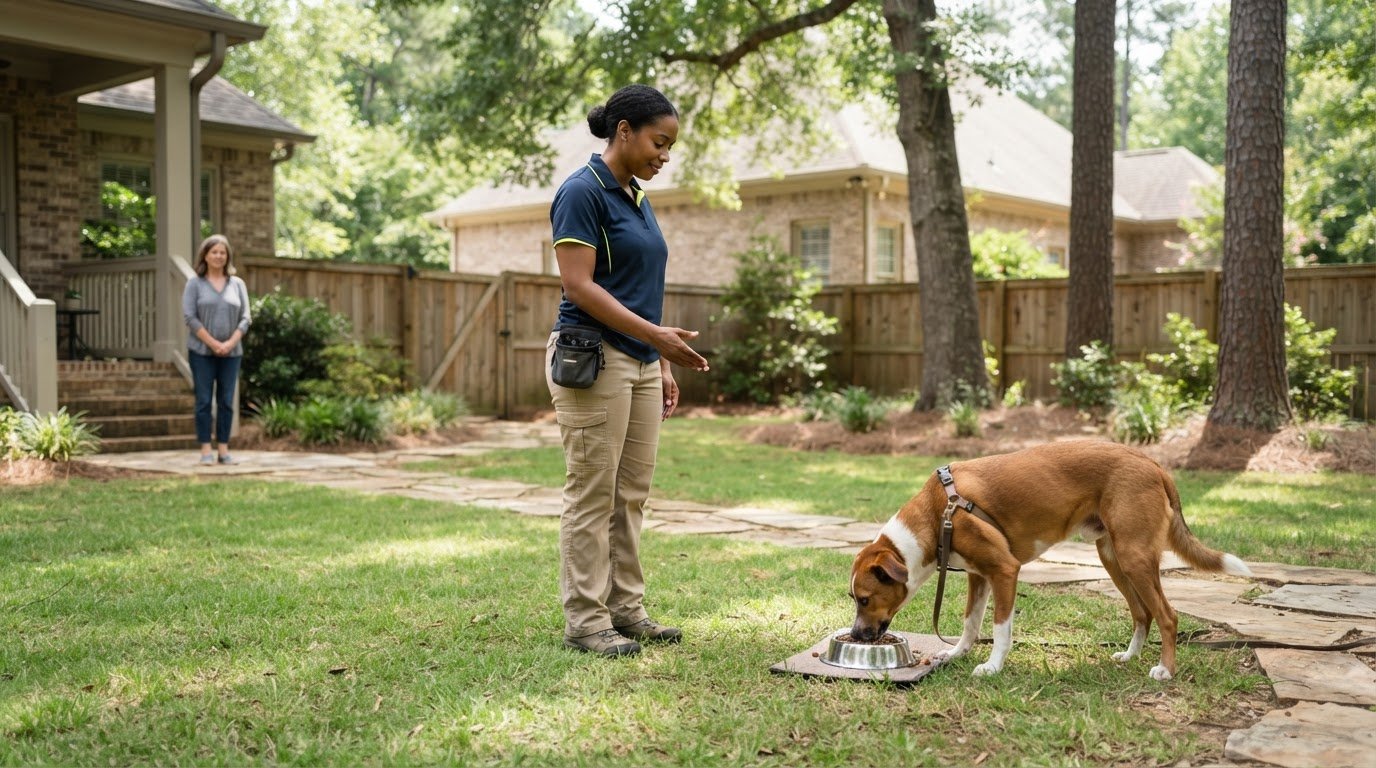
Choose a quiet, consistent spot away from busy walkways, doorways, and household traffic. Set the bowl down before inviting your dog to eat, then give them space. Use a closed door or secure barrier to keep children and other pets out of the area. Don’t reach toward your dog or bowl during the meal.
Set up the space before feeding.
Move the bowl and food away from shared routes where someone might pass unexpectedly. Make sure the separation method keeps children and other animals from entering.
Keep the routine calm and predictable.
Allow your dog to eat undisturbed, and wait until they’ve left the area before picking up the bowl or cleaning up nearby.
Observe only from a safe distance.
Notice whether your dog’s body stays loose and their eating remains relaxed. Don’t move closer to test their response.
Consider training only when safety allows.
If there’s a bite history, escalating behavior, or any doubt about managing the setup, pause and seek individualized guidance rather than attempting exercises alone.
How should gradual behavior work be approached?
Behavior change may involve helping a dog associate a person’s presence at a comfortable distance with something positive. The starting point must be low intensity: far enough away that the dog remains relaxed, with no reaching for the bowl or forced exposure. The aim is to change what that presence predicts, not to make the dog endure discomfort.
Progress depends on the individual dog. A person’s distance, movement, and timing all matter. Only consider a small adjustment when the dog remains loose and settled; if they stop eating, stiffen, stare intensely, growl, snap, or show any escalation, stop the exercise and increase distance if you can do so safely. Don’t push through tension or assume a dog will “get used to it.” A dog behavior modification guide offers broader context, but it can’t replace a plan tailored to a dog’s behavior and household.
Management alone can be the right choice while you assess risk. If you want hands-on help to fix dog food aggression safely, explore personalized behavior-modification support from Alan's K9 Academy. Individualized guidance can help you build clearer communication and choose realistic next steps, without treating progress as a quick fix.
When Professional Help Can Make Food Guarding Safer to Address
General safety steps can reduce opportunities for conflict, but they can’t account for every dog, trigger, or household. Consider individualized behavior-modification support if your dog has bitten or snapped at someone, children live in the home, guarding extends to toys or other resources, or the behavior is becoming more frequent or intense. These are reasons to get guidance, not reasons to feel ashamed or to label your dog as hopeless.
Support is especially valuable when it’s difficult to predict what will trigger a response or to keep everyone safely separated. A plan should consider the dog’s behavior, the people and pets in the household, the situations that bring on guarding, and the management steps that fit daily life. Until you have a safe plan, don’t try to test your dog’s tolerance or practice exercises that require approaching the food.
What can owners expect from personalized behavior modification?
Personalized support starts with understanding what happens in your home, not applying the same exercise to every dog. Hands-on guidance can help you describe meal routines, identify patterns and triggers, and consider practical ways to manage the environment. The work also involves you: consistent observation and clear communication help make a behavior plan relevant to everyday routines.
Alan's K9 Academy provides in-home dog training and behavior modification led by Master K9 Trainer Alan Carr, who brings more than 35 years of professional dog instruction experience. The focus is individualized support and helping owners build communication with their dogs. Progress depends on the dog and household, so a plan should be realistic rather than framed as a guaranteed quick fix.
Working in the home can make it easier to consider where meals happen, how household members move through the space, and what safety arrangements are practical. If you’re learning how in-home instruction can fit into your routine, the in-home dog training guide provides broader context.
How can local families take the next step?
Families in Cartersville, Bartow County, and the North Atlanta Metro area can seek personalized support for food guarding through Alan's K9 Academy. Bring a clear account of what you’ve observed, including the situations that concern you and the safety steps already in place. Don’t recreate a risky incident to demonstrate it. That information can help guide a thoughtful discussion about next steps.
If you’re ready to get individualized help to fix dog food aggression, explore personalized dog training. A tailored approach can help you work toward safer routines and clearer communication without promising a particular outcome or timeline.
Build a Safer Path Forward
Progress doesn’t have to begin with a dramatic training exercise. A useful next step is to decide what a calmer, safer mealtime would look like for your household, then choose support that helps you move toward it without pressure or guesswork. The aim isn’t to force your dog to tolerate every situation. It’s to build practical communication and a plan that respects your dog’s needs while protecting the people around them.
If you’re ready for guidance tailored to your dog and home, take the next step to explore personalized dog training with Alan’s K9 Academy. With thoughtful support, you can work to fix dog food aggression in a way that prioritizes safety and meaningful progress. Small, steady steps can help make a more confident future possible for you and your dog.
Frequently Asked Questions
Can food aggression start suddenly in a dog that has eaten calmly before?
Yes, food guarding can appear after a period of calm eating, and a sudden change deserves attention. Note when it began, whether it occurs around a particular person or meal, and whether anything else in the dog’s comfort or routine has changed. A veterinary check can help rule out pain or illness. Until you understand the change, don’t test the dog by approaching the bowl.
Is food guarding always caused by hunger or a lack of food?
No. Guarding alone doesn’t establish that a dog is hungry or has experienced deprivation. A dog may react to a particular food, feeding spot, or approaching animal, while remaining relaxed in other situations. Keep meals consistent rather than withholding food as a test. You can note whether ordinary changes, such as a quieter room, seem associated with a different response without deliberately provoking the dog.
Can a dog outgrow food aggression without training?
Some dogs may show less guarding when mealtimes are predictable and interruptions decrease, but that doesn’t mean the behavior has disappeared in every situation. Don’t assume a calm meal means it’s safe to approach the bowl later. If you’re trying to fix dog food aggression, keep a record of naturally occurring changes and seek individualized guidance if warnings intensify, a bite occurs, or safe separation is difficult.
Should I hand-feed a dog that guards its food bowl?
Hand-feeding isn’t a universal solution, and it may bring your fingers closer to food the dog is already protecting. Don’t use it to test whether the dog will tolerate contact or to force a closer relationship with the bowl. Maintain a feeding arrangement that allows the dog to eat undisturbed. Before trying hand-feeding as a behavior exercise, get guidance tailored to your dog’s responses and household.
Can two dogs eat in the same room if one guards food?
If either dog becomes tense, rushes toward the other, or guards food, feed them separately. A closed door or secure barrier is safer than relying on supervision while both dogs have access to bowls. Keep them apart until both meals are finished and food has been cleared without putting anyone at risk. Even dogs who usually coexist peacefully may respond differently around food, so don’t use a shared meal to test them.
Is it safe for children to feed a dog that guards food?
No. Children shouldn’t feed, approach, or supervise a dog showing food-guarding behavior. An adult can arrange meals in a protected area children can’t enter and explain a simple rule, such as “leave the dog alone while it eats.” If a child might open the feeding-area door or cross a barrier, the setup needs stronger separation. Seek individualized guidance if you can’t maintain that boundary consistently.
Does a dog growling over food mean it will definitely bite?
No, a growl doesn’t mean a bite is certain, but it does signal discomfort and should be taken seriously. Don’t punish the growl or move closer to find out what happens. Increase distance, keep others away, and note what was happening before the warning. For families in Cartersville, Canton, Woodstock, Marietta, Rome, Acworth, Kennesaw, Sandy Springs, Roswell, Alpharetta, Powder Springs, Dallas, Hiram, Jasper, Cumming, Holly Springs, Ball Ground, and Milton, Alan’s K9 Academy offers personalized dog training and behavior modification.