



How to Build a Strong Bond With Your Dog Through Trust
To build a strong bond with your dog, focus on trust rather than forced affection. Reward the behavior you want, make time together enjoyable, and let your dog explore at a comfortable pace. Patient, consistent interactions help your dog understand what to expect from you.That connection matters: it...

To build a strong bond with your dog, focus on trust rather than forced affection. Reward the behavior you want, make time together enjoyable, and let your dog explore at a comfortable pace. Patient, consistent interactions help your dog understand what to expect from you.
That connection matters: it can make everyday communication and training feel more rewarding for both of you. If bonding feels slow, give your dog room to approach, notice which kinds of interaction they enjoy, and let small moments of trust add up. This guide explores how positive reinforcement, engaging walks, and respect for your dog’s boundaries can strengthen your relationship. You’ll find practical ways to create positive shared experiences while allowing your dog to build confidence at their own pace.
Key Takeaways
• Make training a positive, clear exchange by recognizing the choices you want to see and responding consistently.
• Set aside attentive time for shared activities that support communication, confidence, and everyday cooperation.
• Let walks include opportunities to sniff and explore, so they offer mental engagement as well as movement.
• Notice your dog’s body language and give them room to choose interaction; respecting their pace helps trust grow.
1. Positive reinforcement training
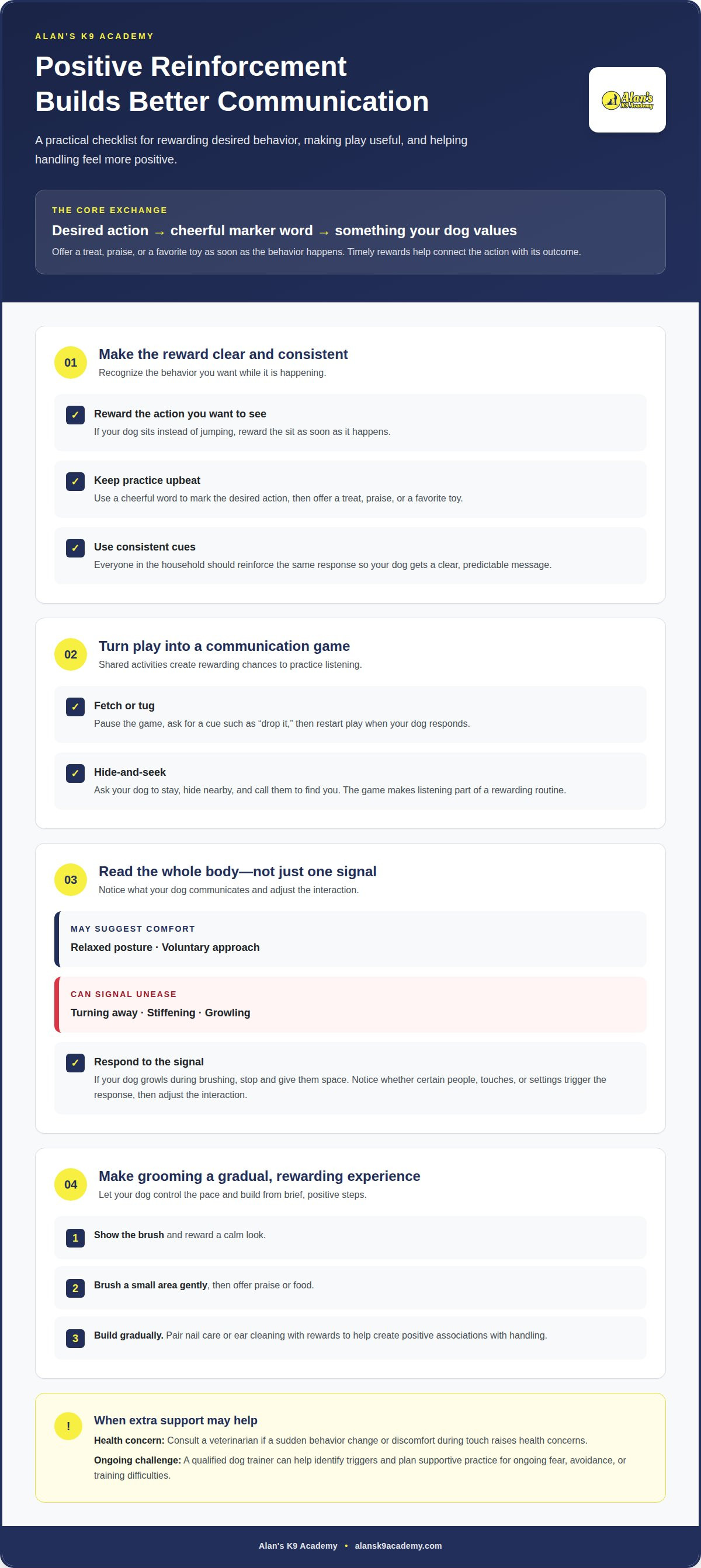
Positive reinforcement teaches your dog which behaviors earn something they value. Mark a desired action with a cheerful word, then offer a treat, praise, or a favorite toy. For example, when your dog sits instead of jumping, reward the sit as soon as it happens. Timely rewards help connect the behavior with its outcome. Keep practice upbeat and use consistent cues so everyone in the household reinforces the same response. If you’re learning how to build a strong bond with your dog, make rewards clear and predictable.
What training games and activities improve communication between dogs and owners? Fetch and tug create shared play and give you chances to practice cues such as “drop it.” Pause the game, ask for the cue, then restart play when your dog responds. Hide-and-seek can also build communication: ask your dog to stay, hide nearby, and call them to find you. These games make listening part of a rewarding routine.
How can you read dog body language and recognize comfort or stress? Look at your dog’s whole body: a relaxed posture and voluntary approach can suggest comfort, while turning away, stiffening, or growling can signal unease. If your dog growls during brushing, stop and give them space. Notice whether particular people, touches, or settings trigger these signals, then adjust the interaction.
Grooming can become a more positive experience when your dog controls the pace. Show the brush, reward a calm look, then gently brush a small area and offer praise or food. Gradually build from that brief step. Pair nail care or ear cleaning with rewards to help create positive associations with handling.
Consult a veterinarian if a sudden behavior change or discomfort during touch raises health concerns. For ongoing fear, avoidance, or training difficulties, a qualified dog trainer can help identify triggers and plan supportive practice. Learning how to build a strong bond with your dog can also involve professional guidance when everyday interactions remain challenging.
2. Why Is Bonding With Your Dog Important?
Everyday connection helps your dog understand what to expect from you. A predictable routine, such as a calm greeting after work, can make household life easier to navigate. Shared attention also supports learning: your dog can practice checking in and cooperating during ordinary moments. Sitting beside you while you read, for example, offers reassurance without demanding constant attention.
What daily activities help build trust and a strong bond with a dog? Set aside time for a walk, interactive play, or quiet companionship, and include petting or massage if your dog welcomes it. A focused morning interaction can bring connection into the day through gentle attention, a short training session, or a simple game.
How much quality time and exercise does a dog need each day? A dog’s needs depend on age, health, energy, and temperament, so balance movement with attentive time together. A walk can provide exercise, while a game or relaxed time nearby adds social connection. Adjust the routine based on whether your dog seems eager, tired, or reluctant to continue. To build a strong bond with your dog, notice which shared activities they choose to return to.
Age, breed, and temperament shape how a dog prefers to connect. A young, energetic dog may enjoy active play, while an older dog may prefer a slower outing and calm company. Breed tendencies can inform activity choices, but your dog’s individual interests matter most. Try different activities and notice whether your dog seeks more engagement or a quiet break. Paying attention to their preferences is a practical part of how to build a strong bond with your dog.
For support creating shared routines at home, explore personalized guidance for everyday dog training.
Making time each day to be present with your dog supports connection. Petting them or sitting quietly together can encourage relaxation and a sense of security.
3. Taking exploratory walks together
Make a daily walk an opportunity to explore, not only a way to cover distance. Let your dog pause to sniff a tree, inspect a patch of grass, or watch passing activity from a comfortable spot. These sensory experiences engage sight, sound, touch, and smell. A walk can include 30 minutes of physical exercise, while still leaving time for your dog to investigate at their own pace.
Sniffing is a practical starting point for shared exploration. Choose a quiet stretch, pause when your dog shows interest, and let them follow a scent instead of pulling onward. You can also try simple scent work at home: let your dog watch as you hide a treat nearby, then use a cue such as “find it.” Gradually make the hiding place less obvious as your dog learns the game.
How does routine and consistency help dogs feel secure? A predictable routine gives your dog familiar cues about what happens next, which can support stability and reduce anxiety. Keep a consistent walking sequence, such as clipping on the leash, stepping outside, and beginning at a familiar corner, while varying the route when your dog seems comfortable.
Pay attention to your dog’s body language on each walk. A dog who stops to sniff or looks around may need time to process the surroundings; allow that pause when it’s safe. If your dog turns away, stiffens, or tries to increase distance from a sound or person, give them room and choose a calmer path. This helps your dog feel heard and makes the walk cooperative rather than a forced march.
Let your dog’s interests shape future outings. If they repeatedly investigate leaf piles, offer another safe chance to sniff; if traffic sounds prompt avoidance, create more distance. Small, thoughtful adjustments can build trust while keeping exploration enjoyable for both of you.
4. Building trust by letting a dog approach at their own pace
Trust grows when your dog can choose whether to engage. Turn slightly sideways, keep your hands relaxed, and let your dog decide whether to approach. If they move closer, offer a calm greeting without reaching over their head. If they walk away, let them go. These small interactions give your dog control and make bonding feel safer than forced contact.
Read your dog’s body language before continuing. A loose posture and voluntary approach can show comfort, while turning away or stiffening suggests you should pause. A growl can signal discomfort, so stop and give your dog more space. This respects their signals and helps you notice which situations may be causing unease.
What common owner behaviors can damage trust with a dog? Forcing interaction when a dog is unreceptive can strain your bond, as can ignoring signs of discomfort. Punishing a growl or using harsh corrections may increase fear instead of helping your dog feel secure.
Try a simple consent-based interaction at home. Sit quietly nearby, place a treat on the floor, then wait without coaxing or leaning in. If your dog takes the treat and stays close, remain calm; if they retreat, don’t follow. Repeat this routine in a quiet space, keeping each interaction brief and predictable. The goal isn’t immediate affection. It’s helping your dog feel comfortable enough to choose contact.
For a dog who repeatedly avoids handling, growls during family interactions, or struggles to settle, behavior modification can help address the underlying challenge. A structured plan can identify triggers and guide safer, more thoughtful responses. Get support for challenging behavior and build a clearer path toward trust.
Respecting your dog’s need for space means accepting their choice not to engage, even when you hoped to share a quiet moment. If they seem unreceptive, don’t try to win them over by moving closer or insisting on contact. Forcing interaction can damage trust; leaving room for your dog to choose keeps the decision theirs.
A growl is a cue to stop the interaction and give your dog more space. Rather than pressing on or correcting the warning, pause and allow distance. This respects your dog’s discomfort and avoids adding pressure when they are already signaling that they need room.
Alan's K9 Academy: In-Home Dog Training
Alan's K9 Academy offers personalized In-Home Dog Training for families who want practical support with trust, communication, and everyday behavior. Working in your home allows training to focus on the routines and interactions your dog encounters with you.
If fear, reactivity, or other challenging behavior is affecting your relationship, Behavior Modification can help address the behaviors getting in the way of comfortable interactions. The academy also offers Therapy & Service Dog Training and Group Classes for other training goals. Its balanced, humane methods keep the focus on helping dogs and their people work together.
Reach out to Alan's K9 Academy to discuss training that fits your goals with your dog.
Let Trust Shape What Comes Next
Think of progress as a growing partnership, not a finish line. Choose one everyday moment you’d like to make easier, such as settling while the family eats or calmly preparing to leave home. Notice what helps your dog manage that moment, then build on it with steady, realistic practice.
Learning how to build a strong bond with your dog also means staying curious as your relationship changes. Your dog’s needs and confidence can shift with new routines, surroundings, or life stages. Keep adapting your expectations, and let trust guide the next goal rather than rushing toward a perfect result.
If you’d like hands-on guidance that fits your dog and household, contact Alan's K9 Academy to talk about a helpful next step. Keep showing up for the small moments. They can make room for a more confident, connected life together.
Frequently Asked Questions
Why Is Bonding With Your Dog Important?
A strong bond helps you and your dog work as a team in everyday situations. A dog who trusts your guidance, for example, may find it easier to follow your lead when guests arrive or plans change. Connection also helps you notice your dog’s preferences, so you can shape shared activities around what feels manageable and enjoyable for both of you.
How to use positive reinforcement to strengthen your bond with your dog?
Choose one useful behavior, such as waiting calmly while you open the front door, and reward it right away with praise, a treat, or permission to move forward. Keep the cue and reward consistent, then practice in different everyday settings once your dog understands. Your dog learns that paying attention to you brings clear, positive outcomes.
How to build a bond with a newly adopted or fearful dog?
Start by making the home predictable and giving your dog a quiet place to rest without interruption. Let them investigate rooms and household sounds without following or crowding them. Offer food nearby, then gradually give treats from your hand if they choose to come closer. If fear persists or interferes with daily life, Behavior Modification can provide structured support for your dog and family.