



How Long Does It Take to Train a Dog? What Affects Progress
Training progress is built in the practice between lessons, not just during them. If you’re asking, “How long does it take to train a dog?” many dogs can learn basic obedience cues within 4 to 6 weeks of consistent practice, while reliable responses in everyday situations take continued repetition.I...

Training progress is built in the practice between lessons, not just during them. If you’re asking, “How long does it take to train a dog?” many dogs can learn basic obedience cues within 4 to 6 weeks of consistent practice, while reliable responses in everyday situations take continued repetition.
It’s understandable to want a clear finish line, especially when working through puppy habits or challenging behavior. But each dog’s pace depends on factors such as age, breed, previous training, temperament, and how consistently skills are reinforced at home. This article explains how those factors shape progress, why a puppy’s timeline may differ from an adult dog’s, and how steady practice helps training carry over into daily life. Rather than a one-size-fits-all deadline, you’ll get a clearer picture of what supports meaningful, lasting learning.
Key Takeaways
• Lessons can introduce skills and build a foundation, but reliable behavior takes ongoing practice.
• Basic, intermediate, and advanced skills have different timelines, so match expectations to the training goal.
• Age, breed, temperament, and previous habits can all shape how quickly a dog learns.
• Consistent practice at home helps training carry into everyday life, while professional guidance can help owners follow through.
Is two weeks enough to train a dog?
Two weeks can introduce training skills and build a foundation, but it rarely creates reliable habits in every setting. A dog may learn basic obedience cues within a few sessions, while responding consistently around distractions takes ongoing practice.
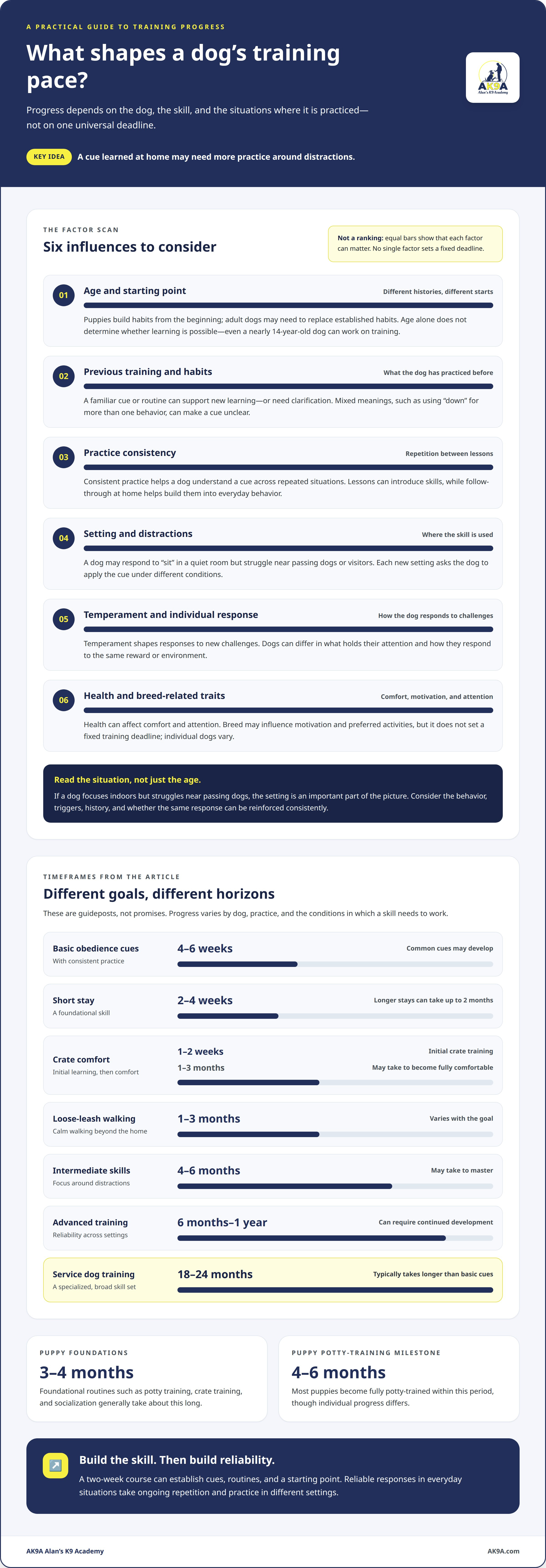
Basic obedience training takes time and consistent practice, and progress varies by dog. Dogs may grasp common commands within 4 to 6 weeks when practice is consistent. Puppy training also includes routines beyond obedience: foundational skills such as potty training, crate training, and socialization generally take about 3 to 4 months.
Basic
Sit, down, and short stays can develop over several weeks. A short stay may take 2-4 weeks, while longer stays can take up to 2 months.
Intermediate
Skills that require focus around distractions may take 4 to 6 months to master.
Advanced
Advanced training can take 6 months to a year, especially when reliability across settings is the goal.
Crate training has stages. Initial crate training can take 1 to 2 weeks, while becoming fully comfortable may take 1 to 3 months. Leash training also varies by goal: loose-leash walking often takes 1-3 months, as the dog learns to walk calmly beyond the home.
A two-week course can establish cues, routines, and a starting point, but it cannot replace follow-through after lessons. A dog may respond to “sit” in a quiet room before doing so near passing dogs or visitors. Each new setting asks the dog to apply the cue under different conditions.
More specialized goals require longer development. Service dog training typically takes 18-24 months, reflecting the breadth of skills involved. Therapy and service dog goals therefore require a different timeline from learning basic household cues.
Age and breed differences in learning
Puppies and adult dogs can both learn new skills, but they may start from different places. Age, previous habits, health, temperament, and breed-related traits all influence the pace.
Adult Dog and Puppy Progress
Adult dogs can learn new behaviors, while puppies are developing skills alongside everyday routines. A puppy may need training to build habits from the beginning; an adult may need to replace established habits first. The timeline depends on the dog’s previous experiences, temperament, health, and consistent practice. Age alone doesn’t determine whether learning is possible: a nearly 14-year-old dog can still work on training.
Age-Based Training Milestones
Age-based milestones are practical markers for matching training goals to a dog’s development. Puppy training typically begins around 8 weeks, and puppies are especially receptive to new experiences during the 8- to 16-week window. Foundational puppy skills, including potty training, generally take about 3 to 4 months. Most puppies become fully potty-trained within 4 to 6 months, though individual progress differs.
Breed can influence a dog’s motivation and the activities that hold its attention, but it does not set a fixed training deadline. Two dogs of the same breed may respond differently to the same reward or setting. One, for example, may focus readily indoors but struggle with distractions outside. A training plan is more effective when it accounts for the individual dog’s response rather than relying on breed stereotypes.
To set realistic milestones, consider both the skill and the setting. A puppy may learn a cue at home before responding around visitors. An adult dog may already know the cue but need practice in a new environment. These are different starting points, even when the goal sounds the same.
A young dog can continue learning beyond puppyhood, including before reaching a year and a half. For puppies and adults alike, steady progress means building skills that suit the dog’s current abilities, then strengthening them as circumstances change.
How age and prior training affect progress
A dog’s learning pace depends on more than age: previous habits, temperament, health, and consistent practice all matter. For instance, a dog that knows “sit” at home may respond differently around visitors.
Age and Learning Progress
Age affects the habits and experiences a dog brings to training, so it helps explain the starting point. A younger dog may still be learning how to respond to unfamiliar people, while an older dog may have practiced the same behavior for years.
A dog showing protective behavior at five or six months old may become overprotective as an adult. That possibility makes early observation useful: note what triggers the behavior and where it occurs. Older dogs can also learn new behaviors; progress depends on their previous habits, temperament, health, and consistency of training.
The Role of Prior Training
Previous training includes a dog’s history with cues, routines, and consequences. That history can support new learning or make it more complicated. A dog that reliably comes when called in the yard may need practice applying the same cue in a different setting.
Mixed signals can also slow progress. For example, if “down” means lie down in one context and get off the furniture in another, the cue may be unclear. A professional assessment can identify which responses are established, which need clarification, and whether a familiar cue needs to be rebuilt.
Factors Shaping Learning Speed
Learning speed reflects how well a training plan fits the dog’s needs and daily environment. Temperament shapes responses to new challenges, while health can affect comfort and attention. Consistent practice helps a dog understand a cue across repeated situations.
Consider a dog that focuses indoors but struggles near passing dogs. The difference points to the setting as a factor, not simply the dog’s age. A useful assessment considers the behavior, its triggers, the dog’s history, and the owner’s ability to reinforce the same response consistently. This creates a practical starting point for training.
Owner consistency and at-home practice
Professional guidance gives owners a clear practice plan between lessons. Short, focused repetitions help a cue become useful beyond the training session.
Recommended Daily Training Time
Daily training time is the amount of focused practice suited to the skill and dog. For basic training, a useful guideline is 10-15 minutes, 2-3 times per day. Intermediate practice may take 15-20 minutes, 2-3 times per day, while advanced work may call for 20-30 minutes daily.
A professional can tailor practice sessions to the dog’s attention and the owner’s routine. For example, start with brief “stay” practice in a quiet room, then work on the same cue around ordinary household activity. Several manageable sessions make it easier to repeat clear cues without turning practice into one long drill. The goal is focused, repeatable learning, not simply filling a timer.
Professional Training Session Frequency
Session frequency is the rhythm of professional coaching and owner practice, shaped by the dog’s goals and progress. A professional considers the skill being taught, the dog’s response between lessons, and how consistently the household can reinforce it.
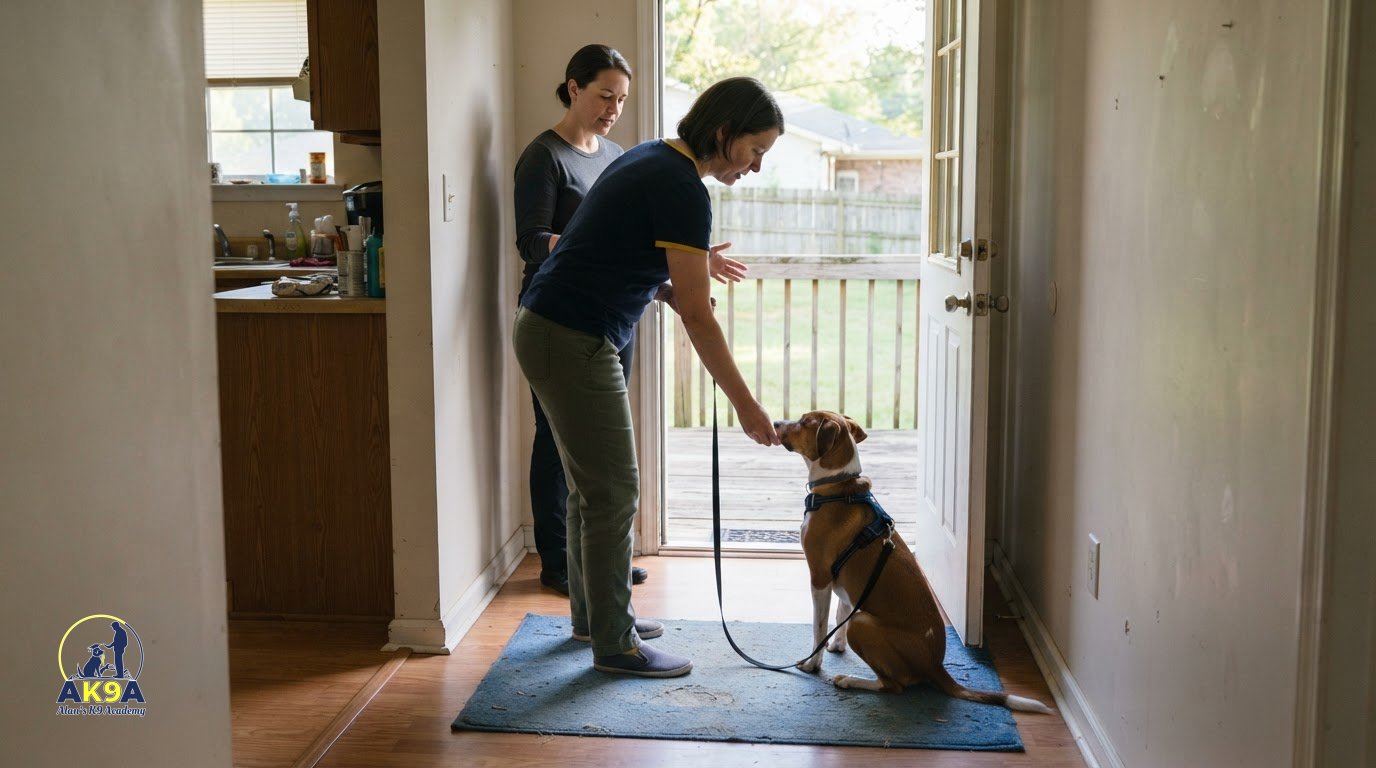
For example, a dog learning loose-leash walking may need coaching at home first, followed by practice in suitable everyday settings. A dog working on a familiar cue may need a different schedule. A professional can review what is working, clarify the owner’s timing, and adjust the next session’s focus. This lets each lesson build on observed progress instead of following a one-size-fits-all calendar.
Between sessions, consistency means using the same cue and expectation. If one person says “down” to mean lie down and another uses it to mean get off the furniture, the dog receives mixed information. A professional can help household members agree on clear cues and identify practical moments to reinforce them, such as asking for a sit before opening a door.
Track examples, not just practice minutes: note whether “come” works in the yard, near visitors, or only indoors. Those details help a trainer distinguish a learned cue from one that needs more practice in a new setting. For guidance applying those observations to your dog’s training, Get Help With Your Dog’s Training.
AK9A Alan’s K9 Academy
AK9A Alan’s K9 Academy helps owners turn training goals into a practical plan for their dog. Its approach is balanced, humane, and tailored to each dog and owner, with guidance shaped around the dog’s habits, behavior, and everyday needs.
Training develops practical skills and teaches owners how to apply them, so the plan connects to everyday life with your dog. The right pace depends on the dog and the goals. An evaluation can help identify a suitable path and clarify how consistent follow-through supports progress.
Choose a Training Goal You Can See
The useful answer to how long it takes to train a dog is the progress you can observe in the situations that matter to your household. Rather than focusing only on a finish date, identify the behavior you want to improve and where it needs to work. An evaluation can turn that goal into a training plan shaped around your dog’s needs and daily routine.
AK9A Alan’s K9 Academy provides personalized in-home training, behavior modification, and therapy and service dog training. The work emphasizes practical skills, owner education, and follow-through, so the guidance connects to life with your dog. Each dog’s timeline depends on its needs and the training goal, so a professional evaluation can help clarify a suitable path.
With a clear goal and thoughtful support, you can build progress one meaningful skill at a time.
Frequently Asked Questions
How Long Does It Take to Train a Puppy?
Foundational puppy skills often take several months to develop because learning involves daily routines as well as cues. A puppy may understand a cue indoors but need more practice before responding during a busy walk. Potty habits, social experiences, and household expectations also shape progress. For example, a puppy learning household manners may need different support from one adjusting to neighborhood outings.
Breed Influence: Are Some Breeds Easier to Train?
No breed is automatically easy to train, and breed alone cannot predict an individual dog’s pace. A dog’s interests, temperament, past experiences, and response to rewards all matter. One dog may eagerly engage with a toy, while another responds better to food or praise. A plan tailored to the individual is more useful than assuming every dog of one breed learns alike.
Can older dogs learn obedience?
Yes, older dogs can learn obedience and new behaviors. Previous routines may affect where training begins, but age does not erase the ability to learn. For example, a mature dog that pulls toward the door can practice waiting calmly before going outside. A professional can build on familiar skills, clarify confusing cues, and tailor lessons to the dog’s comfort, history, and daily environment.
How quickly can a dog learn basic commands?
A dog may begin learning a basic cue within a few training sessions, but responding reliably takes repetition in different situations. If you’re wondering how long it takes to train a dog to follow basic commands, consider both learning the cue and responding consistently in varied settings. A dog might sit in a quiet kitchen yet hesitate when a visitor arrives. Practice helps connect the same signal with the same response across everyday situations.
Should I train my dog myself or hire a professional?
Owners play an essential role in reinforcing skills, while professional coaching can help clarify cues and adapt training to the dog. AK9A Alan’s K9 Academy offers personalized in-home training in Cartersville, Canton, Woodstock, Marietta, Rome, Acworth, Kennesaw, Sandy Springs, Roswell, Alpharetta, Powder Springs, Dallas, Hiram, Jasper, Cumming, Holly Springs, Ball Ground, Milton, and Adairsville.
What Does Dog Obedience Training Actually Include?
Dog obedience training develops useful communication and behaviors for everyday life. Depending on the dog’s needs, goals may include responding to cues, settling at home, or behaving more reliably during walks. The trainer considers the owner’s priorities and the dog’s current skills when shaping instruction. For guidance tailored to your dog, contact AK9A Alan’s K9 Academy about an evaluation.
Article by
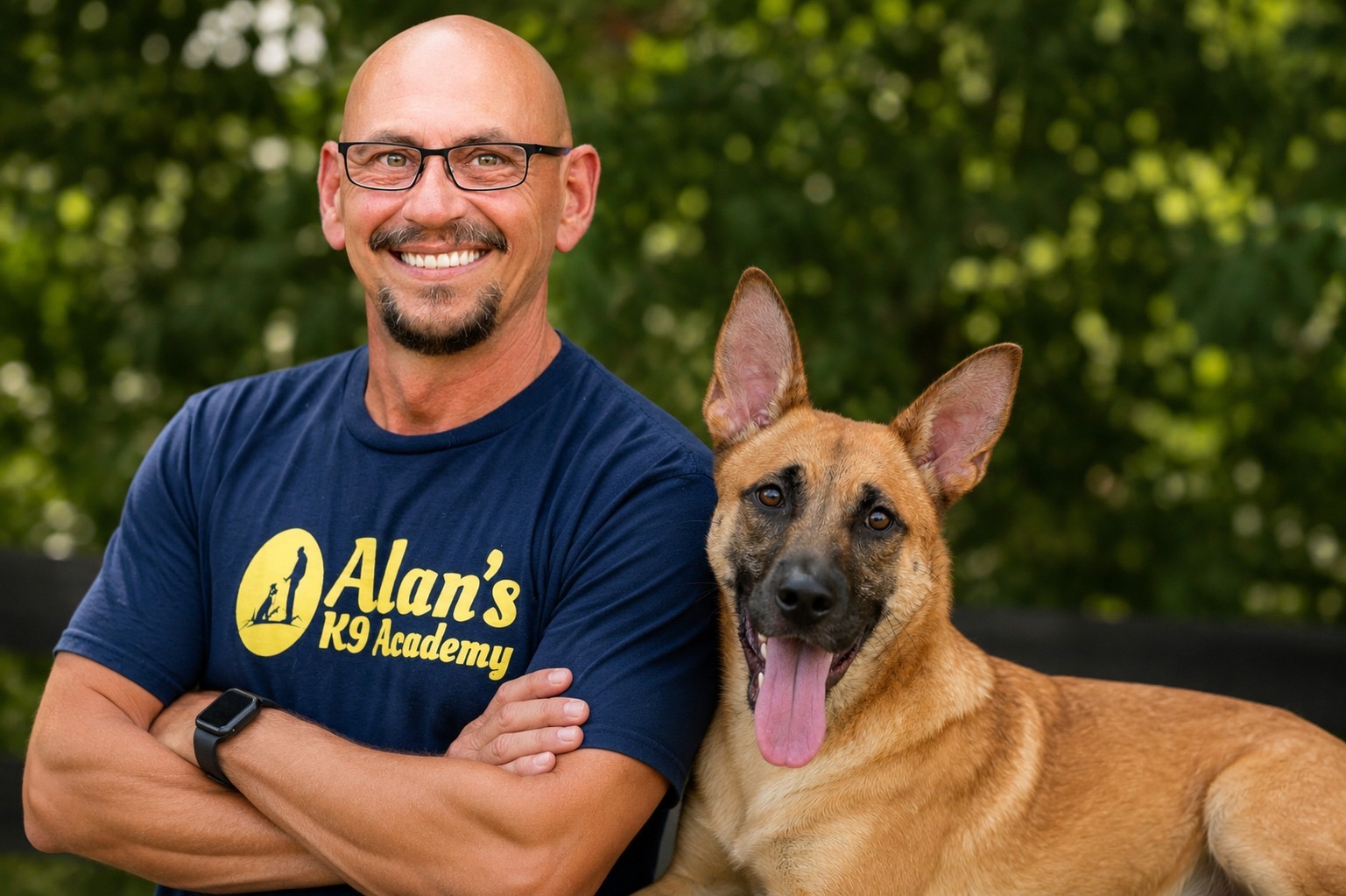
Alan Carr
Alan Carr is the founder of AK9A Alan’s K9 Academy, a military veteran, and a former police K9 handler and trainer with more than 35 years of professional dog-training experience. He specializes in personalized in-home training, puppy development, obedience, off-leash reliability, and behavior modification. His approach emphasizes clear communication, humane balanced training, and helping owners build lasting relationships with their dogs. AK9A serves North Metro Atlanta and Northwest Georgia. Learn more at AK9A.com.
Disclaimer
Every dog and household is different. This article provides general education and does not replace an individualized training assessment. For aggression, bite risks, or serious behavioral concerns, seek professional guidance before attempting training exercises.