



Four ways to feel confident walking a reactive dog safely
Confidence on walks with a reactive dog doesn’t come from forcing closer encounters. Learning how to feel confident walking a reactive dog starts with four practical steps: build positive associations with triggers, create distance before your dog reacts, choose calmer routes, and manage the leash w...

Confidence on walks with a reactive dog doesn’t come from forcing closer encounters. Learning how to feel confident walking a reactive dog starts with four practical steps: build positive associations with triggers, create distance before your dog reacts, choose calmer routes, and manage the leash while keeping your own response steady. These choices make walks more predictable for both of you.
If you feel tense scanning every corner or worry that a passing dog could trigger barking or lunging, that stress is understandable. You don’t have to solve everything in one outing. Small, thoughtful adjustments give you and your dog more room to succeed.
This guide explains how to practise around triggers at a comfortable distance, plan routes with easy exits, and respond calmly when a walk gets difficult. You’ll also learn how leash handling and steady breathing can support safer, more manageable walks.
Key Takeaways
• Pair triggers with positive experiences while your dog is calm, and watch for early signs of rising stress.
• Create space before your dog reacts by turning around, crossing the street, or choosing an easy exit.
• Start in predictable, lower-stress places so you can practice walking skills before trying busier environments.
• Use a calm voice, a familiar cue, and steady leash handling to help you both respond more thoughtfully.
• A sturdy, non-retractable leash and a well-chosen harness or head collar can make walks easier to guide and manage.
1. Building positive associations with triggers
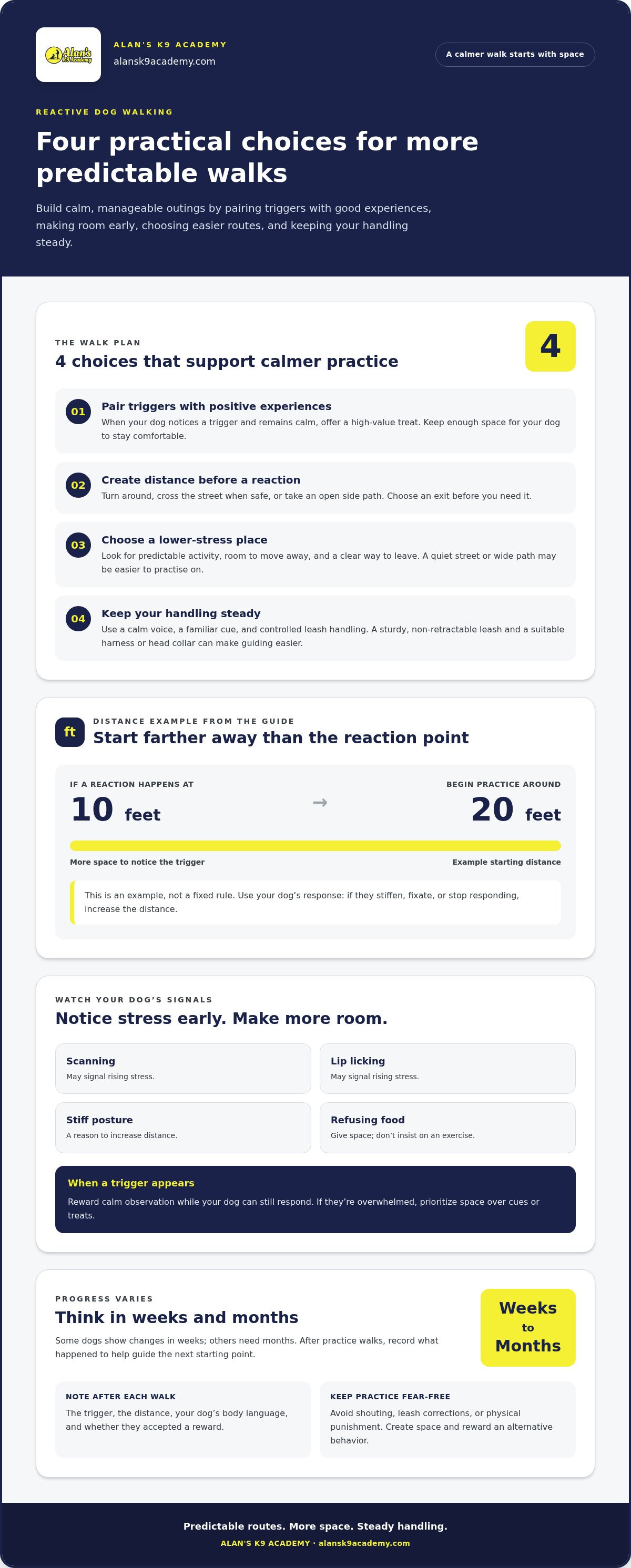
Use gradual exposure and reward-based counterconditioning to help your dog associate a trigger with something positive. Begin far enough away that your dog can notice the trigger and remain calm, then offer a high-value treat. Reduce the distance only while your dog stays comfortable.
Start by practising a familiar cue, such as “Watch,” in a quiet place at home. Reward your dog for looking toward you, then practise outside when another dog is far away. Your dog should be able to see the trigger without being overwhelmed. If your dog can take a treat and respond to the cue, mark that calm moment and reward it.
Choose treats your dog finds especially appealing. Small pieces of boneless, skinless chicken or pasta can work as high-value options during training. When your dog notices another dog calmly, offer a piece. Keep rewarding while the trigger passes, then stop when it’s out of sight. This creates a predictable pattern: the trigger appears, good things happen, and the trigger leaves.
Let your dog’s body language set the pace. Scanning, lip licking, stiff posture, or refusing food can signal rising stress. Increase the distance or end the practice before barking or lunging begins. If your dog is already over threshold, food and familiar cues may not work well. Give your dog space instead of insisting on an exercise.
What training techniques help reactive dogs feel calmer on walks? Practise a focus cue like “Watch” at home, then pair calm sightings of triggers with treats at a comfortable distance. Gradual exposure, careful observation, and rewarding relaxed behavior can build positive associations without forcing close contact.
Keep training fear-free. Avoid shouting, leash corrections, or physical punishment, which can add fear to an already stressful encounter. A reactive dog may learn that barking makes a trigger go away if the trigger leaves during an outburst. Instead, create space while your dog is still calm, reward an alternative behavior, and repeat manageable practice sessions.
When should I hire a certified dog trainer or veterinary behaviorist for reactivity? Seek help from a qualified trainer when reactions are hard to redirect, are worsening, or make everyday walks difficult to manage safely. Your family veterinarian may refer your dog to a veterinary behaviorist for specialized care, particularly when a behavior-modification plan needs veterinary input.
Progress varies: some dogs show changes in weeks, while others need months. After each practice walk, note the trigger, distance, body language, and whether your dog accepted a reward. These details help you spot patterns and choose a starting distance that supports calm learning.
2. Creating distance with U-turns or street crossings
Distance gives your dog room to notice a trigger without being forced into a close encounter. It also gives you time to choose a safe direction before barking, lunging, or leash pulling begins. Watch the path ahead, identify open sidewalks and crossings, and decide where you can turn before another dog comes near.
Use your dog’s response to find a workable starting distance. For example, if your dog reacts to another dog at 10 feet, begin practice at 20 feet, where your dog may be able to remain calm. At that distance, reward calm observation or a turn toward you. If your dog stiffens, fixates, or stops responding, increase space instead of moving closer.
Practise a U-turn cue when no trigger is nearby. Say a consistent phrase such as “This way,” turn smoothly, and encourage your dog to follow. Reward the turn once you’ve moved away. Rehearsing this sequence on a quiet stretch means you won’t need to teach it during a stressful approach.
When a dog appears ahead, cross the street if it’s safe, or take a side path to create more distance. Don’t step into traffic or pull your dog toward a narrow gap. A parked car, hedge, or building can block your dog’s view as you move away. Keep the leash controlled, then continue only when your dog can focus again.
What should I do if an off-leash dog approaches my reactive dog? Turn away early, create as much safe distance as possible, and put a barrier between the dogs if one is nearby. Use a clear voice to ask the other handler to call their dog while you move toward an exit.
Plan an exit before each walk. Choose a turnaround point on a narrow sidewalk, note an open driveway or side street, and avoid routes with no room to retreat. If another dog blocks your planned path, calmly reverse direction instead of waiting for the dogs to meet. A short detour is safer than a forced greeting.
After an encounter, note the trigger, your dog’s response, and the distance that helped them settle. Those observations can guide your next route and practice starting point. If you’re unsure how to adapt your plan, individualized behavior guidance can help you work through real-world walking challenges.
3. Choosing lower-stress walking environments
A familiar route can still be difficult if it takes your dog past busy sidewalks, narrow paths, or crowded entrances. Choose a place where you can see approaching activity and move away without squeezing past people or dogs. A quiet residential street, wide path, or less-used park edge may offer more room to practise calmly.
Before unloading your dog, assess the area from your car. Look for dogs, foot traffic, narrow sections, and clear ways to leave. If a park entrance is busy or dogs are gathering near the path, choose another location. This quick preview helps you find an environment suited to your dog’s current comfort level.
Start where distractions are predictable. A quiet stretch of sidewalk can help you practise walking cues before moving to a park with passing dogs. Focus the first outing on relaxed movement and noticing the surroundings, rather than covering a particular distance. If your dog scans constantly or can’t settle, the location may be too demanding for practice.
Dog parks can offer a view of other dogs without requiring your dog to enter the group. Walking around the outside perimeter lets your dog observe from beyond the fence. Choose a section with room to move farther away, and leave if barking or close approaches make your dog tense. The goal is calm exposure, not lingering beside every dog.
Build difficulty gradually by changing one environmental feature at a time. After your dog can stay relaxed on a quiet residential street, try a wider park path with occasional activity. If the new setting brings more staring, pulling, or difficulty responding to familiar cues, return to an easier route. This keeps practice within your dog’s comfort level.
After each walk, make a simple note of the location, visible triggers, your dog’s body language, and where they seemed most settled. You might notice your dog relaxes on an open path but becomes alert near a trail entrance. Use these observations to choose quieter approaches and avoid repeatedly starting beside predictable pressure points.
Training works best when your dog stays under threshold as much as possible. Choose an environment where your dog can notice activity without becoming overwhelmed. A calm setting gives you room to practise focus, observe your dog’s responses, and end the walk before stress builds. More challenging locations can come later, once easier routes feel manageable.
4. Managing leash tension and handler anxiety
A sudden bark or lunge can make your hands tighten before you notice. That tension can make it harder to guide your dog smoothly, so practise your response before a trigger appears. Hold the leash securely, keep your shoulders loose, and take a slow breath. Aim for steady control, not a tug-of-war.
Choose a verbal cue your dog already knows, such as “This way” or “Let’s go.” Practise it at home and on quiet walks, then use the same words when you need your dog’s attention. A familiar cue is easier to follow than a string of urgent commands. Say it once in a calm voice, then guide your dog toward open space.
If your dog starts reacting, focus on three actions: stay calm, create distance, and redirect attention. Move away from the trigger instead of standing still and tightening the leash. Offer a treat or use the familiar verbal cue if your dog can respond. If your dog can’t take food or focus, prioritize getting farther away.
Avoid shouting, scolding, or yanking the leash during an outburst. These reactions can add pressure to an already difficult moment without showing your dog what to do instead. Keep your voice even, turn smoothly, and reward your dog when they reconnect with you. Each calm response gives you a repeatable plan for the next encounter.
Your own anxiety deserves a practical plan, too. Before leaving home, decide what you’ll do if a dog appears: turn around, cross at a safe place, or step behind a visual barrier. Knowing your next move can reduce the urge to react suddenly. During the walk, breathe slowly and scan ahead for space instead of focusing only on the leash.
After a difficult encounter, pause somewhere quiet and away from the trigger. Let your dog sniff or settle if the location is calm, then decide whether to continue or head home. Don’t treat one reaction as proof that the whole walk failed. Note what happened, which cue you used, and whether distance helped. These details can make your next outing more predictable.
Confidence grows with repetition. Practise leash handling and verbal cues in familiar, low-pressure places before relying on them near a trigger. If you feel yourself bracing, loosen your grip without letting go, breathe out slowly, and return to the plan you chose before the walk.
5. What leash and harness are safest for a reactive dog?
No single setup suits every reactive dog, but predictable equipment can make walks easier to manage. A sturdy, non-retractable leash gives you consistent control without a line extending unexpectedly. Pair it with equipment your dog tolerates and you can handle comfortably. The right choice should support calm guidance, not replace training or distance.
A flat collar may be familiar, but a harness or head collar may provide more control and security for a leash-reactive dog. A front-clip harness can help redirect your dog away from a trigger. A head collar can also help guide attention, but your dog needs time to accept wearing it. Introduce either option gradually at home, then practise simple movements before using it around distractions.
Check the fit before each walk. The harness should sit securely without rubbing, twisting, or slipping as your dog moves. Watch your dog walk, turn, and sniff, and adjust the straps if the equipment shifts or restricts movement. For a head collar, build comfort with brief, reward-based practice rather than putting it on right before a challenging outing.
Inspect the leash, clasp, and attachment points regularly. Look for fraying, a loose connection, or damage that could affect your grip. Hold the leash securely with a manageable amount of slack, so your dog can move naturally without gaining enough distance to rush toward a trigger. Avoid relying on a retractable leash, which can make distance and leash tension less predictable.
Your dog’s response matters as much as the equipment. If a harness makes your dog repeatedly back away or a head collar prompts pawing at the face, pause and reintroduce it more gradually. A comfortable fit supports practice; discomfort can distract your dog when you need their attention. Test new gear in a familiar, low-distraction place before taking it on a busy route.
Equipment works best as part of a clear walking plan. Keep the leash attached to the intended harness or collar point, know how you’ll guide your dog away, and avoid sudden pulls. If your dog has slipped equipment before or you struggle to maintain control, prioritize extra space and seek hands-on guidance with setup and handling.
For example, a dog that pulls toward passing dogs may benefit from a front-clip harness and a sturdy, non-retractable leash. A dog uncomfortable wearing a head collar needs gradual conditioning before walks become more challenging. Choose tools based on your dog’s behavior and comfort, and your ability to guide them steadily.
Alan's K9 Academy: In-Home Dog Training
Alan's K9 Academy offers In-Home Dog Training and Behavior Modification for families who need tailored support with reactivity. If walks regularly involve barking, lunging, or difficulty creating space, hands-on guidance can help you practise safer responses in the places your dog finds challenging. In-home sessions let you work on behavior within familiar surroundings, while a behavior-modification plan can focus on triggers, leash skills, and gradual progress. The right starting point depends on what your dog does, what situations feel hardest, and which skills need practice first. You can build on the walking strategies in this guide with practical coaching suited to your dog and household. Contact Alan's K9 Academy to discuss support for your reactive dog.
Make your next walk a manageable step
Confidence can grow from one thoughtful decision at a time. Before your next outing, choose one intention, such as ending the walk while your dog is still settled or practising a familiar cue in a comfortable place. This gives you a clear focus without making every walk a test of progress.
If you’re still learning how to feel confident walking a reactive dog, personalized support can help turn your observations into a practical plan for everyday situations. Alan’s K9 Academy offers In-Home Dog Training and Behavior Modification to help owners work through behavior challenges with their dogs. Reach out when you want guidance tailored to the situations you and your dog face.
Contact Alan’s K9 Academy for support and take the next step toward calmer, more manageable walks. You and your dog can keep building confidence together, one outing at a time.
Frequently Asked Questions
How can I safely walk my reactive dog?
Make safety decisions before leaving, not during a close encounter. Choose a route with open space, bring your dog’s usual rewards, and use secure equipment you’ve practised with. Keep your dog beside you near driveways or blind corners, where another dog could appear suddenly. If the sidewalk becomes crowded, shorten the outing or move to a quieter area instead of pushing through a stressful stretch.
How can I build confidence walking a reactive dog?
Build confidence by setting one achievable goal for each outing, such as completing a quiet block or calmly turning away from one distraction. To learn how to feel confident walking a reactive dog, notice your own choices as well as your dog’s behavior: did you spot the trigger early, keep your grip steady, or take a useful pause? Progress means responding more deliberately, not expecting every walk to be perfect.
How do I handle a reactive dog barking or lunging on walks?
As soon as barking or lunging begins, stop moving toward the trigger and guide your dog toward more space. Use a short, familiar cue rather than repeating commands, then leave without scolding or jerking the leash. Once your dog can orient toward you again, calmly continue away or end the walk. If the reaction happens repeatedly in the same situation, adjust that part of your route.
What distance should I keep from triggers when walking a reactive dog?
Use the distance at which your dog can notice a trigger and still respond calmly. For example, if your dog reacts at 10 feet, start practice at 20 feet, then watch your dog’s body language. A fixed distance won’t fit every trigger or setting. If your dog fixates, stiffens, or stops responding, add space; reduce it only while your dog remains comfortable and engaged.
How can I stay calm and confident when my dog reacts in public?
Choose a brief plan before the walk, such as saying “This way,” turning toward an open area, and pausing once you’re clear. If a reaction catches you off guard, exhale slowly and focus on the next safe movement rather than the attention of passersby. A prepared phrase can prevent frantic talking. Afterward, pause somewhere quieter before deciding whether to continue.
What are the risks of using punishment or aversive tools with a reactive dog?
Punishment can increase fear in a dog already reacting from distress, and physical corrections may make the trigger feel even more threatening. Aversive methods can also interfere with learning and contribute to lasting stress. For example, shouting when your dog barks at another dog may add pressure without teaching an alternative response. Focus on managing the situation and reinforcing calm behaviors instead.