



Dog Training Reinforcement Schedules: When to Reward
Reward every correct response while your dog is learning a new behavior, then introduce rewards less often and deliberately as the skill becomes reliable. A dog training reinforcement schedule helps you decide when to deliver a reward, but the shift from frequent rewards to variable ones should foll...

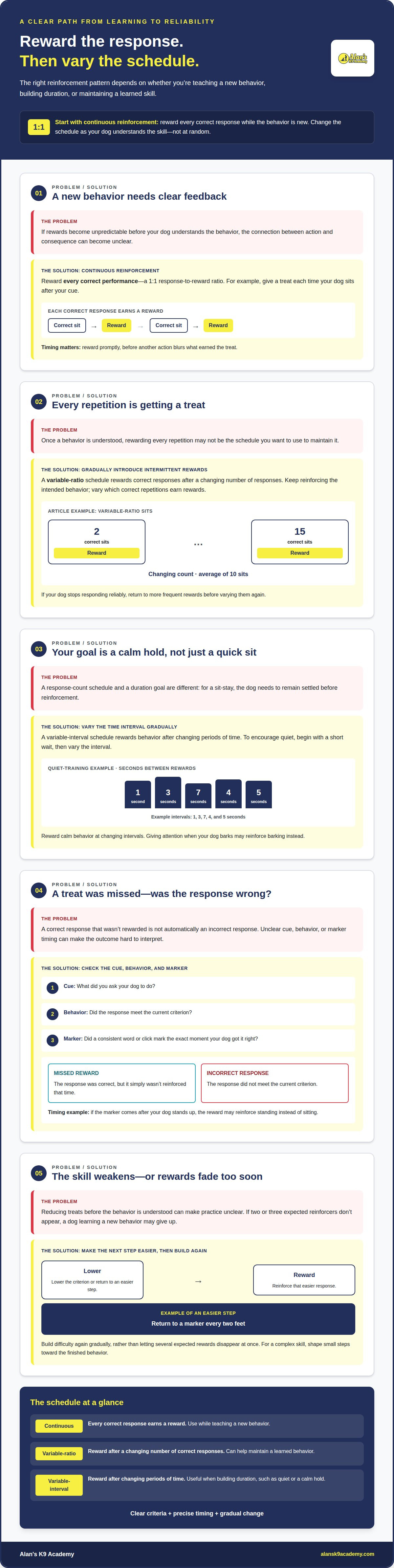
Reward every correct response while your dog is learning a new behavior, then introduce rewards less often and deliberately as the skill becomes reliable. A dog training reinforcement schedule helps you decide when to deliver a reward, but the shift from frequent rewards to variable ones should follow your dog’s understanding, not happen at random.
It’s natural to wonder whether a missed treat means your dog made a mistake or simply wasn’t rewarded that time. The distinction matters: unclear timing or expectations can leave both of you frustrated, while consistent feedback helps your dog understand which response earned reinforcement.
This guide explains continuous and intermittent reinforcement, including how a variable-ratio schedule works and why it can help maintain a learned behavior. You’ll also see how shaping rewards small steps toward a finished skill, and how to distinguish an incorrect response from a correct one that didn’t receive a reward. The goal is a practical, flexible approach that keeps learning clear for your dog.
Key Takeaways
• Reward each correct response while a behavior is new, then adjust the schedule as your dog understands the skill.
• Learn how variable-ratio rewards vary with correct responses and can help maintain a learned behavior.
• Use clear marker timing and reward placement to distinguish a missed reward from an incorrect response.
• Shape complex skills by reinforcing small steps, and introduce intermittent rewards gradually as progress becomes reliable.
Schedules of Reinforcement: When Should You Reward Your Dog?
Reward every correct response while teaching a new behavior, then adjust reinforcement as your dog learns. The right schedule depends on whether you’re building a skill, strengthening duration, or maintaining a response.
Teaching New Behaviors with Continuous Rewards
Continuous reinforcement means rewarding every correct performance, creating a 1:1 response-to-reward ratio. SWGDOG describes this ratio for teaching a new behavior. For example, give a treat each time your dog sits after your cue. This clear pattern helps the dog connect the action with its consequence. Consistent timing matters: reward the correct behavior promptly, before another action blurs what earned the treat.
Maintaining Behaviors Through Variable-Ratio Rewards
A variable-ratio schedule rewards correct responses after a changing number of unrewarded attempts. NIST describes it as reinforcement following a varying number of correct responses. For example, you might reward an average of ten sits, varying how many correct sits come between treats. The pattern isn’t predictable. Introduce intermittent reinforcement gradually, once the behavior is understood, so you can maintain the skill without rewarding every repetition.
Using Variable-Interval Rewards for Duration and Quiet
A variable-interval schedule rewards behavior after changing periods of time, making it useful for building duration. To encourage calm, quiet behavior, you might initially reward one second of quiet, then vary the wait. For example, waits could be one, three, seven, four, and five seconds. Rewarding calm behavior at changing intervals can build patience, while giving attention when your dog barks may reinforce barking instead.
Resilience and Recovery After Extinction
Extinction is a behavior’s reduction when its former consequence no longer occurs. Intermittent reinforcement can make an unwanted behavior harder to stop: if barking sometimes earns attention, your dog may keep trying. Consistently reinforce an alternative behavior instead. If a learned skill weakens, lower the criterion and reward an easier step, such as returning to a marker every two feet. Build difficulty again gradually rather than letting several expected rewards disappear at once.
Variable-ratio reinforcement
Continuous reinforcement rewards every correct response; intermittent reinforcement rewards selected responses after a behavior is learned. In a variable-ratio schedule, the number of correct actions before a reward changes.
Comparing Fixed and Variable Schedules
A fixed-ratio schedule delivers a reward after a set number of responses, while a variable-ratio schedule changes that count. For example, your dog might earn a treat after every three sits on a fixed schedule. On a variable-ratio schedule, rewards might follow two steps sometimes and fifteen steps at other times, averaging ten steps. NIST describes this changing response count as a variable-ratio schedule. The distinction helps you choose between predictable practice and less predictable reinforcement.
Applying Variable Rewards During Sessions
Variable reinforcement means a learned behavior doesn’t earn a treat after every repetition. During a walk, you could reward your dog for checking in, then vary which correct check-ins earn treats. Like a slot machine, the reward is less predictable, but training should remain clear: reinforce the intended behavior, not random actions. If your dog stops responding reliably, return to more frequent rewards before varying them again.
Variable duration changes how long your dog holds a behavior before receiving reinforcement. For a sit-stay, reward a calm hold, then sometimes wait longer before marking and treating. Increase duration gradually; a sudden jump can make the task unclear. This schedule is useful when the goal is for your dog to remain settled, not simply perform a quick sit.
Variable-interval schedules depend on changing periods of time rather than a set count of responses. For example, when teaching quiet, the handler can reward a dog for staying calm after a wait, then vary the next interval. The dog practices maintaining quiet rather than barking to prompt attention. If timing or criteria are difficult to adjust, in-home dog training can help tailor practice to your household.
Distinguishing missed rewards from incorrect responses
A missed reward follows a correct response that simply wasn’t reinforced; an incorrect response doesn’t meet the current criterion. For example, if your dog sits on cue but receives no treat, the sit may still be correct. Look at the cue, the behavior, and the marker before deciding what happened.
Positive reinforcement adds something your dog values after a behavior, making that response more likely in the future. A consistent word or click can mark the exact moment your dog gets it right. If the marker comes after your dog stands up, the reward may reinforce standing instead of sitting. Clear timing gives each reward a purpose.
How should reinforcement schedules differ for puppies and adult dogs? Base the schedule on the skill, not age alone. A puppy learning a new cue and an adult learning a new response both benefit from clear, frequent reinforcement. Gradually vary rewards as each dog learns the behavior reliably.
A common fading mistake is reducing treats before the behavior is understood, then treating an ordinary lapse as defiance. If two or three expected reinforcers don’t appear, a dog learning a new behavior may give up. Return to an easier response and reward it, rather than repeating the cue or raising the difficulty.
Reward frequency should fit your dog’s reinforcement history: the pattern of outcomes that has strengthened or weakened a behavior. One dog may need continuous reinforcement for a new skill, while another has learned the same response well enough for occasional rewards. A dog practiced with a no-reward marker hundreds of times may understand that it means to try again; without that history, silence can be confusing.
Reward placement matters, too. Deliver a treat beside you after a close heel, rather than tossing it ahead and inviting your dog to move away. During a sit-stay, place the reward where your dog can remain settled. These small choices clarify which response earned reinforcement and help prevent frustration as treats become less frequent.
Shaping schedules and intermittent reinforcement
Shaping teaches a behavior by rewarding small steps toward the finished skill. Instead of waiting for a perfect result, reinforce an achievable approximation, then adjust the criterion as your dog succeeds. For loose-leash walking, you might first reward your dog for staying near you, then gradually expect that position across more steps. The key is to make each new step clear, not random.
Consider a floor-marker exercise with about ten markers arranged in a line, spaced about four feet apart. You can mark your dog’s position near you by the fifth marker, then reinforce progress along the line. In a demonstration with three friendly, largely untrained dogs, all looked polished by the fifth pass. The example shows how clear markers and manageable criteria can make practice purposeful.
Intermittent reinforcement can maintain a learned behavior, but it shouldn’t mean withholding treats unpredictably while the dog is still trying to understand. When refining a skill, reward no more than 50% of previously correct responses. For example, if a dog stays close through several markers, the handler might reward selected correct stretches while gradually asking for more distance. If performance slips, make the next criterion easier.
A fixed schedule can reward every other repetition, while a variable schedule changes which correct repetitions earn reinforcement. Choose a schedule to serve your training goal: increase duration, improve position, or build reliability in a real setting. Keep the marker consistent, and make sure each rewarded response meets the current criterion. That way, an unpredictable reward pattern doesn’t make the behavior itself unpredictable.
For hands-on support shaping a skill and adjusting its criteria, get help with dog training.
Alan's K9 Academy
Alan's K9 Academy can help you turn reinforcement principles into a practical plan for your dog. If rewards are causing confusion, a behavior is inconsistent, or you’re unsure when to move from frequent treats to occasional reinforcement, personalized guidance can clarify what to reward and when.
In-Home Dog Training can address learning in your home, while Behavior Modification can support work on unwanted or challenging behaviors. Group Classes offer another setting for practicing skills around everyday distractions. Each approach can help connect the reward schedule to the behavior you’re teaching, your dog’s progress, and the situations where you need the response to hold up.
Contact Alan's K9 Academy to discuss which training support fits your goals.
Put Your Training Plan Into Practice
Your next step is to make reward decisions fit the behavior and the situation. Notice whether your dog understands the response, whether the setting adds difficulty, and whether your timing makes the desired action clear. If progress stalls, adjust one element at a time, such as the criterion or reward frequency, so you can see what helps your dog succeed. A dog training reinforcement schedule is most useful when it supports clear communication between you and your dog, rather than becoming a rigid formula.
If you’d like experienced guidance applying these ideas to your goals, Alan's K9 Academy offers In-Home Dog Training, Behavior Modification, and Therapy & Service Dog Training. Together, you can work toward a plan that suits your dog and the skills you want to build.
Contact Alan's K9 Academy to talk about your training goals. With a thoughtful plan and consistent practice, you can keep learning constructive and rewarding for both of you.
Frequently Asked Questions
What are reinforcement schedules in dog training?
A dog training reinforcement schedule describes the pattern linking your dog’s behavior to reinforcement. For example, during recall practice, you might reward each response at first, then reward selected successful recalls once the cue is familiar. The schedule helps make your feedback consistent and purposeful. Consider what your dog did, whether it met the current goal, and when the reward followed.
When should you switch from continuous to variable reinforcement?
Begin varying rewards after your dog understands the behavior and responds consistently to its cue in the practiced setting. Adjust the dog training reinforcement schedule by changing one feature at a time, such as rewarding selected correct repetitions. If the response becomes unreliable, return to more frequent reinforcement and make the task easier. A new location or distraction may call for more support again.
What reinforcement schedule works best for teaching a new dog behavior?
For a new behavior, reward each correct attempt so your dog can connect the action with its outcome. For example, when teaching a nose target, mark and reward the moment your dog touches your hand. Keep early attempts simple, then raise the expectation only after your dog understands what earns reinforcement. This gives the new skill a clear starting point.
How often should you reward a dog during training?
During early learning, reward every correct response rather than waiting for a long sequence of successes. In a short sit practice, deliver the reward after each sit that meets the cue and criteria. As the behavior becomes familiar, vary rewards gradually. If your dog hesitates, misses the cue, or struggles with a new distraction, make the next repetition easier.
What is the difference between fixed-ratio and variable-ratio schedules in dog training?
A fixed-ratio schedule delivers reinforcement after a set number of correct responses; a variable-ratio schedule changes how many responses occur before a reward. For instance, a fixed schedule might reward every fifth sit, while a variable one changes the number of correct sits between treats. The fixed pattern is predictable; the variable pattern makes reward timing less predictable.
How do variable-interval and fixed-interval schedules work for dogs?
Both schedules base reinforcement on time passing, rather than a set count of responses. With a fixed interval, you reward the desired behavior after the same period; with a variable interval, the wait changes. For example, a calm dog might earn reinforcement after a consistent wait or after waits that vary. Choose an interval that matches your duration goal.