



Dog Training Prices and Options in Marietta, GA
The lowest per-session price doesn’t always mean the best fit. If you’re wondering how much dog training costs in Marietta, the price is customized to your dog’s age, temperament, previous training, behavioral concerns, and goals. An evaluation helps determine the right training plan and its cost.It...

The lowest per-session price doesn’t always mean the best fit. If you’re wondering how much dog training costs in Marietta, the price is customized to your dog’s age, temperament, previous training, behavioral concerns, and goals. An evaluation helps determine the right training plan and its cost.
It’s reasonable to want a clear budget before you begin, especially when you’re aiming to make everyday life calmer for you and your dog. This guide explains what shapes training costs, how common formats differ, and what to consider when choosing a professional trainer in Marietta. You’ll also learn how to match training to your dog’s needs and your goals.
Key Takeaways
• Compare private, in-home, and group training by the kind of support your dog needs, not just the session format.
• Understand which factors shape training costs, including your goals and the complexity of the behavior you want to address.
• Choose a trainer whose experience and approach fit your dog, and discuss a realistic training plan before committing to a bundle.
• Explore how personalized training and group classes can support practical skills and behavior goals in the Marietta area.
HOW MUCH DOES A DOG TRAINER COST?
Private training costs depend on your dog’s needs, goals, location, and lesson format. The price depends on the case and is provided after a quote request, with behavior, session format, and training goals shaping the plan.
Private Session Pricing
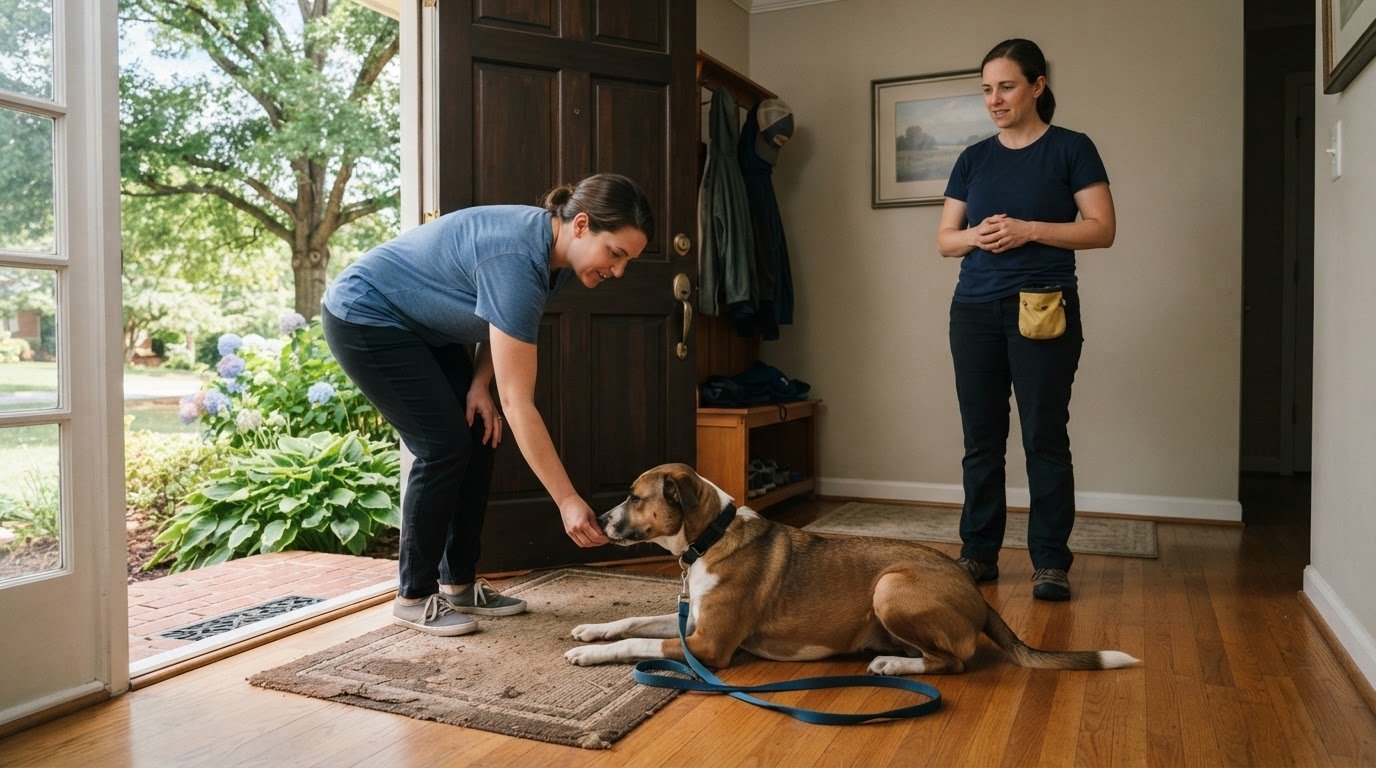
Private training gives your dog and family focused, one-on-one instruction. In-home lessons bring coaching into familiar rooms, doorways, and routines, where challenges may arise. Compare what the training plan covers, how goals are set, and how you’ll practice between sessions. These details help you understand the support included, not just the session length.
Before an evaluation, write down your top priorities. Note, for example, whether your dog struggles with greetings, leash manners, or settling at home. Share specific examples so the trainer can understand when and where the behavior occurs. Ask how the recommended plan will address it and what you’ll practice. Clear goals connect training to skills you can use every day.
Private Training Classes
Private dog training is personalized instruction for you and your dog, rather than a class shared with a group. Sessions can address obedience, behavior concerns, or practical skills that fit your routine. Consider whether one-on-one coaching suits your priorities and whether training at home would help you work on relevant household routines.
Compare formats by listing your goal, where the behavior happens, and what support would help. A dog that barks at visitors, for instance, may need practice with calm greetings at home. Group Classes provide structured, shared practice, while private training focuses on your dog’s needs and examples. Choose the format that fits your goals and household routine.
How to choose the right dog trainer in Marietta, GA
Start with the behavior or skill you want to change, then match it to the training format. Basic obedience, behavior support, and service-dog task work call for different goals, practice settings, and trainer experience.
Private lessons let the trainer focus on your dog and household routines. Group Classes give dogs and owners structured practice around other people and dogs, adding distractions to familiar skills. For example, a dog that responds at home but struggles on busy walks may need practice in real-world settings. Choose based on where the skills need to work.
Basic obedience
Identify the cues you want to build, such as a reliable stay or calm leash walking.
Behavior concerns
Describe the setting and trigger, such as barking when guests enter the home.
Service-dog training
Discuss the intended tasks and the dog’s starting skills. Cost depends on task complexity, foundational training, and the amount of instruction; a quote request accounts for those factors.
Pickup and drop-off
Treat transport as a separate logistical detail from instruction. It should not be assumed as part of a private lesson or class.
Before choosing, ask for a realistic training timeline and how practice will build between sessions. Look for experience that matches your dog’s needs, not credentials counted without context. A trainer should explain how lessons develop obedience, consistency, and your relationship with your dog. For service-dog goals, focus on relevant task-training experience and a clear path from foundation skills to real-world distractions.
Write down your priorities before comparing options: the behavior, where it occurs, and what success looks like in daily life. Then compare training formats against that list. Reviewing individualized dog-training options can help you consider how a tailored approach fits your goals and practice setting.
Choosing a professional dog trainer
Choose a trainer whose experience fits your dog’s specific behavior and your household goals. A puppy learning potty training needs a different plan from an adult dog that jumps on visitors or struggles around other animals. Name the behavior, describe where it happens, and explain what you want your dog to do instead. Those details help focus the training plan.
Ask how the trainer uses rewards, clear communication, and structure. For example, rewarding four paws on the floor during a greeting can reinforce the behavior you want. Consistent timing helps your dog connect an action with its reward. You’ll also learn how to practice between sessions so training carries into daily routines.
Credentials matter most when they match your dog’s needs. A trainer’s education or experience in puppy development may help with potty training, while experience in behavior modification can better fit persistent fear or reactivity. For service-dog goals, look for relevant task-training experience. The number of credentials alone doesn’t show whether a trainer understands your animal’s specific challenge.
An evaluation helps identify your dog’s needs and determine a suitable training plan. Describe triggers, current skills, and where problems occur. A Marietta-area dog that jumps at the front door, for example, may need practice with greetings and household routines. Training should connect exercises to those everyday situations.
Finally, consider how the trainer involves you. You’ll need to learn the cues, reward timing, and practice routine, not just watch your dog respond during a lesson. Choose an approach that gives you clear steps for building skills at home and handling distractions outside. For complex behavior, emotion-based challenges can take more time than basic obedience, so make sure the plan addresses gradual, consistent practice.
Average dog-training rates in Marietta
Yes. Marietta dog owners can start with free practice at home, using everyday routines to reinforce manners and puppy training. For example, reward a calm greeting at the door or practice a sit before meals. These short exercises build consistency, though persistent behavior concerns may need structured professional guidance.
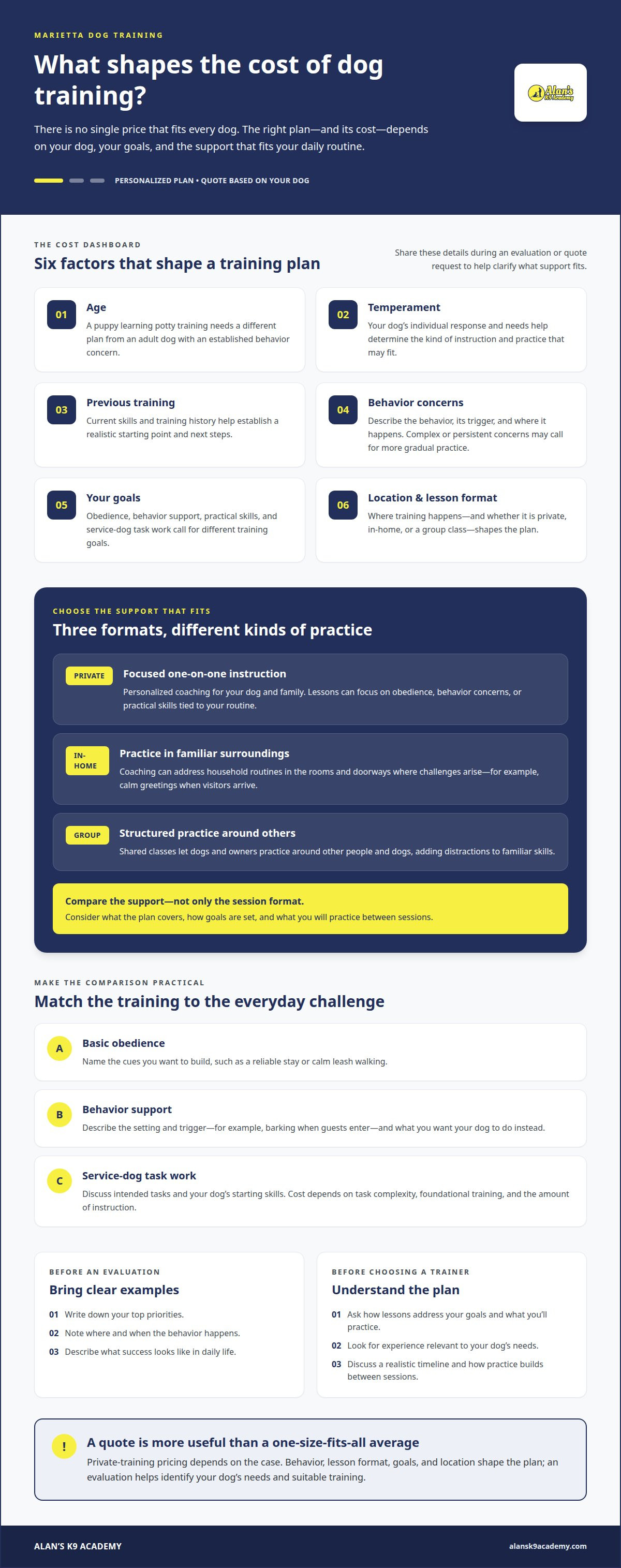
There’s no single average that applies to every training plan because formats address different goals. Group Classes provide structured practice with others, while private training focuses on your dog and household. In-home training also lets you work on routines where they happen. Compare the customized plan and instruction, rather than relying on the format’s name alone.
Your quote depends on your dog’s age, temperament, previous training, behavioral concerns, and goals. A puppy learning household manners may need a different plan from a dog working through reactivity or developing specialized skills. An evaluation helps clarify your dog’s needs and the recommended training plan, along with its cost.
To discuss training in Marietta, write down the behavior you want to address, where it happens, and what you’d like your dog to do instead. Then consider whether Group Classes or personalized coaching better fit your goals. Consistent practice with clear rewards can help reinforce skills between lessons. A dog that pulls on walks, for example, needs practice with leash manners.
Free home practice can support a training program, but it may not provide feedback on timing, technique, or challenging behavior. If you’re weighing individualized guidance for home routines, explore in-home dog training options to see how hands-on instruction may fit your goals.
Alan's K9 Academy: In-Home Dog Training
Alan's K9 Academy offers personalized in-home training for owners who want support with skills and behavior in familiar surroundings. Its balanced, humane methods can address everyday training goals as well as more involved behavior concerns. The academy also offers Behavior Modification, Therapy & Service Dog Training, and Group Classes, giving families different formats for their training priorities.
Consider in-home guidance when you want to work on routines where they happen, or Behavior Modification for specific behavior challenges. Therapy & Service Dog Training supports specialized training goals, while Group Classes provide a shared learning setting. Each path centers on practical training for dogs and their people.
For guidance on a suitable training path, contact Alan's K9 Academy or visit Alan's K9 Academy online.
Turn Your Training Goals Into a Clear Next Step
Understanding how much dog training costs in Marietta is only part of choosing a path forward. The next step is to turn your biggest day-to-day challenge into a specific goal: calmer greetings, more reliable responses, or skills tailored to a service role. A clear goal makes it easier to discuss what kind of instruction fits your dog and your household.
Alan's K9 Academy offers In-Home Dog Training, Behavior Modification, and Therapy & Service Dog Training. These options can support different needs, from working on behavior at home to building specialized skills. You don’t have to map out every detail alone; start with what you’d most like to change and what situations are hardest for your dog.
Reach out to discuss a training direction that fits your goals. Contact Alan's K9 Academy today, and take a practical first step toward a stronger partnership with your dog.
Frequently Asked Questions
What is the average cost, and how much does dog training cost in Marietta, Georgia?
There isn’t one cost that applies to every training plan in Marietta. The format, your dog’s needs, and the goals you set affect the scope of instruction. For Alan's K9 Academy, pricing is customized, and an evaluation helps determine a suitable recommendation. Consider the type of support you need before comparing options, such as focused help at home or structured group practice.
How much does dog training cost in Marietta for a private session?
Private-session pricing varies, and Alan's K9 Academy customizes its pricing rather than publishing one fixed session fee. An evaluation helps shape a precise recommendation for your dog and goals. Before comparing session options, note whether you need coaching for household routines, obedience foundations, or a specific behavior concern. That makes it easier to understand how the proposed instruction fits your needs.
What factors affect dog training costs in Marietta, such as behavior issues or dog size?
Training costs depend on your dog’s age, temperament, previous training, behavioral concerns, and goals. A dog with little leash experience, for example, has different starting needs from one with established skills and reactivity. An evaluation helps clarify those needs and the recommended plan. Share relevant details about your dog’s behavior and history so the recommendation reflects your situation.
What is included in Marietta dog training packages, and are there extra fees?
Training plans can involve personalized one-on-one coaching, behavior modification, or structured group classes, depending on the needs identified. The evaluation and customized recommendation establish the program’s scope. Before deciding, make sure you understand which instruction and owner guidance the plan covers, and how any additional costs are handled. This helps you compare the actual support offered rather than relying on the word “package.”
What should I ask before hiring a dog trainer in Marietta?
Ask how the trainer will address your dog’s specific challenge, what role you’ll play during lessons, and how practice carries into home routines. For a dog that reacts to visitors, ask how the plan builds calmer greetings and what you’ll practice between sessions. Also discuss relevant experience, training methods, and how an evaluation informs the recommendation. Clear answers help you choose with confidence.