



Dog Training for Small Dogs in Powder Springs: Behavior Help
Yes, dog training for small dogs in Powder Springs can help address reactive behavior, build calmer routines, and teach more appropriate responses. A dog’s small size does not make barking, lunging, or fear-based reactions any less stressful for the dog or the people nearby. Training can focus on th...

Yes, dog training for small dogs in Powder Springs can help address reactive behavior, build calmer routines, and teach more appropriate responses. A dog’s small size does not make barking, lunging, or fear-based reactions any less stressful for the dog or the people nearby. Training can focus on the situations that trigger these behaviors and the skills your dog needs to respond differently.
If walks feel tense or everyday changes throw your dog off, you’re not alone, and compassionate, consistent practice can give you a clearer way forward. The right setting depends on what your dog is working through: private, in-home lessons can address behavior in familiar surroundings, while small-group training can offer practice around other dogs and people. This guide explains how those options can support reactive behavior, new routines, and humane behavior correction, and what to consider when choosing a training approach for your small dog.
Key Takeaways
• Notice the situations that trigger barking, lunging, or avoidance so training can target the skills your dog needs in those moments.
• Private lessons can focus on your home routines and your dog’s specific behavior, while small-group practice can help build skills around everyday distractions.
• For puppies and newly adopted dogs, create predictable routines and introduce new experiences gradually to support confidence and learning.
• Humane behavior correction pairs clear guidance with reinforcement of the choices you want to see, rather than relying on intimidation.
• Choose a training setting based on your dog’s comfort, behavior goals, and the situations where you want progress to carry over.
Can dog training help with aggressive or reactive behavior?
Yes. Training can help a small dog learn different responses to triggers and build useful obedience skills. For example, a dog that barks when another dog appears can practice turning toward its handler and moving away. A search for “dog training for small dogs Powder Springs” may reflect concerns about stressful walks, visitor greetings, or other everyday situations. Start by identifying what happens before the reaction and which skills could help.
Notice the trigger, your dog’s distance from it, and early signs of discomfort, such as freezing or turning away. A dog worried by strangers needs a different practice plan from one that pulls toward other dogs. Anxiety can make it harder to respond to familiar cues. Begin where your dog can still focus, then gradually add difficulty as calm responses become easier to repeat.
Obedience skills can help with daily situations: responding to a name, waiting at a doorway, walking on a loose leash, and returning when called. Practice recall in a secure, controlled area before adding distractions. Eligible obedience packages include a 15-foot leash for guided practice. For leash pulling, reward your dog for walking near you and pause forward movement when the leash tightens.
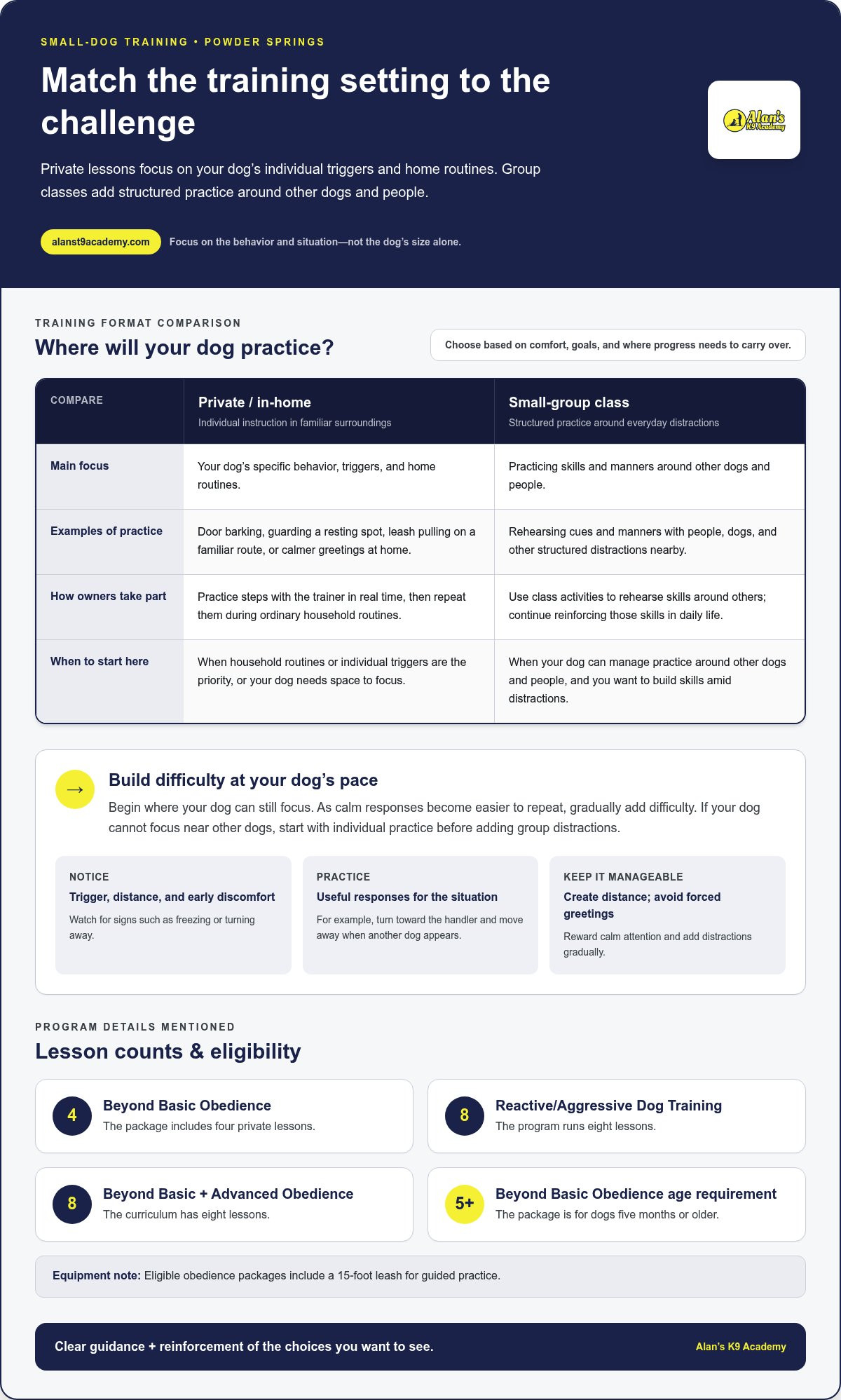
Private lessons, group classes, and day training offer different kinds of practice. Private lessons can focus on the dog’s individual triggers and home routines. Classes introduce structured distractions and opportunities to practice manners around others. Day training provides organized skill practice, while owners still need to reinforce those skills in daily life. Reactive/Aggressive Dog Training runs eight lessons. The Beyond Basic + Advanced Obedience curriculum also has eight lessons, and its Beyond Basic Obedience package is for dogs five months or older.
Powder Springs owners comparing “dog training for small dogs Powder Springs” can begin with the setting where their dog needs the most help. In-home practice may suit a dog that struggles with household routines, while a Group Class can help rehearse skills around other dogs and people. The useful starting point is the behavior and situation, not the dog’s size alone.
Local class requirements can involve age, vaccination status, and enrollment; the Beyond Basic Obedience package requires dogs to be five months or older. Prepare for a first class by practicing a name response and settling on a mat, then bring familiar rewards and walking equipment. Arrive with time for your dog to observe the setting before activities begin.
Small dogs may struggle with leash pulling, barking, anxiety around unfamiliar dogs, or being overlooked in busy settings. Help keep practice safe by creating distance, avoiding forced greetings, and rewarding calm attention. If your dog cannot focus near other dogs, start with individual practice before adding group distractions. This keeps training manageable while building useful skills.
Private dog-training lessons
In-Home Dog Training gives owners focused time to work on their dog’s specific goals, home routines, and behavior. A useful plan connects practical instruction with steps owners can repeat between sessions.
In-Home Training Options
In-home lessons let a trainer observe the dog where daily challenges happen, such as barking at the door, guarding a resting spot, or pulling toward a familiar route. Owners can practice the same steps in real time, then repeat them during ordinary routines. The Beyond Basic Obedience package includes four private lessons, and many pet parents begin to see progress after 2-4 dog-training sessions. In-home dog training can focus practice on the household situations owners want to change.
Before training begins, write down the behavior, what happens just before it, and how your dog responds afterward. For aggression or anxiety, note the setting and distance from the trigger. These details can help shape an individualized plan focused on safety, communication, leash handling, and realistic household goals.
Small-Breed Trainer Specialties
Small and toy breeds benefit from clear learning goals adapted to their size and surroundings. Training can help owners practice comfortable leash walking, calm greetings, handling, and settling on a mat. Choose instruction that involves you in the practice, so cues and routines stay consistent at home. The focus should be your individual dog’s behavior, not assumptions based on breed or size.
What dog trainers offer training for small dogs in Powder Springs, GA? Options include private lessons, in-home instruction, group classes, and behavior-focused training. These formats can address obedience, household manners, leash skills, and behavior concerns through different types of practice.
Which trainers near Powder Springs specialize in small or toy breeds? Private trainers and group-class instructors may work with small dogs; useful specialization means adapting exercises to the dog’s comfort, size, and behavior goals. Ask what the dog will practice, such as loose-leash walking or calm responses to visitors, and how owners will continue those exercises between lessons.
When reading reviews of local trainers, look for concrete descriptions of communication, lesson structure, and progress toward goals similar to yours. Specific examples can be more helpful than relying on a star score alone.
To prepare for an in-home lesson, note your priorities, bring your dog’s regular walking equipment, and set aside familiar rewards. A short list helps keep the session focused, whether your goal is reducing leash pulling or encouraging calmer greetings. Consistent practice helps turn lesson skills into everyday habits.
Puppy and newly adopted dog training
A puppy or newly adopted dog is learning how the household works, from where to rest to how walks begin. Start Obedience Training with one clear cue, such as “sit,” and use it before predictable moments like setting down a food bowl. With an adopted dog, first observe how they respond to doors, visitors, handling, and quiet time. Those observations help shape routines around the dog’s current comfort and skills.
Early boundaries work best when everyone in the household follows the same routine. If jumping is not welcome, ask for four paws on the floor before giving attention. If a puppy mouths hands during play, pause the game and offer an appropriate toy instead. Keep rules practical and consistent: decide where the dog sleeps, which rooms are accessible, and how greetings happen at the door.
Build Everyday Skills at the Dog’s Pace
Puppies and adult adoptees learn at different paces, so tailor practice to your dog’s attention and experience. Begin in a quiet room with a short exercise, such as responding to their name or settling on a mat. Add household distractions gradually, then practice the same cue near a doorway or in the yard. If your dog stops engaging, reduce distractions and make the task easier.
Socialization means helping a dog experience people, places, sounds, surfaces, and routines at a manageable pace. For example, let a puppy watch passing traffic from a comfortable distance before approaching a busier sidewalk. A newly adopted dog might first explore a quiet block, then try a new route after settling into the household. Gradual, positive experiences can help dogs build confidence and navigate their surroundings more comfortably.
Make Practice Part of the Household Routine
Use everyday moments as training opportunities instead of relying on one long practice period. Ask for a calm pause before opening the door, reward a loose leash at the start of a walk, or guide your dog to a bed while preparing a meal. These repetitions connect Obedience Training to useful outcomes. Keep cues consistent across family members, so “come” means the same thing in the kitchen, yard, and front entry.
Make training spaces accessible and safe for a small dog: provide a stable resting surface, keep rewards within reach, and avoid asking your dog to jump down from furniture. Around Powder Springs and nearby communities, practice skills where they matter, such as calmly meeting a visitor or walking past a neighbor. A written household plan can track cues, boundaries, and new experiences, helping everyone reinforce the same habits as your dog grows or settles in.
Positive reinforcement and humane behavior correction
Positive reinforcement teaches a dog which choices earn rewards, while humane correction guides behavior without intimidation. A useful plan connects each cue to a clear action, such as rewarding four paws on the floor during greetings.
Reward-Based Instruction
During positive-reinforcement instruction, mark the behavior you want and reward it promptly. For example, say “yes” when a dog looks toward you instead of barking at a passing dog, then offer a treat. Basic Marker Mastery™ is a four-week positive-reinforcement program. Its structure illustrates how repeated marker-and-reward practice can make the desired response clearer.
Choose rewards that matter to your dog, such as food, play, or access to a favorite activity. If your dog pulls toward the door, pause and wait for the leash to loosen before moving forward. This sequence rewards the response you want rather than the pulling.
Humane Behavior Correction
Humane correction starts with identifying what triggers a behavior and changing the setup where possible. If your dog barks at visitors, use a gate to create space, cue a mat behavior, and reward settling. This teaches an alternative response while reducing opportunities to repeat the barking pattern.
Avoid correcting a signal without addressing its cause. If your dog growls when approached near a resting place, give them space and prevent access to that situation during practice. Then teach a calm move-away or “come” cue in an easier setting. For concerns such as aggression, Behavior Modification can focus on triggers, safety, and replacement skills.
Ongoing Reinforcement and Family Coaching
Everyone in the household should use the same cue and reward the same response. If one person allows jumping while another asks for a sit, the dog receives conflicting information. Agree on a simple greeting routine: ask for a sit, reward calm paws, and pause attention if jumping starts.
Keep practice connected to ordinary routines. Reward a dog for waiting before meals, settling while family members watch television, or walking beside an owner through a doorway. In Georgia homes, consistency across rooms and family members helps behavioral skills transfer beyond a single practice spot.
Track progress with brief notes about the cue, setting, and response. If a dog can settle in a quiet room but struggles when guests arrive, return to the easier setting and build gradually. Family coaching helps owners recognize when to reward, when to create more space, and how to repeat the same humane steps during everyday interactions.
In-home and small-group training
In-Home Dog Training and Group Classes support different training goals. Choose the setting based on where your dog struggles and where you need the skills to work.
At home, a trainer can observe the routines connected to your dog’s behavior. For example, practice a calm greeting at the front door, settling while dinner is prepared, or waiting before leaving for a walk. The familiar setting also lets you work with actual household distractions rather than trying to describe them later.
Small-group classes offer structured practice around other dogs and people. A dog learning to keep four paws down can work on greetings while classmates take turns approaching. The trainer can help adjust distance and difficulty, so the dog practices manners without being pushed into a stressful interaction. Owners also learn to notice early signs of distraction and reward attention before jumping begins.
Consider your goal before choosing a format. If your dog barks at a particular window or struggles with household handling, begin with practice in that setting. If your dog can focus around mild distractions, a Group Class can provide structured opportunities to respond to cues near other dogs. Some dogs benefit from both: build a skill at home, then practice it in a group environment.
Leave time to practice between sessions. Choose a routine that lets you repeat the trainer’s steps during everyday moments, such as before a walk or when guests arrive. Note the cue, distraction, and response. If your dog succeeds in the kitchen but not near the front door, return to the easier location before increasing the difficulty.
Help your dog arrive ready to learn. Bring familiar rewards and walking equipment, and give them time to observe the room from a comfortable distance. During practice, avoid greetings that feel overwhelming. Ask for a simple cue, reward engagement, and create more space if your dog cannot focus.
For reactive behavior, individual instruction can establish safer routines before group practice. A dog that lunges when another dog approaches can first practice turning toward their handler from a distance. Group practice becomes useful when the dog can engage and recover in that setup. The goal is meaningful learning, not simply placing dogs close together.
Choose a setting that matches your dog’s current skills, then build toward everyday situations. Explore a tailored training approach for home routines and group practice.
Alan's K9 Academy: In-Home Dog Training
Alan's K9 Academy offers personalized In-Home Dog Training for owners who need help with behavior in familiar surroundings. A trainer can work with your household routines, such as calmer door greetings, leash practice before walks, or settling when visitors arrive. For reactive behavior or other persistent challenges, Behavior Modification can focus on triggers and practical alternative responses. Group Classes provide another setting for practicing skills around everyday distractions, while Therapy & Service Dog Training supports those specific training goals.
Consider in-home guidance when your dog’s challenges arise during daily routines or when you want hands-on coaching in your own space. Share your main concerns and the moments when they occur to help shape useful practice. Contact Alan's K9 Academy to discuss training for your dog.
Build the Next Step Around Your Dog
Progress grows from a plan that fits the life you and your dog share. Choose one everyday goal to focus on first, then notice what makes it easier or harder for your dog to succeed. That clarity can help turn broad hopes, like calmer outings, into practical training priorities. For dog training for small dogs Powder Springs, a useful next step is matching support to the behavior or skill you want to work on.
Alan's K9 Academy offers In-Home Dog Training and Behavior Modification for owners seeking hands-on help with routines or behavior concerns. Therapy & Service Dog Training supports those specific goals. The right focus starts with your dog’s needs and the situations you want to improve.
Share your goals and take the next step at Contact Alan's K9 Academy. With a clear starting point and steady practice, you can build a more confident routine together.
Frequently Asked Questions
How many dog training sessions will I need?
The number depends on the training goal and program structure. Reactive/Aggressive Dog Training runs eight lessons; the Beyond Basic Obedience package includes four private lessons, while the Beyond Basic + Advanced Obedience curriculum has eight lessons. To make practice useful between sessions, keep a brief log of the cue, setting, and your dog’s response. That record helps you see which skills need more repetition.
Are there puppy training, obedience, and socialization classes near Powder Springs?
Yes. Alan’s K9 Academy offers puppy training, obedience training, and Group Classes, including structured opportunities to practice social skills. For example, a puppy can work on calm attention while another dog moves nearby, with distance adjusted to help the puppy stay comfortable. Acceptance into a program and the recommended training plan are determined through an evaluation, which considers your dog’s needs and goals.
How do group classes compare with private dog training for small dogs?
Group Classes provide practice around other dogs and people, while In-Home Dog Training focuses on your dog and household routines. A dog that can respond to cues around mild distractions may benefit from class practice. If barking at the door interrupts learning, in-home instruction can address that situation directly. The choice depends on where your dog can focus and which skills need attention first.
What positive-reinforcement methods do Powder Springs dog trainers use?
Positive reinforcement rewards a behavior you want repeated, such as looking toward you when called or waiting calmly before a walk. Alan’s K9 Academy describes its approach as balanced and customized, combining positive reinforcement with clear communication, structure, and appropriate tools. Owners can apply the same principle at home: mark the desired response promptly, reward it, and use consistent cues so the dog understands what earned reinforcement.
What are the age, vaccination, and enrollment requirements for local dog training classes?
The Beyond Basic Obedience package requires dogs to be five months or older. Local classes may also have vaccination and enrollment requirements.
What are the reviews and ratings for dog trainers in Powder Springs and nearby areas?
When reading reviews, look for specific descriptions of communication, lesson structure, and progress toward goals similar to yours. These details can be more useful than star scores alone.