



Dog training for seniors in Acworth, GA: Find a fitting program
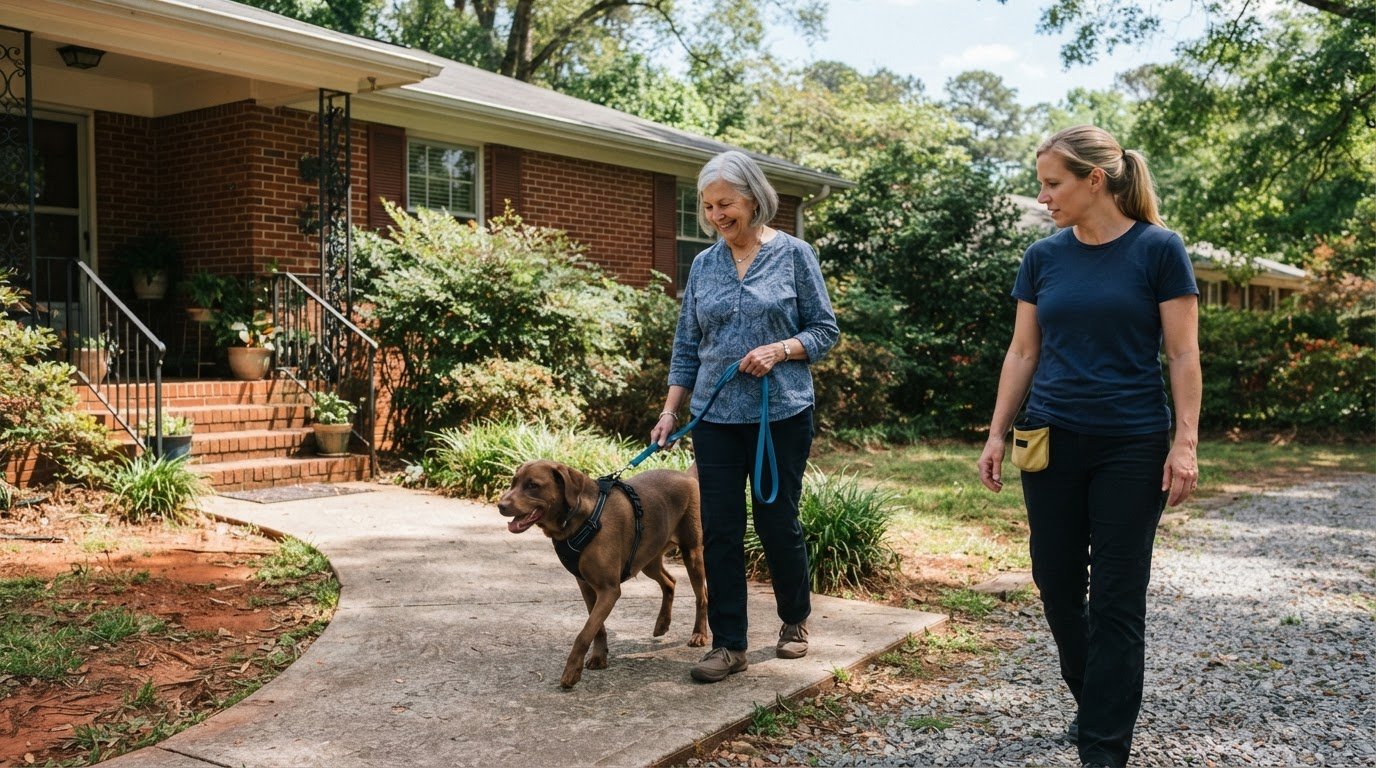
A dog’s breed or size shouldn’t be the only factor in choosing a training program. For dog training for seniors in Acworth, GA, start with your dog’s behavior and learning needs, along with your comfort, mobility, and goals.It’s understandable to wonder whether a large, energetic dog or a small dog...

A dog’s breed or size shouldn’t be the only factor in choosing a training program. For dog training for seniors in Acworth, GA, start with your dog’s behavior and learning needs, along with your comfort, mobility, and goals.
It’s understandable to wonder whether a large, energetic dog or a small dog with strong reactions will be manageable. Breed and size can shape practical training choices, but personalized instruction can also account for leash manners, household routines, confidence, and the skills you want to build together.
This guide explains training options in Acworth, how individualized programs and behavior support can help, and what to consider when matching a trainer and approach to your dog. You’ll also learn how breed and size may influence the plan, so you can focus on a safe, realistic path toward calmer walks and a more comfortable life with your companion.
Key Takeaways
• Explore obedience, puppy, leash, behavior, and advanced-command training to identify the kind of support that matches your dog’s needs.
• Shape a personalized plan around your dog’s age, temperament, and goals, with practice at home supporting progress between sessions.
• Consider how breed, size, and behavior affect practical training choices rather than assuming they alone determine program fit.
• Learn how trainer experience and behavior support can guide your next step, including whether in-home training, group classes, or behavior modification may suit you.
What types of dog training are available in Acworth, GA?
Acworth dog-training options may include basic obedience, puppy training, leash skills, behavior correction, and advanced commands. For an older adult managing a large or energetic dog, private sessions can prioritize loose-leash walking, calm greetings, reliable responses, and settling at home. These practical skills help make everyday routines more manageable. Positive training uses rewards and clear cues to show the dog which behavior to repeat.
Training outcomes depend on the dog’s starting skills, temperament, and practice between sessions. A local puppy-training example involved a five-lesson course, while another review described a five-month-old golden retriever completing four weeks of training with Elena. Those examples illustrate different program structures, not a standard schedule for every dog. Session frequency is shaped by the goals, the dog’s progress, and how consistently skills can be practiced at home.
Group classes are an option in Acworth, while private training sessions provide individual attention. Class locations, physical access, and schedules vary, so there isn’t one format that fits every senior. In-home instruction can reduce travel and let practice happen around familiar doorways, furniture, and walking routes. A group setting can provide practice around other dogs, while private lessons can focus on specific household routines.
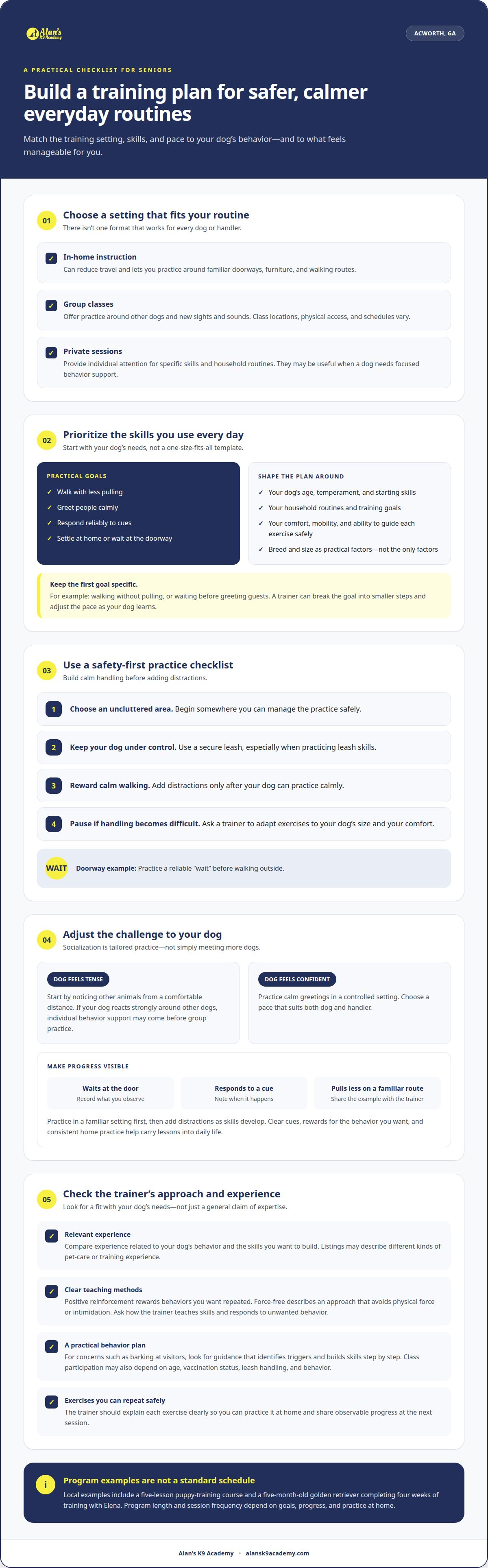
Leash pulling, sudden lunges, and rushing through doorways can make handling difficult, especially with a strong dog. Build safety into practice by choosing an uncluttered area, keeping your dog under control, and rewarding calm walking before adding distractions. Use a secure leash and pause if your dog becomes difficult to manage. For example, practice a reliable “wait” at the doorway before walking outside. A trainer can adapt exercises to your dog’s size and your comfort.
Personalized training programs
A useful training program starts with your dog’s actual needs, not a standard template. Age, temperament, and training goals shape which skills come first. A dog that hesitates at doorways may need calm transitions, while a lively dog may need to practice settling before visitors arrive. Your comfort matters too. For dog training for seniors in Acworth, GA, the plan should fit your household routines and your ability to guide each exercise safely.
Choose one practical goal to start, such as walking without pulling or waiting before greeting guests. A trainer can break it into smaller steps and adjust the pace as your dog learns. If your dog struggles with a cue in the kitchen, practice there before adding distractions. Clear cues, rewards for the behavior you want, and consistent practice at home help carry lessons into daily life.
Socialization should be tailored, not treated as simply meeting more dogs. A dog that becomes tense near other animals may start by noticing them from a comfortable distance. A confident dog might practice calm greetings in a controlled setting. Group classes provide practice around new sights and sounds, while personalized training can keep the challenge appropriate for both dog and handler. This can make dog training for seniors in Acworth, GA more manageable by building skills at a pace that suits you both.
Progress is easier to recognize when you track observable changes. Note whether your dog waits at the door, responds to a cue, or walks a familiar route with less pulling. Share those examples at the next session so the trainer can refine the exercises. If household routines or mobility needs shape your priorities, include them in the plan. A customized training approach can connect everyday goals with structured practice.
Trainer qualifications and behavior support
Trainer experience matters, especially when a dog’s behavior affects safe handling or daily routines. In Acworth, compare relevant experience, training approach, and the trainer’s ability to explain practical steps.
Trainer Qualifications
Look for experience that connects to your dog’s needs, not just a general claim of expertise. An Acworth listing describes Malia P. as having three years of pet-care experience. Morgan H. says they cared for and trained a Chihuahua for 14 years. Those details offer context, but the dog’s behavior and your goals should guide which experience matters most.
Positive Reinforcement Methods
Positive reinforcement rewards a behavior you want repeated, such as walking beside you or settling on a mat. Force-free describes an approach that avoids physical force or intimidation. Local trainers may use different methods, so look for a clear explanation of how they teach skills and respond to unwanted behavior. For example, ask how they would address barking at visitors.
Class requirements can differ. Age, vaccination status, leash handling, and behavior may affect class placement or participation, so programs can consider these details during enrollment. A dog that reacts strongly around other dogs may need individual behavior support before practicing in a group setting.
For behavior concerns, look for a trainer who identifies triggers and develops a step-by-step plan. If your dog barks when someone approaches the front door, training might begin with distance, a calm cue, and rewards for settling, then build toward realistic visitor routines. Focus on observable skills and practical guidance.
Confidence matters for both handler and dog. If you feel unsteady holding a pulling dog, practice calm starts and stops in a familiar space. Advanced work, such as responding reliably around distractions, should build on skills your dog already understands. The trainer’s explanations should help you repeat each exercise safely at home.
Acworth dog trainer listings
Trainer listings can help you narrow options by program type and the skills your dog needs. Acworth listings may cover basic obedience, puppy training, leash training, behavior correction, and advanced commands. For example, an owner seeking calmer walks can focus on leash skills, while someone addressing barking may prioritize behavior support. Match the listed focus to a specific goal rather than choosing by title alone.
Read each listing for details about training format, methods, and the kinds of behavior it addresses. A private option may suit an owner who wants individual attention or needs practice tailored to home routines. Group classes can offer structured practice around other dogs. Look for plain explanations of reinforcement, how exercises are taught, and what owners practice between sessions. These details help you understand what the program involves.
To enroll in a class near Acworth, start with these steps:
• Write down your main goal, such as loose-leash walking or calm greetings.
• Choose a format that fits that goal, such as private instruction or group classes.
• Describe your dog’s age, size, behavior, and previous training when completing enrollment details.
• Share any accessibility or scheduling needs, then follow the program’s enrollment instructions.
A clear goal helps match you and your dog to a suitable starting point. A dog that pulls strongly may need individual work on walking skills before practicing in a group. A dog that can already settle around distractions may be ready for classes that build focus. An evaluation considers your dog’s behavior and training needs to guide the plan. Bring one practical goal to your evaluation, then build skills you can reinforce at home.
Alan's K9 Academy
Alan's K9 Academy can help you connect your dog’s training needs with a practical program and your daily routine. If leash pulling, reactivity, or other behavior concerns make handling stressful, Behavior Modification can address those challenges through personalized support. In-Home Dog Training focuses practice on familiar surroundings, while Group Classes offer a structured setting for learning alongside other dogs. Therapy & Service Dog Training is available for people working toward those specific goals. The right direction depends on the skills you want to build and the behavior you need help managing, not breed or size alone. Share your priorities and your dog’s challenges to begin a useful conversation. Contact Alan's K9 Academy to discuss training support for you and your dog.
Choose a practical next step for you and your dog
The right plan should make daily life feel more manageable, not add pressure. For dog training for seniors in Acworth, GA, start with a goal that matters in your routine, such as a calmer walk or a more settled response when visitors arrive. A focused first step gives you and your dog a clear skill to practice together.
Alan's K9 Academy offers In-Home Dog Training, Behavior Modification, and Therapy & Service Dog Training. These options can support different needs, from practicing in familiar surroundings to addressing challenging behavior or developing specialized skills. Share what feels difficult now and what you’d like to change, so the next conversation can focus on a useful direction for you and your companion.
Contact Alan's K9 Academy to discuss a fitting training path. With a clear goal and thoughtful support, you can take the next step with greater confidence.
Frequently Asked Questions
Are there any breed or size restrictions for training?
Programs are available for many breeds and temperaments, but acceptance and the recommended plan are determined after an evaluation. Breed and size help shape practical coaching, such as how to guide a powerful dog through a doorway or teach a small dog to respond reliably around distractions. Share your dog’s behavior and training history so the evaluation can identify a suitable approach.
How much does dog training cost near me in Acworth, GA in 2026?
Training costs are customized, and an evaluation is needed for an accurate recommendation and quote. Price depends on your dog’s age, temperament, previous training, behavior concerns, and goals. For example, a dog learning household manners may need a different plan from one needing support for reactivity. There is no single fixed price for every dog and owner.
Is it too late to train an adult dog?
Yes. Adult dogs can learn new cues and routines, and training can focus on the behaviors that matter in your life now. For example, a dog that has never practiced waiting calmly while you open the door can learn that skill through clear steps and repetition. Share your dog’s habits and your goals during the evaluation, then build on what your dog already understands.
What if my dog has specific behavioral issues?
Behavior Modification addresses concerns such as aggression, anxiety, reactivity, destructive behavior, and impulse control. The plan can focus on the situations where the behavior occurs. If your dog reacts when another dog approaches, describe the setting, distance, and behavior you observe during the evaluation. Those details help shape practical training priorities for you and your dog.
What results can I expect from dog training in Acworth, GA?
Training can build clearer communication, stronger obedience skills, and calmer behavior at home or in public. Goals might include responding to a cue near a distraction, waiting before greeting someone, or walking with better manners. Progress depends on your dog’s needs and the skills you practice together. Choose an observable behavior you can recognize in everyday life.
What dog training services are available for seniors in Acworth, GA?
Options include In-Home Dog Training, Behavior Modification, Group Classes, and Therapy & Service Dog Training. For example, in-home coaching can focus on routines in familiar surroundings, while group classes provide structured practice with other dogs. Therapy and service dog programs address their respective foundation skills. Choose based on your priorities, such as safer handling, household manners, or specialized training goals.