%20(620%20x%20150%20px)%20(14).webp)
%20(620%20x%20150%20px)%20(15).webp)
.webp)
_page-0001.webp)
.webp)
.jpg)
Dog Trainers for Resource Guarding: Your Guide to Behavioral Rehabilitation
You're walking through the kitchen when your dog freezes over their food bowl, a low rumble vibrating in their chest. It's a heart-stopping moment that turns your home from a sanctuary into a minefield. If you've found yourself "walking on eggshells" or worrying about how children might interact wit...
%20(5).gif)
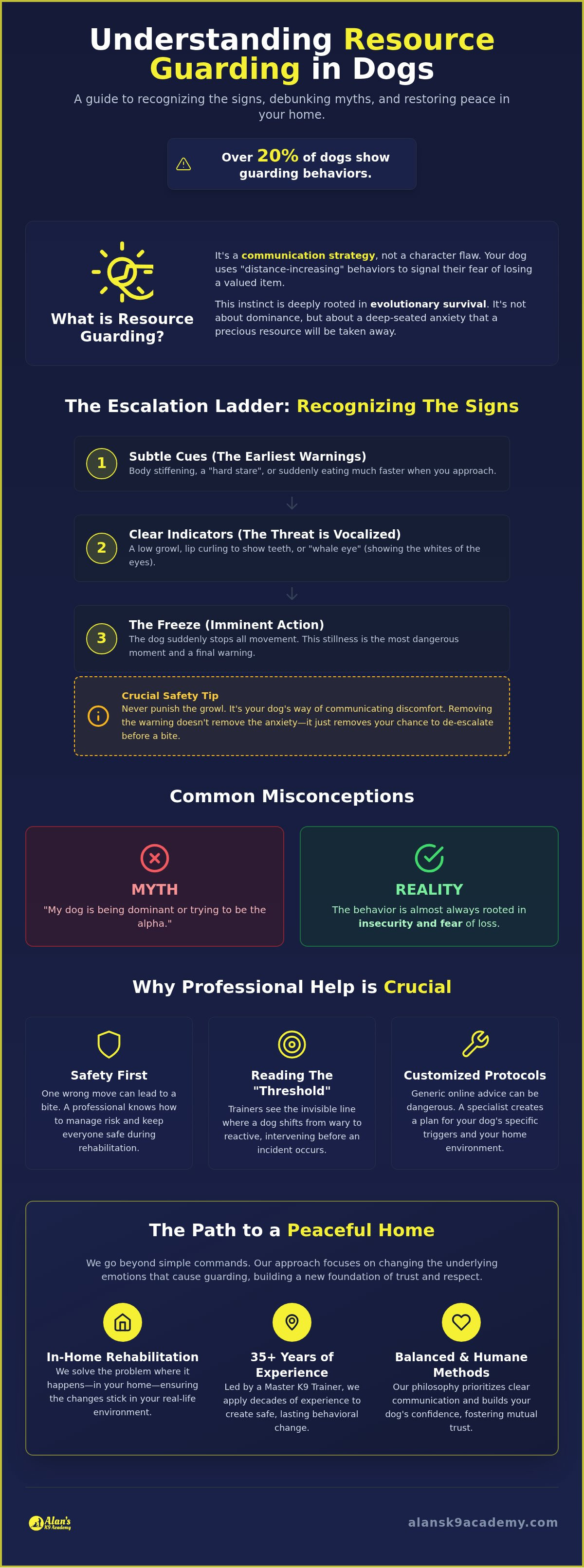
You're walking through the kitchen when your dog freezes over their food bowl, a low rumble vibrating in their chest. It's a heart-stopping moment that turns your home from a sanctuary into a minefield. If you've found yourself "walking on eggshells" or worrying about how children might interact with your pet, you aren't alone. Recent data suggests that over 20% of dogs exhibit this behavior, and finding the right dog trainers for resource guarding is the first step toward a peaceful household. You deserve to feel safe in your own living room without the constant fear of a bite.
You may have tried "positive-only" methods or "force-based" DIY fixes that simply didn't stick, leaving you feeling frustrated and guilty. We understand that stress. This guide will explain why your dog guards their possessions and how professional, in-home rehabilitation can restore trust. At Alan's K9 Academy, we've spent over 35 years helping families in Marietta, Alpharetta, and Cartersville navigate these challenges with balanced, humane methods. We'll preview the biological roots of guarding, the nuances of canine body language, and how a customized training partnership can finally bring security back to your North Atlanta home.
Key Takeaways
• Learn to recognize "distance-increasing" behaviors like freezing or subtle body stiffening before they escalate into dangerous household confrontations.
• Discover why specialized dog trainers for resource guarding are essential for safely identifying your dog's threshold and preventing bite incidents.
• Understand the critical importance of in-home training to ensure behavioral changes stick in the specific environment where guarding actually occurs.
• Gain immediate management strategies to stop the conflict cycle and protect your family while you prepare for professional rehabilitation.
• Explore how a customized, balanced approach from a Master K9 Trainer can restore a sense of peace and mutual trust in your home.
What is Resource Guarding and How Do I Identify It?
Resource guarding isn't a character flaw; it's a communication strategy. Technically, it is the use of "distance-increasing" behaviors to discourage others from approaching a valued item. Whether it's a food bowl, a high-value treat, a "stolen" sock, or even a spot on the sofa, your dog is telling you they're afraid of losing something important. This behavior is deeply rooted in evolutionary survival. In the wild, a canine that couldn't protect its meal didn't survive. Even though your companion lives in a comfortable home in Alpharetta or Marietta, those ancient instincts can still flare up when they feel vulnerable.
One of the most critical signs to watch for is the "freeze." When your dog suddenly stops moving mid-action, it is the most dangerous moment in the interaction. This stillness is a high-level warning that an escalation is imminent. Understanding the nuances of Dog behavior and resource guarding is the first step toward reclaiming safety in your household. It's about learning to read the quiet signals before they turn into loud actions.
Recognizing the Early Warning Signs
Before a dog ever growls, they usually offer subtle cues that they're uncomfortable. You might notice a "hard stare" where their eyes fixate intensely on you as you pass by. Their body might stiffen, or they may suddenly start eating much faster as you enter the room. Overt signals like low growling, lip curling, or "whale eye" (where you see the whites of their eyes) are clear indicators that the dog feels threatened. Whatever you do, don't punish the growl. Correcting a warning signal doesn't remove the dog's anxiety; it simply removes their way of telling you they're about to bite. This is why families often seek specialized dog trainers for resource guarding to address the root cause safely without suppressing vital communication.
Common Misconceptions About Guarding
Many owners mistakenly believe their dog is trying to be "alpha" or dominant over the household. In reality, guarding is almost always rooted in insecurity and fear. Your dog isn't trying to boss you around; they're terrified that a valuable resource is about to disappear forever. Trying to "prove you are the boss" by forcibly taking items away only confirms their fears and makes the guarding more intense. We see this often when DIY attempts fail. Working with professional dog trainers for resource guarding helps you shift the dynamic from a power struggle to a partnership built on trust and clear, predictable boundaries.
Why You Need Specialized Dog Trainers for Resource Guarding
Attempting to fix resource guarding on your own is like trying to defuse a high-pressure situation without a manual. The stakes are simply too high. One wrong move or a misread signal can lead to a bite that fundamentally changes your relationship with your pet. This is why specialized dog trainers for resource guarding are a necessity rather than a luxury. Professionals are trained to see the "threshold," which is the invisible line where a dog moves from being wary to being reactive. While an owner might only notice the snap, a seasoned trainer sees the dilation of the pupils, the subtle shift in weight, and the change in respiratory rate that precedes the aggression.
Generic advice found in a "one-size-fits-all" YouTube video can be dangerous. For instance, many online tutorials suggest "trading up" for a better treat. However, if your timing is off by even a second, you might accidentally reward the aggressive posture instead of the release. We focus on customized protocols that respect your dog's individual triggers and your specific household dynamics. Our balanced methods prioritize clear communication, ensuring your dog understands exactly what is expected of them while building the trust necessary for long-term success.
The Role of a Behavior Modification Specialist
There is a massive distinction between basic obedience and behavior modification. Teaching a dog to "sit" or "stay" is about simple mechanics. In contrast, behavior modification is about changing a dog's underlying emotional state. As a Master K9 Trainer with over 35 years of experience, Alan Carr analyzes the "why" behind the behavior. We don't just suppress the growl; we address the insecurity that causes it. You can learn more about our deep-dive methodology by exploring our guide on behavioral training for dogs. Our goal is a permanent transformation, not a temporary fix.
Safety First: The Professional Advantage
Safety is our absolute priority. During an initial evaluation, we often use professional equipment like muzzles or tethering to ensure a controlled environment. This isn't about being "tough" on the dog. It's about expert management that prevents the dog from "practicing" the unwanted behavior while we work. According to Veterinary Partner on resource guarding, proper management is a cornerstone of successful rehabilitation. We also determine if the guarding is an isolated issue or part of a broader aggressive dog training need. If you are feeling overwhelmed, a professional in-home evaluation can provide the roadmap you need to restore peace.
In-Home Training vs. Board and Train for Resource Guarding
Why does a dog stop guarding at a training facility but resume the behavior the moment they see your kitchen? The answer lies in "context-specificity." Resource guarding is deeply tied to the environment where the dog feels the need to protect their assets. They aren't just guarding a bowl; they're guarding their bowl, on your tile floor, in your kitchen. This is why many families searching for dog trainers for resource guarding find that traditional board and train programs often fall short of providing a permanent solution.
We often see the "Hero Trainer" effect. A dog behaves perfectly for a trainer in a sterile facility because the environment is new and the social hierarchy is different. However, without the owner's involvement, that behavior rarely translates back to the real world. According to the Humane Society's guide to resource guarding, management and consistent communication are vital. If you aren't the one learning how to read and respond to your dog's signals, the progress made at a facility can vanish within forty-eight hours of returning home. At Alan’s K9 Academy, we focus exclusively on in home dog training to ensure that the results we achieve are reliable where they matter most: in your daily life.
The Pitfalls of Board and Train for Guarders
Board and train facilities can be high-stress environments. For an insecure dog already prone to guarding, the presence of unfamiliar dogs and people can actually exacerbate their anxiety. Furthermore, these programs often suffer from a lack of generalization. The dog learns to follow rules in the "training bubble," but they don't associate those rules with you or your home. Most importantly, you miss the "Human Element." You don't see the subtle shifts in your dog's threshold, and you don't gain the hands-on skills needed to maintain the behavioral changes once the trainer is gone.
Benefits of In-Home Training in North Atlanta
Training happens where the triggers are. Whether it's the front door, the couch, or the dinner table, we address the behavior in the exact spot it occurs. This approach offers unparalleled convenience for families in Cartersville, Canton, and Woodstock. You don't have to worry about the logistics of dropping your dog off for weeks at a time. Instead, we work together to build a lifelong partnership. By hiring specialized dog trainers for resource guarding to come to you, you ensure that the rehabilitation is customized to your specific household dynamics and that you are empowered to lead your dog with confidence.
Immediate Management Steps: What to Do While Waiting for Help
How do you keep your family safe tonight while you wait for professional help to arrive? When your dog is growling over a bone or a "stolen" slipper, your first instinct might be to confront them or forcibly take the item away. Don't. The most critical rule for managing this behavior is to stop the confrontation cycle immediately. Every time you engage in a physical power struggle, you reinforce your dog's fear that you are a threat to their resources. This isn't "giving in" to the behavior; it is a strategic pause designed to prevent the situation from escalating into a bite incident.
Management is about preventing the dog from practicing the behavior until you can work with specialized dog trainers for resource guarding. If your dog isn't given the opportunity to guard, the neural pathways for that aggression aren't being strengthened. It creates a baseline of safety that allows everyone in the house to breathe a little easier. While you wait for your appointment, focus on creating "Safe Zones" and removing high-value triggers from the environment entirely. This temporary management phase is essential for lowering the household's overall stress levels.
Environmental Management Strategies
The easiest way to stop guarding is to remove the opportunity. If your dog guards their food, feed them in a separate room or a crate where they can eat in peace without feeling watched. Are they guarding "stolen" items like socks or tissues? Keep your laundry off the floor and clear the counters. For dogs that guard specific pieces of furniture or "their" person on the couch, it is best to keep them off the furniture entirely for now. Use baby gates or tethers to manage their access to the living room during high-traffic times. These simple shifts in your daily routine can drastically reduce the tension in your North Atlanta home.
Safe Interaction Guidelines
It is a common mistake to try and use commands like "Drop It" or "Leave It" during an active guarding episode. If these commands aren't already rock-solid, trying to teach them while your dog is over their threshold will only lead to failure and increased anxiety. Instead of physical contact or verbal confrontation, use "positive redirection." If you must move your dog away from a guarded item, lure them into another room with a high-value treat or the sound of the back door opening. Once they have moved, you can safely close a door or gate before retrieving the item. Preparing for a visit from a dog behavior specialist involves documenting these triggers without intentionally provoking them. If you're ready to stop the stress and start the rehabilitation process, schedule your in-home evaluation with our team today and find out why we are the preferred dog trainers for resource guarding in the local community.
The Alan’s K9 Academy Approach to Resource Guarding
We don't just look at the snap; we look at the whole dog. Our process begins with a comprehensive in-home evaluation to assess your dog's unique temperament and the specific dynamics of your household. This foundational step allows us to understand the "why" behind the behavior, which is a critical distinction when you are looking for dog trainers for resource guarding. We believe that every dog is an individual; therefore, their rehabilitation should reflect their specific needs and triggers. You shouldn't have to settle for a generic program when your family's safety is on the line.
Our philosophy centers on balanced training. This means we combine clear, fair boundaries with positive reinforcement for the behaviors we want to see. It isn't just about stopping the growl. It's about teaching your dog that they don't need to feel threatened when you approach their space. With a 35-year legacy of excellence, Master K9 Trainer Alan Carr brings a calm, unfazed presence to every session. This depth of experience is vital for handling aggression safely and effectively. Our work is rooted in Christian values, ensuring that every family we serve in the North Atlanta area receives a service defined by integrity, compassion, and excellence.
Your Personalized Behavior Modification Plan
We develop a roadmap that includes step-by-step desensitization and counter-conditioning protocols. This process slowly changes your dog's emotional response to your presence around their valued items. We don't just train the dog; we provide hands-on coaching for every member of your family. This includes teaching children how to respect boundaries and read subtle body language. By working in your actual living environment, we achieve real-world reliability that a facility simply cannot replicate. You'll gain the confidence to lead your dog through any situation.
Service Areas and Getting Started
Alan's K9 Academy is proud to serve families throughout Cartersville, Marietta, Alpharetta, and the surrounding North Atlanta Metro. Our primary focus is on building a deep, meaningful line of communication between you and your companion. We aren't here to "fix" a broken machine; we are here to restore a relationship built on mutual trust and respect. If you are tired of living in a state of anxiety and are ready to reclaim your home, we're here to help. Ready to restore peace? Schedule your in-home evaluation today and take the first step toward a safer, happier life with your dog.
Restore Peace and Security to Your Home
Living with a dog that guards their food or toys creates a constant state of tension, but you don't have to navigate this challenge alone. By understanding the evolutionary roots of these behaviors and implementing immediate management strategies, you've already taken the first steps toward a safer household. However, permanent rehabilitation requires the nuanced approach of specialized dog trainers for resource guarding who can address triggers in the exact environment where they occur.
At Alan’s K9 Academy, we bring a 35-year legacy of excellence to every household we visit. As an award-winning behavior modification specialist, Master K9 Trainer Alan Carr uses balanced, humane methods to transform fear into trust. We are proud to serve the North Atlanta Metro with integrity and Christian values, focusing on communication rather than just compliance. You deserve a home where you don't have to walk on eggshells. Take the first step toward a safer home; Book your In-Home Evaluation with Alan’s K9 Academy. A peaceful, reliable partnership with your dog is within reach.
Frequently Asked Questions
Is resource guarding a sign of an aggressive dog?
No, resource guarding is not a definitive indicator that a dog is aggressive in every situation. It is a context-specific behavior rooted in the fear of losing something valuable. While the reaction involves aggression, it often stems from deep-seated insecurity rather than a desire to harm. Many otherwise social and loving dogs exhibit these instincts due to evolutionary survival traits that haven't been properly redirected.
Can resource guarding be cured, or just managed?
Resource guarding can be successfully rehabilitated through professional behavior modification, though management remains a vital safety component. We focus on changing the dog's emotional state so they no longer feel the need to guard. While you can't delete an instinct, you can create new, positive associations. Consistent work with dog trainers for resource guarding often leads to a household where the behavior is no longer a threat.
Should I ever take food away from my dog to show them I'm the boss?
You should never take food away from your dog to establish dominance or show them who is boss. This practice actually confirms your dog's fear that you are a threat to their resources. It breaks trust and significantly increases the likelihood of a bite incident. Instead of a power struggle, focus on being a predictable provider who respects their space and safety during meal times.
What should I do if my dog growls at me when I approach them on the couch?
Stop your approach immediately and give your dog the space they are requesting. A growl is a vital warning signal that should never be punished or ignored. If you need the dog to move, use a high-value treat or the sound of a leash to lure them away without physical contact. Once the dog has moved, you can safely manage the environment to prevent a reoccurrence.
Are certain breeds more prone to resource guarding?
Any breed can exhibit resource guarding, from small terriers to large guardian breeds. While some working or herding breeds may have stronger natural instincts to protect assets, the behavior is largely individual. Factors like early socialization, genetics, and past trauma play a much larger role than the breed label itself. We treat every dog as an individual during our evaluations regardless of their pedigree.
How long does it typically take to see results with professional training?
The timeline for results varies based on the severity of the guarding and the consistency of the owner's management. Many families notice a significant reduction in household tension within the first few weeks of starting a customized plan. Achieving long-term reliability usually requires several months of dedicated practice. Working with experienced dog trainers for resource guarding ensures you have a realistic roadmap for permanent behavioral change.
What is the difference between resource guarding and reactive dog training?
Resource guarding is the protection of a specific item, while reactive dog training focuses on overreactions to external stimuli like other dogs or cars. While both involve heightened emotional states, the triggers are different. Guarding happens over a possession, whereas reactivity is a response to a perceived threat in the environment. Both require specialized behavior modification to address the underlying anxiety and stress.
What should I do if my dog guards me from my spouse or children?
This is known as person guarding and requires immediate professional intervention to ensure family safety. Use management tools like tethers or baby gates to prevent the dog from being in a position to guard you during family interactions. It is essential to avoid claiming the dog or punishing the behavior, as this can escalate the tension. A behavior specialist can help you rebalance these social dynamics safely.