%20(620%20x%20150%20px)%20(14).webp)
%20(620%20x%20150%20px)%20(15).webp)
.webp)
_page-0001.webp)
.webp)
.png)
Dog Separation Anxiety Training in Atlanta: The 2026 Guide to a Confident Canine
You return to your Atlanta apartment after a quick grocery run only to find a shredded rug and a frantic voicemail from your neighbor about non-stop barking. The pit in your stomach grows as you realize you can't even grab dinner in Midtown without worrying your home is being dismantled. It feels li...
%20(5).gif)
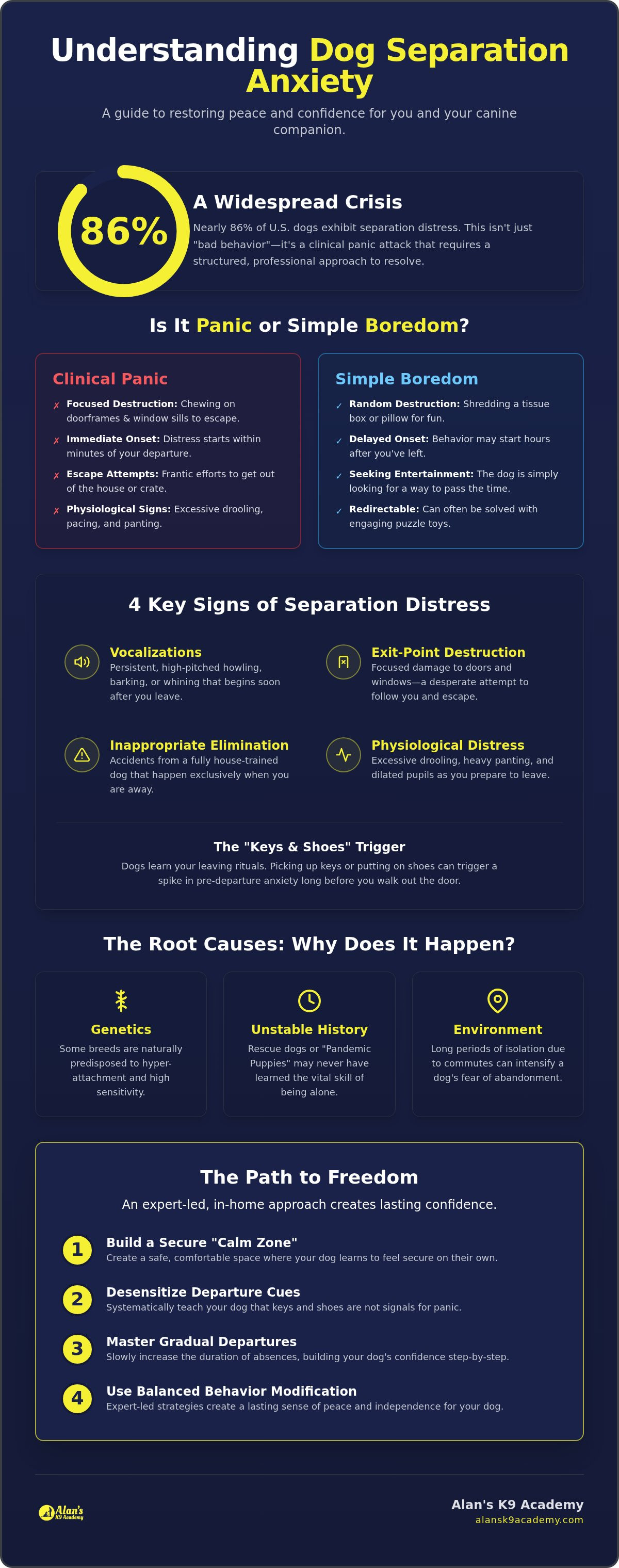
You return to your Atlanta apartment after a quick grocery run only to find a shredded rug and a frantic voicemail from your neighbor about non-stop barking. The pit in your stomach grows as you realize you can't even grab dinner in Midtown without worrying your home is being dismantled. It feels like you're a prisoner to your dog's panic, and the guilt of leaving them is becoming unbearable. You aren't alone in this struggle. Recent data shows that nearly 86 percent of dogs in the U.S. now exhibit moderate to severe separation distress, making professional support more critical than ever in 2026.
We understand the frustration of feeling "shackled" to your house, but there is a path to freedom for both of you. This guide explores the most effective dog separation anxiety training Atlanta has to offer, focusing on in-home solutions that address the root of the problem rather than just the symptoms. You'll learn how to transform your dog’s anxiety into lasting confidence through expert-led, balanced strategies. We will walk you through our proven methodology for restoring peace to your household, ensuring you can finally enjoy a night out while your canine companion remains relaxed and secure at home.
Key Takeaways
• Understand the difference between clinical panic and simple boredom so you can address the root cause of your dog's distress.
• Discover why dog separation anxiety training Atlanta works best when it happens in your living room where the actual triggers occur.
• Learn to spot the specific signs of separation distress, from immediate vocalizations to targeted property destruction.
• Master initial management steps like building a secure Calm Zone and desensitizing your dog to the sound of your car keys.
• Find out how expert-led, balanced behavior modification creates a lasting sense of peace for both you and your canine companion.
What is Dog Separation Anxiety and Why Does it Happen?
Many owners mistake a dog's destructive behavior for spite or a lack of discipline. In reality, What is Dog Separation Anxiety can be best described as a clinical panic attack triggered by the absence of an attachment figure. It is a psychological state where a dog lacks the coping mechanisms to be alone. This isn't just a "naughty" dog; it's a dog experiencing a genuine neurological crisis that requires a structured approach to resolve.
You might notice your companion follows you from the bedroom to the kitchen; this "velcro dog" phenomenon is often a precursor to separation distress. While it feels like a sign of deep affection, it actually signals a lack of self-confidence and an unhealthy dependency. True anxiety differs from "barrier frustration" or simple boredom. A bored dog might shred a tissue box to pass the time. An anxious dog, however, is in the throes of a panic response that they cannot control without professional dog separation anxiety training Atlanta. This hyper-attachment creates a cycle of stress that eventually leads to the destructive behaviors we see in Atlanta townhomes and apartments.
The Root Causes: Genetics, History, and Environment
Why does this happen? Genetics play a significant role, as some breeds are naturally predisposed to hyper-attachment and high sensitivity. We also see lasting impacts in rescue dogs with unstable histories or the "Pandemic Puppies" who, even in 2026, struggle because they never learned the vital skill of being alone. Your environment also matters. Atlanta's unique pressure points, such as long commutes on the Downtown Connector or GA-400, mean your pet may be isolated for ten hours a day. This extended isolation intensifies their fear of abandonment and makes dog separation anxiety training Atlanta a necessity for maintaining a peaceful home.
The Difference Between Boredom and Panic
Distinguishing between "acting out" and a clinical disorder is vital for proper treatment. If your dog destroys items randomly throughout the house, they are likely just looking for entertainment. If the destruction is focused on doorframes, window sills, or blinds, they are trying to escape the house to find you. This is a major red flag for panic. We always recommend setting up a camera to watch your dog's behavior the moment you shut the door. If the howling, pacing, and salivation start within minutes, you aren't dealing with a bored pet; you're dealing with a canine in crisis. Identifying these signs early allows us to implement behavior modification before the property damage becomes catastrophic.
Recognizing the Signs of Separation Distress in Your Dog
Identifying separation anxiety goes beyond noticing a chewed shoe or a tipped trash can. In the dense living environments of Midtown or Sandy Springs, these symptoms aren't just a nuisance; they often lead to lease violations and immense owner stress. True distress manifests through a specific set of clinical signs that occur almost exclusively when the dog is left alone or perceives an imminent departure. If you're concerned about your pet's behavior, look for this specific checklist of symptoms:
Vocalizations
Persistent howling, barking, or whining that typically begins within minutes of your departure. Unlike play barking, this sound is repetitive and high-pitched.
Exit-Point Destruction
Focused damage to doorframes, window sills, or blinds. This indicates a desperate attempt to follow you rather than a desire to chew for fun.
Inappropriate Elimination
Accidents in the house that only happen when you're gone, even if the dog is otherwise fully house-trained.
Physiological Distress
You may find puddles of saliva on the floor or notice your dog panting heavily with dilated pupils as you prepare to leave.
By understanding these symptoms and working toward Reducing Your Dog’s Separation Anxiety, you can begin the journey toward a calmer household. If you're seeing these signs, it's time to look into specialized behavior modification that addresses the underlying panic.
Pre-Departure Anxiety: The "Keys and Shoes" Trigger
Dogs are masters of observation. They learn your "leaving ritual" long before you actually walk out the door. The moment you pick up your car keys, put on your shoes, or grab your commuter bag for the drive to Alpharetta, your dog's heart rate begins to climb. This pre-departure anxiety creates a state of hyper-vigilance. Many owners try "sneaking out" to avoid a scene, but this often backfires. It teaches the dog that you might disappear at any second, which actually increases their baseline stress levels. Effective dog separation anxiety training Atlanta focuses on breaking these associations to keep the dog's "emotional cup" from overflowing before you even leave the driveway.
The Danger of Self-Mutilation
In severe cases, the panic becomes so overwhelming that the dog may inadvertently hurt themselves. We've seen dogs with broken teeth from biting at crate bars or bloody paws from trying to dig through a solid door. These aren't just behavioral quirks; they are emergencies. When a dog reaches this level of "threshold," they are no longer in control of their actions. Immediate professional intervention is required to prevent further physical harm. Our specialized dog separation anxiety training Atlanta provides a compassionate, structured path to de-escalate these high-risk situations and restore safety to your home.
Why In-Home Training is the Most Effective Solution
Separation anxiety is a context-specific disorder. It doesn't usually happen at a dog park, a vet's office, or a training facility. It happens in the quiet of your hallway when you reach for your coat. Because the panic is tied to your specific living environment, the solution must be found there too. Effective dog separation anxiety training Atlanta owners rely on focuses on the home because that is where the triggers live. A trainer needs to see the exact layout of your house, the sound of your garage door, and the specific way your dog reacts to the sight of the back gate to build a successful plan.
Working in your own space allows us to create a customized routine that fits your lifestyle. Whether you are commuting from Marietta to Buckhead or working a hybrid schedule in Sandy Springs, your dog's training must mirror your real-world habits. This level of customization is impossible in a generic classroom setting. By addressing the behavior where it occurs, we ensure that the progress you see is permanent and reliable. According to the ASPCA guide to separation anxiety, successful treatment often involves systematic desensitization to the very environment that causes the stress.
The Limitations of Board and Train for Anxiety
It is tempting to look for a "quick fix" by sending your dog away for a few weeks. However, removing a dog from their home environment often masks symptoms without fixing the underlying panic. A dog might remain calm in a kennel because the familiar triggers of your home are absent. Once they return to your living room, the old associations often come rushing back. This is why behavioral training for dogs requires your active participation. You are the primary leader in your dog's life. If you aren't part of the training process, the communication bond cannot fully transfer back to you. The stress of a loud, unfamiliar kennel can even exacerbate existing anxiety, making the problem harder to solve in the long run.
Real-World Reliability in the North Atlanta Metro
Our approach focuses on building confidence through structured communication in the dog’s safe space. We work with families across the North Atlanta Metro, including Roswell and Alpharetta, to handle the specific distractions of their neighborhoods. We believe in a "Compassionate Expert" model where we mentor you to become the source of your dog's security. Alan’s K9 Academy uses balanced methods to ensure your dog understands what is expected of them, even when you aren't there to give a command. This creates a foundation of trust that transforms a panicked pet into a confident companion. When you choose dog separation anxiety training Atlanta that prioritizes the in-home experience, you are investing in a long-term solution that respects the unique bond you share with your pet.
5 Steps to Begin Reducing Your Dog’s Separation Anxiety
Taking the first step toward a calmer home can feel overwhelming when you're staring at a chewed doorframe. However, you can begin to shift the dynamic today by implementing a structured routine. These steps focus on building your dog's confidence and teaching them that your departure isn't a catastrophe. While these foundational exercises are powerful, many owners find that professional dog separation anxiety training Atlanta provides the customized breakthrough needed for long-term success.
The Myth of "Getting Another Dog"
It's a common suggestion on social media forums: "Just get another dog so they aren't lonely." Unfortunately, this rarely works. True separation anxiety is a clinical panic attack triggered by the absence of a specific human attachment figure, not a lack of canine company. Adding a second dog often results in two anxious pets instead of one. The focus must remain on your dog's relationship with you and their ability to self-regulate when you aren't present. We specialize in behavior modification that addresses this human-canine bond directly.
Creating a Low-Drama Departure and Return
Your emotional energy set the tone for your dog's experience. If you make a big production of saying goodbye or shower them with intense affection the moment you walk through the door, you're reinforcing the idea that your absence is a major, high-stakes event. We recommend the "15-minute rule." Ignore your dog for 15 minutes before you leave and for 15 minutes after you arrive. This keeps the emotional "stakes" low and teaches your dog that your coming and going is a normal, boring part of life. Consistency across every family member in your household is vital for this strategy to work. When everyone follows the same protocol, your dog receives a clear, reassuring message that they are safe.
Professional Behavior Modification with Alan’s K9 Academy
Choosing the right partner for your dog's behavioral journey is a significant decision. At Alan’s K9 Academy, we provide the specialized dog separation anxiety training Atlanta residents trust to resolve even the most complex cases. Master K9 Trainer Alan Carr brings over 35 years of professional experience to every session, ensuring your pet receives the highest level of expert care. Our philosophy is built on balanced, humane methods that focus on lasting communication. We don't just stop the visible symptoms of panic; we teach your dog how to feel secure and confident when they are alone. This transformation is designed to restore peace to your home and improve the quality of life for both you and your companion.
Our mission is deeply rooted in the local community. We serve families across the North Atlanta Metro, providing hands-on support in Marietta, Alpharetta, Woodstock, and Sandy Springs. By focusing on in-home sessions rather than board-and-train programs, we ensure you remain an integral part of the solution. This partnership is vital for long-term success. Your journey begins with a personalized in-home evaluation where we observe your dog in their natural environment. This allows us to identify the specific triggers that spark their distress and create a roadmap for recovery that actually works in the real world.
Customized Plans for Every Breed and Household
No two dogs experience panic in exactly the same way. A German Shepherd’s anxiety might manifest as destructive digging at exit points, while a Toy Poodle might resort to non-stop, high-pitched whining. We analyze these breed-specific traits alongside your home's layout and your unique work schedule. Whether you live in a high-rise in Sandy Springs or a family home in Cartersville, your plan is built for your specific reality. We take pride in creating meaningful, hands-on strategies that fit your lifestyle. You can learn more about our general approach and our commitment to excellence by reading our guide to in home dog training.
Award-Winning Results You Can Trust
We are an award-winning professional dog training company because we specialize in real-world reliability. Our goal is to give you the freedom to go to work or enjoy a dinner in Buckhead without a second thought about what is happening at home. We build a foundation of trust and structured communication that lasts for the life of your dog. This transformative process moves you from a state of constant worry to one of hope and control. Are you ready to see a real change in your pet's confidence and your own peace of mind? Schedule your in-home behavior assessment today! and let's begin this mission to help your canine companion thrive.
Reclaiming Freedom for You and Your Canine Companion
Living with a dog in distress is exhausting, but the cycle of property destruction and neighbor complaints doesn't have to be your permanent reality in 2026. By shifting from management to meaningful behavior modification, you can help your dog build the self-confidence they need to be alone. Remember that effective dog separation anxiety training Atlanta requires a structured, in-home approach where you are an active part of the solution. Sending a dog away often fails to address the specific triggers within your own living room; our localized, hands-on methodology focuses on where the problem actually lives.
Alan’s K9 Academy is here to serve as your trusted mentor through this transformation. With over 35 years of experience, Master K9 Trainer Alan Carr has helped countless families in Marietta, Alpharetta, and North Atlanta achieve real-world reliability. You deserve the freedom to leave your home without guilt, and your dog deserves a life free from panic. It's time to move toward a stronger, more confident bond with your pet. Restore peace to your home; Book an In-Home Assessment with Alan’s K9 Academy. Let's turn your dog's panic into peace of mind together.
Frequently Asked Questions
Is it possible to ever fully cure a dog’s separation anxiety?
Yes, many dogs can reach a state of clinical resolution where they no longer experience panic when left alone. While some dogs may always have a slightly lower threshold for stress, professional behavior modification builds the coping mechanisms they currently lack. Success depends on consistency and following a structured plan tailored to your home. We've seen hundreds of dogs transform from destructive panickers into calm companions who simply sleep while their owners are away.
How much does separation anxiety training in Atlanta typically cost?
Costs for specialized behavior modification in the North Atlanta Metro area vary based on the trainer's experience and the complexity of the case. Most professionals offer either individual sessions or multi-session packages designed to provide ongoing support. You should view this as an investment in your dog's mental health and the safety of your property. We recommend an initial assessment to determine the specific level of care required for your unique situation and household goals.
Can medication help with my dog’s separation anxiety during training?
Medication can be a valuable tool to lower your dog's baseline anxiety, making it easier for them to learn new behaviors. If a dog is in a constant state of high-level panic, their brain isn't in a state where it can process training. We often work alongside your veterinarian to ensure a balanced approach. While pills aren't a cure on their own, they can create the calm window needed for dog separation anxiety training Atlanta to be effective.
Will my dog grow out of separation anxiety on its own?
Unfortunately, separation anxiety is a progressive disorder that rarely improves without active intervention. In fact, every time a dog experiences a full-blown panic attack while you're away, the neural pathways for that fear are strengthened. This often leads to escalating destruction and higher stress levels over time. Early intervention is the best way to prevent self-injury and permanent damage to your home, ensuring your pet doesn't suffer needlessly for years.
How long does it take to see results with professional training?
You'll likely see small, meaningful shifts in your dog's body language within the first few weeks of a structured program. However, fully resolving clinical separation anxiety is a marathon, not a sprint. The timeline depends on your dog's history, breed genetics, and your ability to remain consistent with the daily exercises. Most owners report a significant reduction in destructive behaviors and vocalizations after the first month of dedicated, expert-led behavior modification.
Should I use a crate for a dog with separation anxiety?
Crating is a polarizing topic in the world of anxiety. For some dogs, a crate provides a secure den that limits their ability to destroy the house. For others, it triggers confinement distress, leading to broken teeth or bloody paws as they try to escape. We evaluate each dog individually to determine if a crate or a larger Calm Zone is the safest option. Our goal is always to prevent injury while building the dog's confidence.
What is the best way to monitor my dog while I am at work in Atlanta?
Using a remote camera with a live feed is the most effective way to track your dog's progress. High-tech options allow you to see if your dog is pacing, panting, or resting in real-time. This data is vital for our training sessions because it tells us exactly when your dog hits their threshold. Being able to check in from your office in Buckhead or Sandy Springs provides the peace of mind you need to stay focused.
Do you offer group classes for dogs with separation anxiety?
While we do offer group classes for general obedience and socialization, separation anxiety requires a more customized, one-on-one approach. Because this specific disorder is triggered by the home environment and the absence of the owner, group settings don't allow us to address the root cause. Our dog separation anxiety training Atlanta is conducted in your home to ensure we're working with the actual triggers and layout that cause your pet's distress.