



Dog Separation Anxiety Specialist in Rome, GA: Signs and Causes
Separation anxiety isn’t simply bad behavior; a dog’s distress when left alone can be linked to frightening experiences, changes in routine, or even a medical issue. A dog separation anxiety specialist in Rome, GA can help identify the pattern behind the behavior and shape a response around the dog’...

Separation anxiety isn’t simply bad behavior; a dog’s distress when left alone can be linked to frightening experiences, changes in routine, or even a medical issue. A dog separation anxiety specialist in Rome, GA can help identify the pattern behind the behavior and shape a response around the dog’s needs.
If your dog barks, paces, tries to escape, or has accidents when you leave, it’s understandable to feel worried and unsure what to do next. These behaviors can be stressful for your household, but they aren’t a reason to blame your dog.
This article explains why separation anxiety may develop, which signs to watch for, and how to distinguish it from other causes of problem behavior. You’ll also learn why specialized support matters: a careful assessment can help clarify what your dog is experiencing and guide the next steps.
Key Takeaways
• Consider both frightening experiences and possible medical factors when looking for what may be behind difficulty staying home alone.
• Notice whether barking, pacing, escape attempts, or accidents happen specifically during separation.
• Use the pattern of behavior while alone to help distinguish separation-related distress from other causes.
• Specialized support can help shape a humane behavior plan around your dog’s needs and your family’s well-being.
Why Do Some Dogs Develop Separation Anxiety?
Dogs may become distressed when alone after frightening events or health-related changes. Garbage collection, storm season, or a reaction to a monthly medication may act as triggers.
Tracking Triggers and Medical Factors
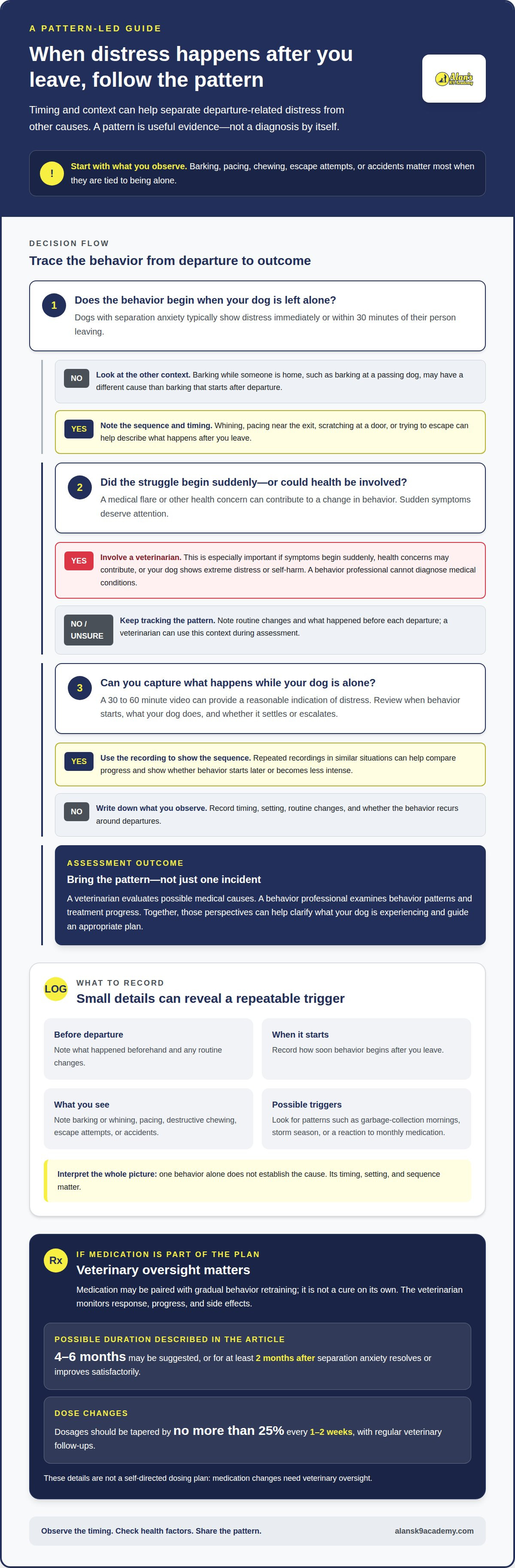
Track triggers by noting when your dog’s behavior changes and what happened before each departure. This can reveal patterns, such as distress on garbage-collection mornings or during storm season. A sudden struggle to stay alone can also coincide with a medical flare. Recording symptom timing and routine changes gives a veterinarian useful context for assessment.
Medical Conditions to Rule Out
A medical check can help distinguish anxiety from behavior changes linked to another health problem. A veterinary visit for suspected separation anxiety may include a behavioral assessment and medical tests to rule out other conditions. Involve a veterinarian if symptoms begin suddenly, health concerns may be contributing, or your dog shows extreme distress or self-harm. A behavior professional cannot diagnose medical conditions.
Medication may be part of treatment, but it isn’t a cure on its own. Behavior medication may be suggested for 4 to 6 months, or for at least 2 months after separation anxiety resolves or improves satisfactorily. The plan can pair medication with gradual behavior retraining, helping the dog practice calm departures while anxiety is managed.
Medication changes need veterinary oversight. Dosages should be tapered by no more than 25% every 1 to 2 weeks, with regular follow-ups to adjust the plan and monitor side effects. The veterinarian considers the dog’s response and progress during retraining. This coordinated approach matters because dogs with separation-related distress may need ongoing, individualized support rather than medication alone.
Common signs of separation anxiety
Watch for behavior that appears specifically when a dog is left alone or shortly after departure. Dogs with separation anxiety typically show distress immediately or within 30 minutes of their person leaving. The timing matters: barking during an absence differs from barking at a passing dog while someone is home.
Common signs involve changes in vocalization, activity, or house-training. For example, a dog may:
• Bark or whine persistently after the owner leaves.
• Pace repeatedly instead of settling in a resting place.
• Chew furniture, doors, or other household items destructively.
• Try to escape or have accidents indoors while alone.
One behavior alone doesn’t establish the cause. Destructive chewing could happen during separation, but its timing and setting help explain the pattern. An accident when your dog is alone may be linked to distress, while accidents at other times may point to a different concern. Look for a consistent connection with departures.
Distress may appear as a sequence. Your dog might whine, pace near the exit, then scratch at a door. Another dog may bark and try to escape soon after its owner leaves. These examples help you describe the behavior clearly to a veterinarian or behavior professional, who can assess the overall pattern instead of one isolated incident.
Dogs express anxiety in different ways. Some show obvious destruction or escape attempts; others display quieter signs, such as persistent pacing or whining. No damaged belongings doesn’t rule out distress. Look for behavior that changes during separation and recurs around departures.
Assessment can help distinguish separation-related distress from other behavior concerns and shape suitable support. A professional may use gradual desensitization, adjusting departure practice to the dog’s response rather than pushing through panic. A professional behavior assessment can help make sense of the signs and identify an appropriate path forward.
Identifying separation anxiety and other causes of problem behaviors
Your dog’s behavior during absences can help clarify whether it is anxious about being alone. Timing and context matter as much as the behavior itself.
Defining Separation-Related Behaviors
Separation-related problem behaviors are distress responses that happen when a dog is away from its person or home alone. The term describes a pattern, not a diagnosis by itself. Barking, pacing, or damaging an exit may indicate departure-related distress, but similar behavior in other situations can have different causes. That distinction helps professionals choose an appropriate assessment and treatment focus.
Recording Behavior When Alone
A professional can use a recording of the dog home alone to observe what happens after departure. A 30 to 60 minute video can provide a reasonable indication of distress. The review focuses on when behavior starts, what the dog does, and whether it settles or escalates. These details show more than a report of barking or damage alone.
Repeated recordings can help track progress during treatment. A professional can compare your dog’s responses in similar situations, including when distress starts and how long it lasts. If behavior starts later or becomes less intense, that change can inform adjustments. Recordings can also help distinguish separation-linked behavior from activity that occurs regardless of whether someone leaves.
Ruling Out Other Behavior Problems
Ruling out other behavior problems means checking whether the same actions happen in situations unrelated to separation. For example, barking while someone is home may have a different context from barking that starts after departure. A professional considers the setting, timing, and sequence before interpreting behavior, rather than letting one visible sign define the whole case.
Assessment also considers whether health factors could contribute. A behavior consultant cannot diagnose separation anxiety. A veterinarian evaluates possible medical causes, while a behavior professional examines patterns and treatment progress. These perspectives can help clarify what your dog is experiencing and keep the plan focused on the right situations.
Why specialized separation anxiety expertise matters
Separation distress calls for more than general obedience practice. A plan needs to address your dog’s emotional response while protecting its welfare.
Evidence-Based, Humane Methods
Humane support uses gradual desensitization, keeping practice below the point where panic begins. Forcing longer absences or punishing distress can intensify the underlying fear. A dog separation anxiety specialist in Rome, GA can tailor practice to your dog’s responses instead of following a fixed schedule. Food-based counterconditioning may help some dogs, but highly anxious dogs may not eat when alone.
Specialized support helps distinguish a training goal from an anxiety response. Obedience commands alone don’t resolve separation distress, and unsupported exposure to triggers can overwhelm a dog. A dog separation anxiety specialist in Rome, GA should adapt departure practice to your dog’s comfort and behavior. Mental enrichment may support a plan, but it doesn’t replace carefully managed practice. The professional should also consider your household routine and your dog’s welfare.
Specialist Qualifications
A Certified Separation Anxiety Trainer (CSAT) credential indicates advanced training focused on separation anxiety. It can help identify relevant expertise, but the professional should also explain how assessment, gradual practice, and progress reviews work together. A behavior consultant is not a veterinary professional and cannot diagnose separation anxiety or medical causes. Veterinary involvement matters for diagnosis and medication decisions.
Ask how the professional observes your dog, keeps practice below the panic threshold, and adjusts sessions when distress appears. Clear explanations should connect your dog’s behavior to the plan, rather than promise quick results or rely on punishment. A suitable specialist considers your pet’s welfare and your family’s ability to manage absences during treatment.
Alan's K9 Academy
Alan's K9 Academy can help families address separation-related behavior through personalized training and behavior modification. If your dog becomes distressed when left alone, professional support can help clarify the behavior pattern and shape a humane plan suited to your dog and household.
In-home training addresses challenges in the setting where they occur, while behavior modification focuses on responses that interfere with everyday life. A veterinarian should assess possible medical causes; training can then work alongside veterinary care when appropriate. The goal is practical progress that considers both your dog’s well-being and your family’s routine.
If you’re ready to discuss your dog’s behavior and possible next steps, contact Alan's K9 Academy.
Take the Next Step Toward a Calmer Routine
Moving forward starts with a plan suited to your dog’s behavior and your household’s daily life. When speaking with a dog separation anxiety specialist in Rome, GA, describe what happens around departures and what support you’re seeking. Those details can make the first conversation more focused.
Alan's K9 Academy offers In-Home Dog Training and Behavior Modification for families working through behavior challenges, as well as Therapy & Service Dog Training. The right training focus depends on your goals and your dog’s needs. A thoughtful discussion can help you understand which direction makes sense for your situation.
You don’t have to work through the next step alone. Contact Alan's K9 Academy today to discuss your dog’s behavior and explore a path forward. With clear information and compassionate professional support, you can take a steady step toward a more comfortable routine for your family and your dog.
Frequently Asked Questions
Are there other reasons that my dog may engage in these behaviors?
Yes. Similar behaviors can have different causes, including a medical problem or a frightening event associated with being alone. For example, your dog may react to garbage collection or storm noises rather than your departure. Note whether the behavior also happens when you’re home, and share sudden changes with your veterinarian. This context can help distinguish health concerns from departure-related distress.
How can a professional help teach my dog to accept my departures?
A professional can identify which parts of leaving seem difficult, such as picking up keys or closing the door, then shape a plan around your dog’s response. Practice departure cues in brief, calm sessions, making sure your dog is settled before repeating them. The aim is to make those cues less alarming, not to repeatedly expose your dog to a departure that causes panic.
How can a professional retrain my dog to feel less anxious during departures?
A professional can use gradual desensitization, keeping each practice absence below the point where your dog becomes distressed. Adjust the length according to your dog’s response, not a preset timetable. If anxiety appears before the planned return, shorten the next practice absence. This helps build comfort steadily rather than asking your dog to endure a longer departure.
How do I know if my dog's problem is due to separation anxiety?
Look for a repeated connection between your departure and the behavior, rather than relying on one episode of barking or damage. A recording of your dog home alone can reveal when the behavior starts and whether it continues. A veterinarian can assess possible medical factors; a behavior professional can examine the pattern but cannot diagnose separation anxiety.
How can a specialist help my dog progress to being left at home?
A specialist can establish a starting point your dog can handle, then adjust the plan as calm behavior develops. Some dogs begin with brief periods alone, while others can manage longer practice. If signs of distress appear, shorten the absence instead of extending it. Progress means your dog can remain calm, not simply that more time has passed.
How can a specialist retrain my dog to reduce dependence and following?
A specialist can build independence in easier situations first, such as helping your dog stay settled while you briefly leave the room. Gradually increase the duration as your dog remains comfortable. This develops a different skill from tolerating a full departure: relaxing without constant proximity. The professional can adapt exercises to your dog’s behavior and avoid pushing beyond its current comfort.