%20(620%20x%20150%20px)%20(14).webp)
%20(620%20x%20150%20px)%20(15).webp)
.webp)
_page-0001.webp)
.webp)
Dog Obedience Classes in Cartersville, GA: Build Real-World Skills
What if better obedience means more than teaching your dog a cue? It also means learning to use that cue together when everyday life gets distracting. If you’re considering dog obedience classes Cartersville GA, think about whether your dog can focus around other dogs and people, and which everyday...
%20(5).gif)
What if better obedience means more than teaching your dog a cue? It also means learning to use that cue together when everyday life gets distracting. If you’re considering dog obedience classes Cartersville GA, think about whether your dog can focus around other dogs and people, and which everyday situations you want to improve. The goal is to build skills you can use beyond class.
Structured group training gives dogs and owners a chance to learn side by side, practice communication, and build consistency with guidance. It can help develop everyday obedience and social skills in a supported setting. The most useful starting point is a clear idea of your dog’s needs and your own training goals.
This article explains what group obedience classes can help you practice, what participation involves, and how to choose a format that suits your dog. Alan's K9 Academy offers hands-on group instruction using balanced, humane methods. Founded by Master K9 Trainer Alan Carr, the academy draws on more than 35 years of professional dog instruction experience to help families build practical skills and stronger communication.
Key Takeaways
• Group obedience classes let owners and dogs practice together, building clearer communication for everyday situations.
• Skills grow more dependable through a simple cycle: learn a cue, practice it, and use it consistently in daily routines.
• Consider your dog’s behavior, learning goals, and comfort around distractions when deciding whether group practice is a good fit.
• Dog obedience classes Cartersville GA can provide structured, humane instruction for developing practical skills beyond class.
• Alan’s K9 Academy serves Cartersville and Bartow County, drawing on founder Alan Carr’s more than 35 years of professional dog instruction experience.
What Can Dog Obedience Classes in Cartersville Help Your Dog Learn?
Group obedience classes are structured learning sessions where owners and dogs practice skills together with professional guidance. The aim is not just to get a response to a cue in class. It’s to help you communicate clearly and consistently, then use that understanding in daily routines. In Cartersville, that might mean a more manageable walk, a calmer greeting at the door, or a dog who can settle while you speak with a neighbor.
Obedience practice teaches cues and manners for everyday life; behavior modification focuses on changing challenging behavioral patterns and responses. The two can complement each other, but they address different goals. Teaching a dog to come when called is an obedience goal. Addressing fear or reactivity that makes approaching people difficult may call for behavior modification tailored to the dog’s needs.
Common obedience goals include responding to a name, sitting, staying, coming when called, walking on a loose leash, and waiting calmly. To choose a useful goal, start with a specific routine that is difficult at home or on walks. For general background on dog training principles and methods, you can explore how training approaches support communication and learning.
What does obedience training mean in everyday life?
A cue becomes useful when it helps with a real routine. If your dog rushes toward the door, for instance, practice a brief pause before opening it. Use the same cue, wait for the response you’re teaching, and reinforce it consistently. Repeating that practice in the same routine helps your dog understand what to do. Once your dog is comfortable, you can build on the skill in other everyday situations.
Why learn with your dog in a group setting?
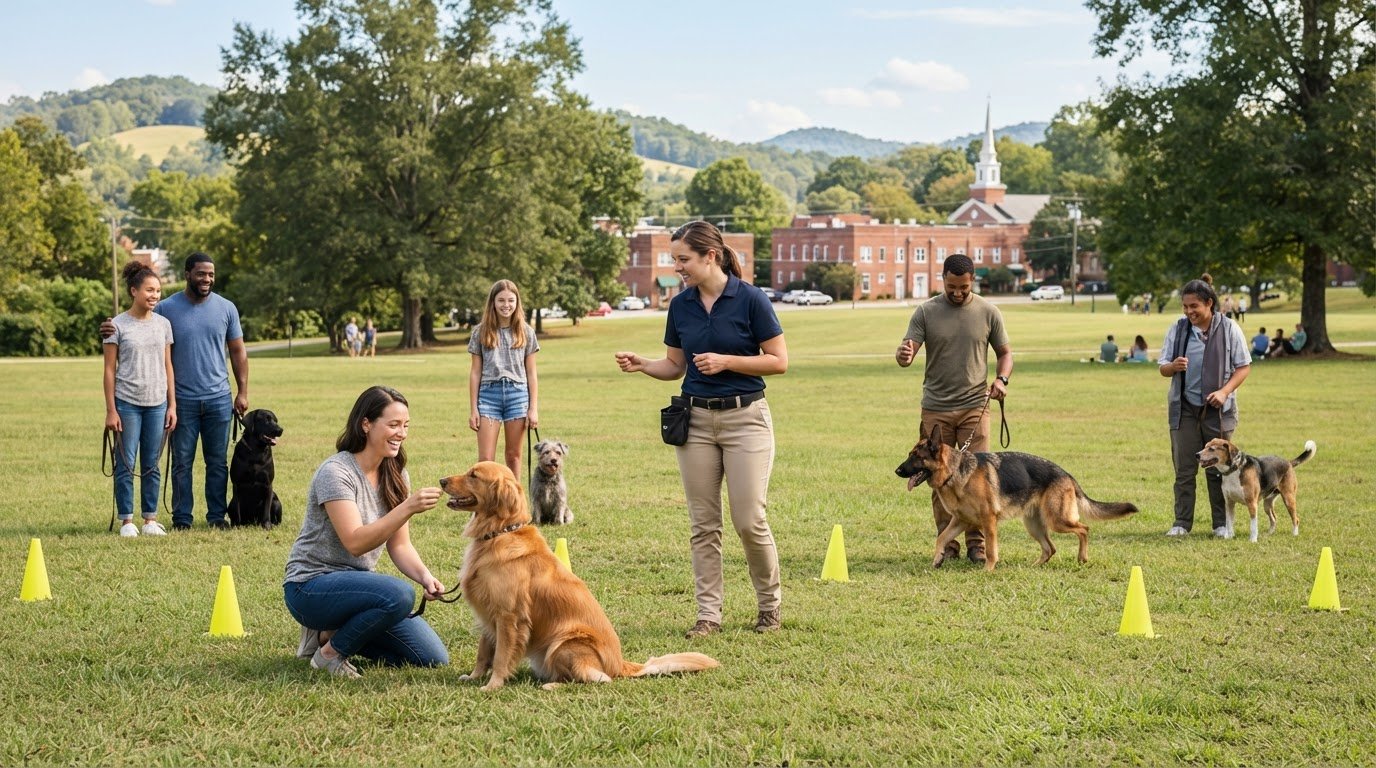
In group classes, you’re an active participant, not a spectator handing training off. You practice giving cues, notice how your dog responds, and learn how to guide the next attempt. A structured group environment also gives you and your dog a chance to practice around ordinary distractions, such as other dogs moving nearby, while keeping the focus on your partnership. Socialization means calm, appropriate exposure, not forcing dogs to greet or interact.
Shared practice can help you recognize when your dog is ready to respond and when you should make the situation easier. If attention slips, pause, create more space, and try again with a simple cue. That gives you a calm way to adjust instead of repeating a command louder or faster.
For owners exploring dog obedience classes Cartersville GA, Alan's K9 Academy offers structured group learning with balanced, humane instruction. You and your dog build communication together, one practical skill at a time. A cue is most useful when both of you understand it and can apply it beyond the training setting.
How Do Group Dog Obedience Classes Build Skills and Reliability?
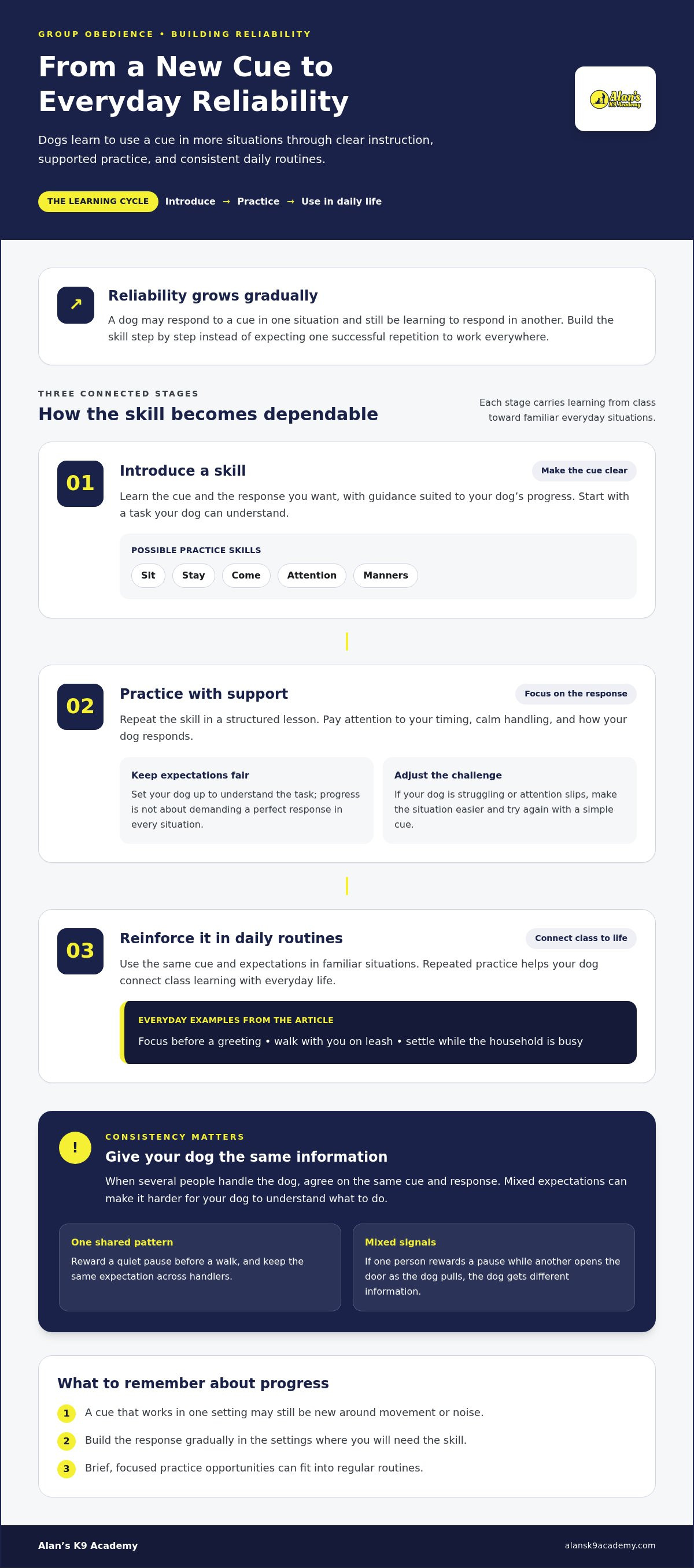
A dog may respond to a cue in one situation and not another. That doesn’t mean learning has failed. Reliability develops as your dog understands what a cue means, practices the response with your guidance, and learns to use it in different everyday situations. Group classes give you a structured place to start, while practice between lessons connects instruction to life at home.
Reliability grows through repeated practice in the settings where you’ll need a skill. A dog who can wait calmly in a quiet room is still learning if the same cue is new around movement or noise. Build the response gradually rather than expecting one successful repetition to work everywhere.
Introduce a skill.
Learn a clear cue and the response you want, with guidance suited to your dog’s progress.
Practice with support.
Repeat the skill in a structured lesson while you focus on timing, calm handling, and your dog’s response.
Reinforce it in daily routines.
Use the same cue and expectations in familiar situations so your dog can connect class practice with everyday life.
Balanced, humane instruction pairs clear guidance with fair expectations. Set your dog up to understand the task, pay attention to their response, and adjust the challenge if they’re struggling. Progress is not about demanding a perfect response in every situation. It’s about helping your dog learn while you become more consistent and confident as a handler.
What skills can owners practice during obedience training?
Depending on your dog’s needs and lesson goals, practice may include basic cues such as sit, stay, or come, along with attention and manners. Connect practice to familiar routines: encourage your dog to focus before a greeting, walk with you on leash, or settle while the household is busy. Calm, consistent handling makes expectations easier to understand.
How does owner participation support progress?
Your dog learns with you, not just from an instructor. During class, practice giving cues and reinforcing the response, then carry those same skills into regular routines. Brief, focused practice opportunities can be easier to fit into the day than one long session. If several people handle the dog, agree on the same cue and response to avoid mixed signals.
For example, if one person rewards a quiet pause before a walk and another opens the door while the dog pulls, the dog gets different information about the same moment. A shared approach gives your dog a clearer pattern to follow. Keep expectations manageable, practice when you can give your dog your attention, and pause if either of you becomes frustrated.
Owners considering dog obedience classes Cartersville GA can look for instruction that makes practice collaborative and practical. Alan's K9 Academy’s group obedience classes bring owners and dogs together for structured learning with balanced, humane methods. Between lessons, consistent communication helps turn a practiced skill into a useful everyday habit.
Are Group Dog Obedience Classes Right for Every Cartersville Dog?
Group learning can be useful, but the best setting depends on your dog’s goals, comfort, and behavior. Some dogs are ready to practice everyday cues around other dogs and people. Others may find a group environment too challenging at first, particularly if fear, anxiety, or reactive behavior makes it difficult to focus. Choose a setting that supports learning instead of expecting every dog to progress in the same way.
For owners considering dog obedience classes Cartersville GA, begin with the main goal. Are you working on basic manners and cues around manageable distractions? Or does your dog’s behavior make ordinary situations difficult or stressful? That distinction can help you choose between shared practice and more individualized guidance.
When can a group class be a useful fit?
A group class can suit owners looking for structured obedience practice and the chance to learn alongside their dogs. A managed setting gives you the opportunity to work on attention and cues while other activity is present, building experience beyond a quiet room at home. The environment should remain supportive: practicing near other dogs does not require direct greetings or interaction. Consistent practice between lessons also matters.
Group learning may be a good match if your dog can notice nearby activity and still engage with you, even if their attention wanders at times. Use the structure to practice calmly, follow guidance, and observe your dog’s responses. If the setting feels overwhelming, adjust the challenge rather than pushing through distress.
For broader ideas on building dependable responses beyond class, explore this North Atlanta dog obedience training guide.
When might individualized behavior support be more appropriate?
Basic obedience goals, such as responding to cues or improving manners, differ from concerns such as aggression, anxiety, or intense reactions to people, dogs, or specific situations. When behavior concerns make it difficult for a dog to feel safe or participate, individualized behavior modification can focus more directly on that dog’s triggers, responses, and learning needs. It can also help owners understand how to approach challenging situations thoughtfully.
Use these three questions to think through the best setting:
Goal
Are you building everyday obedience skills, or addressing a specific behavioral challenge?
Learning environment
Can your dog focus with other activity nearby, or would a quieter, more individualized approach better suit them?
Complexity
Does the concern involve more than learning a cue, such as fear, anxiety, or aggression?
If behavior concerns are central to your decision, this dog behavioral training guide offers additional context. The right support depends on the dog and the goal, and owner follow-through helps make practice more useful. For Cartersville dog owners, Alan’s K9 Academy offers group classes as well as individualized training options, including in-home training and behavior modification.
How Can Cartersville Owners Prepare for Obedience Class and Keep Practicing?
Good preparation starts with a clear picture of daily life, not a long list of commands. Before class, think about the moments when communication feels difficult: perhaps your dog struggles to focus near visitors, pulls toward interesting smells, or has trouble settling while the family is busy. Choose one specific example to share. It gives you a practical goal and helps make instruction relevant to your routine.
For owners exploring dog obedience classes Cartersville GA, preparation also means noticing how your dog handles unfamiliar places and nearby activity. Share useful context with the instructor, including what tends to distract or worry your dog and what you’ve already tried. The goal is not to arrive with perfect behavior, but to start with a clear picture of what your dog needs to learn.
What should you think through before the first class?
Identify your priorities, consider your dog’s comfort in new environments, and decide what realistic progress would look like. You might aim for a calmer start to walks rather than expecting your dog to ignore every distraction right away. If your dog has a behavior concern, describe what happens and in which situations. Clear context helps guide useful, humane instruction.
Name a routine
Choose one everyday situation where you’d like clearer communication or better manners.
Notice your dog’s response
Think about how they react to new surroundings, people, sounds, or nearby dogs.
Set a manageable goal
Focus on a skill or moment you can practice consistently, rather than expecting instant change.
How can you reinforce class learning at home?
Between lessons, keep practice brief and focused. Choose one clear skill and try it in a familiar, manageable situation before making the setting more challenging. Use the same cue and a consistent response as much as possible. If several people in your household work with the dog, agree on the words and expectations so your dog isn’t left guessing.
• Practice during a quiet moment, such as asking for a pause before clipping on the leash.
• Notice and reinforce appropriate choices in everyday routines, including calm attention or settling.
• If your dog loses focus, reduce the distraction or make the task easier, then try again calmly.
A class can introduce skills, but lasting habits grow through steady owner participation. Small repetitions woven into ordinary routines help you recognize what your dog understands and where more support may be useful. Keep expectations fair, notice thoughtful effort, and give your dog time to learn.
Alan’s K9 Academy uses hands-on, balanced, humane instruction to help owners and dogs learn together. Explore Alan’s K9 Academy’s training approach as you plan practical next steps for your dog.
Find Dog Obedience Classes Near Cartersville with Alan’s K9 Academy
Choosing a class is about more than finding a place to practice cues. Look for instruction that helps you understand your dog and apply what you learn in everyday routines. Alan’s K9 Academy is an award-winning dog training business serving Cartersville and Bartow County, with structured group classes where owners and dogs learn together.
Founded by Master K9 Trainer Alan Carr, the academy brings more than 35 years of professional dog instruction experience to its training. Its balanced, humane approach pairs clear guidance with practical expectations, helping owners take an active role in learning. Group classes keep the owner-dog partnership central to practice.
What makes the academy’s group training owner-focused?
Hands-on participation gives you the opportunity to practice communicating with your dog while receiving instruction. You can work toward goals that matter in daily life, whether that means building attention, improving manners, or creating more consistent responses in familiar routines. As you learn to notice your dog’s signals and respond clearly, class practice becomes a foundation you can continue using together.
The value is in learning as a team. You’re not only watching your dog respond to an instructor; you’re building the skills and understanding to guide your dog yourself. That shared work makes training relevant to both of you, while the group format provides a structured setting for practicing alongside other owner-dog teams.
How can local owners get started?
Start with your goals. Consider the situations where you’d like more reliable communication, then choose a training format that fits your dog and household. Alan’s K9 Academy serves local owners through group classes, in-home training, and behavior modification. Each offers a different way to work on your dog’s needs.
As you explore dog obedience classes Cartersville GA, look for a learning experience that values your involvement and connects instruction to practical skills. Alan’s K9 Academy brings professional experience and owner-and-dog collaboration together, with humane guidance focused on a stronger working relationship. Progress takes participation, patience, and practice, and you can build those habits with guidance.
Take the next step toward clearer communication and practical training for your dog. Explore Alan’s K9 Academy.
Build the Next Skill Into Your Everyday Routine
Training progress doesn’t have to begin with a dramatic change. Choose one moment you’d like to make easier, then decide what clearer communication with your dog could look like there. That goal can help you create a practical plan, whether you’re building everyday obedience or choosing the right learning environment for your dog.
If you’re exploring dog obedience classes Cartersville GA, look for guidance that helps you participate, practice, and keep learning alongside your dog. Consistency takes time, and small efforts repeated in daily life can give you a stronger foundation for handling new situations together. Start with what matters most to your household and build from there.
Alan’s K9 Academy helps local owners work toward training goals through group classes, in-home training, and behavior modification. Explore Alan’s K9 Academy and take the next step toward practical training for your dog.
Frequently Asked Questions
Are dog obedience classes good for dogs that have never had training?
Yes. Beginners can learn in class alongside their owners. You don’t need to arrive with polished skills; start by helping your dog notice you and respond to simple cues. For owners considering dog obedience classes Cartersville GA, a useful first goal might be getting your dog’s attention before asking for a response. Progress depends on your dog’s needs and the practice you continue at home, so keep expectations realistic and recognize small steps.
Can adult dogs join obedience classes, or are they only for puppies?
Obedience learning isn’t limited to puppies. Adult dogs can work on new skills or strengthen habits they’ve already started learning. An adopted adult dog, for example, may need practice walking calmly on leash, while another dog may benefit from improving attention around everyday activity. Think about the behavior you want to work on and how your dog handles a learning environment. Goals and support should fit the individual dog.
What should I bring to a dog obedience class?
Bring items that help you handle and care for your dog comfortably, such as a leash, water, cleanup bags, and treats your dog enjoys if you use them in training. A short note about your goals or challenging situations can help you explain what you’d like to work on. Keep your dog’s belongings organized and easy to reach so you can focus on instruction.
How often should I practice obedience skills at home?
Practice regularly in brief, manageable opportunities rather than waiting for one long training session. You might work on attention before a walk, then reinforce a calm pause during another routine. Everyday moments help your dog connect a cue with different contexts, not just the place where it was first taught. If your dog becomes tired or distracted, simplify the task and try again later. Consistency matters more than cramming in repetitions.
Can a dog with reactivity attend a group obedience class?
It depends on what triggers the reaction and whether your dog can stay engaged in a shared setting. Mild distraction is different from intense fear, anxiety, or aggression that makes nearby dogs or people difficult to manage. If the concern is complex, individualized behavior modification can address specific triggers and responses more directly. Share the behavior context with your trainer so the approach can account for your dog’s needs and safety.
How long does it take for a dog to learn obedience?
There’s no single timeline for learning obedience. A dog may understand a cue in a familiar, quiet setting before responding consistently around movement, noise, or other distractions. Progress depends on the dog, the skill, how consistently you practice, and how challenging the situation is. Focus on steady improvement instead of a deadline. If a response isn’t reliable yet, return to an easier setting and build difficulty gradually.
Do owners participate in dog obedience classes?
Yes, group classes are designed for owners and dogs to learn together. You practice giving cues, observe your dog’s response, and learn how to support the skill outside class. Alan’s K9 Academy serves owners in Cartersville, Canton, Woodstock, Marietta, Rome, Acworth, Kennesaw, Sandy Springs, Roswell, Alpharetta, Powder Springs, Dallas, Hiram, Jasper, Cumming, Holly Springs, Ball Ground, and Milton. Your involvement helps build communication you can continue using at home.