%20(620%20x%20150%20px)%20(14).webp)
%20(620%20x%20150%20px)%20(15).webp)
.webp)
_page-0001.webp)
.webp)
Dog Obedience Classes in Bartow County: How to Choose the Right Fit
The best choice among dog obedience classes Bartow County offers may not be a group class. If other dogs and new surroundings distract or overwhelm your dog, personalized training may be a better starting point. If your dog can focus around others with your guidance, a structured group setting can h...
%20(5).gif)
The best choice among dog obedience classes Bartow County offers may not be a group class. If other dogs and new surroundings distract or overwhelm your dog, personalized training may be a better starting point. If your dog can focus around others with your guidance, a structured group setting can help you practise obedience and social skills together.
It’s natural to wonder what a class teaches, how owners take part, and whether your dog is ready to learn alongside others. The right fit depends on your dog’s needs, your goals, and where you want to use the skills in daily life.
This guide compares group classes with personalized in-home training, explains the everyday skills obedience practice can support, and offers practical ways to choose a path in Bartow County. You’ll also learn how owner involvement and consistent practice help carry lesson skills into daily routines.
At Alan’s K9 Academy, structured group classes focus on obedience and socialization, with owners working alongside their dogs. Founded by Master K9 Trainer Alan Carr, who has over 35 years of professional dog instruction experience, the academy also provides in-home training and behavior modification for dogs who need a more individualized approach.
Key Takeaways
• Use obedience training to build clearer communication and practise useful everyday skills with your dog.
• Know what to expect from a class: demonstrations, owner coaching, and guided practice help make learning manageable.
• Choose group learning for structured obedience and socialization practice, or consider personalized training when your dog needs a more tailored setting.
• Before starting dog obedience classes Bartow County, identify your goals and share relevant behavior history and learning needs.
• Alan’s K9 Academy offers owner-involved group classes and personalized training to support a practical next step for you and your dog.
What Do Bartow County Dog Obedience Classes Teach?
A dog obedience class is structured, owner-involved training that helps dogs and their people build practical communication and everyday skills. You don’t just watch a trainer work with your dog. You learn to give clear cues, notice your dog’s response, and reinforce useful behavior consistently. That partnership is central to basic obedience training.
In dog obedience classes Bartow County owners may work on foundational cues and manners that make home routines and outings easier to manage. Common goals include:
Basic cues
Sit, down, stay, and coming when called.
Leash manners
Practising calmer, more attentive walks beside you.
Polite greetings
Helping your dog learn more controlled ways to meet people.
Focus around distractions
Responding to your cue when something interesting is nearby.
These are training goals, not guaranteed results. Dogs learn at different paces, and skills become more dependable through repeated practice. Use the same words and gestures at home, reinforce the behavior you want, and keep practice sessions manageable. If family members use different cues for the same behavior, your dog may have a harder time understanding what you’re asking.
Which everyday skills can an obedience class develop?
Obedience practice can help you communicate what you want your dog to do in familiar situations, such as waiting at a doorway, settling during a household routine, or walking with you on leash. Socialization is also part of learning. It means helping a dog stay composed around people, other dogs, and everyday distractions, not expecting every dog to greet or play with everyone.
Why does local, real-world practice matter in Bartow County?
Skills need to work beyond a lesson. Around Cartersville and Bartow County, you might want your dog to respond to a cue at home, stay attentive on a walk, or greet visitors more calmly. Practising in suitable everyday settings helps you carry lessons into the routines you actually share. Begin with manageable distractions and build gradually as your dog is able to stay focused.
Attending class alone isn’t enough. Short, regular practice between lessons helps you and your dog understand each other and use cues in different situations. Alan’s K9 Academy’s structured group classes focus on obedience and socialization, with owners participating alongside their dogs so learning is a shared effort.
What Happens in a Bartow County Dog Obedience Class?
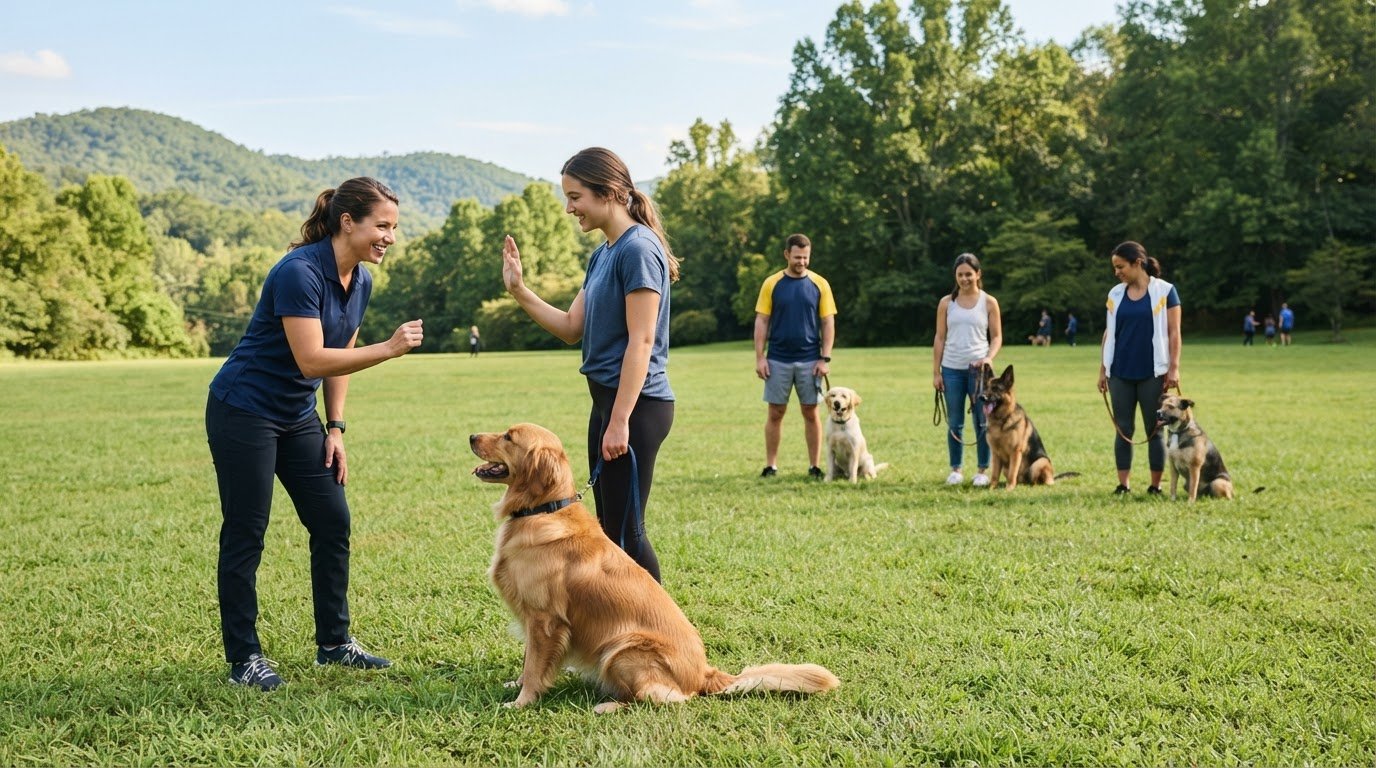
A well-structured lesson gives you a chance to see a skill demonstrated, try it with your dog, and receive coaching as you practise. Activities vary, but the focus is hands-on learning rather than simply watching a trainer give instructions.
A trainer may introduce a task in manageable steps, demonstrate how to communicate a cue, and then guide you as you work with your dog. You might practise walking on leash, waiting calmly, or responding to a familiar cue. Feedback can help you adjust your timing, body language, or reward so your dog receives a clearer message. The aim is for you to understand how to continue practising outside class.
How do dogs and owners practise obedience skills together?
Expect to take an active role. You give the cue and reward while the trainer observes and offers practical feedback. If your dog is unsure or distracted, the trainer can help you break the task into smaller steps. Owner coaching matters because you, not the trainer, will use these skills in daily routines. For a reference point on manners and handling skills, the Canine Good Citizen program outlines behaviors assessed in its evaluation. A class doesn’t need to follow that program to provide useful instruction.
How does structured socialization support learning?
Socialization in a class doesn’t have to mean dogs meeting or playing with one another. Calm, guided exposure gives your dog a chance to notice people, dogs, and activity while practising attention and settling. Distance and pacing matter. A dog who can focus with more space may find it easier to learn than one placed close to a distraction before they’re ready. Dogs vary, so a group setting won’t feel comfortable or productive for every dog right away.
In dog obedience classes Bartow County owners can look for structured practice that takes the dog’s comfort into account. If your dog seems overwhelmed, tell the trainer what you’re noticing rather than pushing through the exercise. Alan’s K9 Academy’s group classes focus on obedience and socialization, with owners participating alongside their dogs. For a closer look at owner-involved group dog training, explore the academy’s approach.
Learning continues between lessons. Keep practice short and consistent, and use familiar routines to reinforce the same cues. Thoughtful repetitions help you build on classwork without expecting your dog to master everything at once.
Group Classes or Personalized Dog Training: Which Fits Your Bartow County Dog?
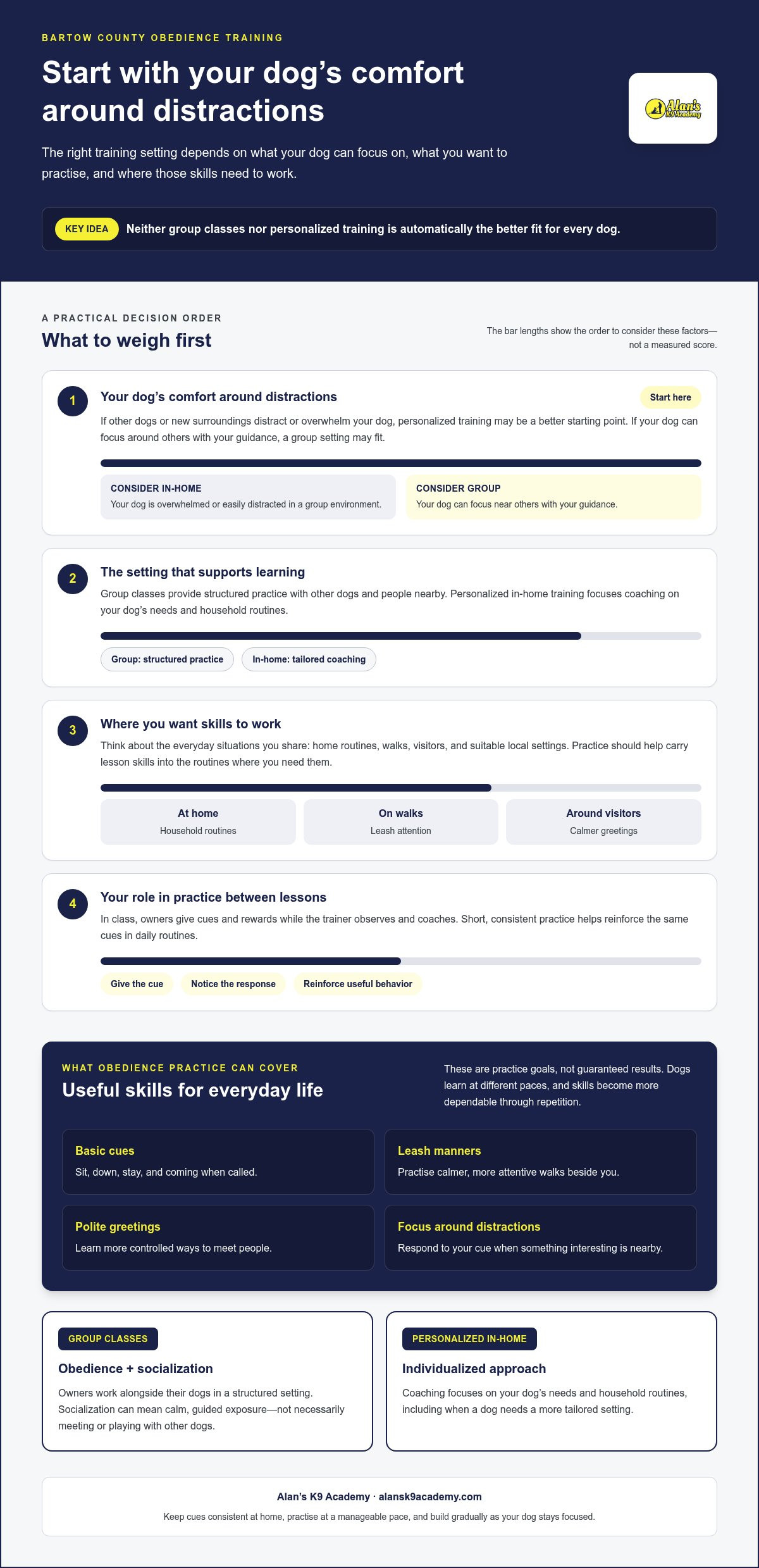
The right format depends on what your dog is ready to learn and where you need the skills to work. Group classes provide a structured setting to practise obedience and socialization with other dogs and people nearby. Personalized in-home training, by contrast, focuses coaching on your dog’s needs and household routines. Neither format is automatically the better choice for every dog.
When can group obedience classes be a good fit?
Group learning may suit a dog who can stay engaged with your guidance around manageable distractions, even if focus still takes practice. You can work on obedience while helping your dog remain composed around others. The goal isn’t for every dog to greet or play. It’s to build useful skills at a pace that respects the dog’s comfort. Goals and progress will differ from dog to dog.
When comparing dog obedience classes Bartow County offers, consider whether your dog can participate in a shared environment and whether you want structured practice around everyday distractions. Alan’s K9 Academy’s group classes focus on obedience and socialization, with owners taking part alongside their dogs.
When might personalized behavior support be a better first step?
If aggression, anxiety, or complex behavior concerns make a group setting difficult, individualized guidance can start with what your dog is experiencing and the context at home. Personalized in-home training and behavior modification provide a tailored path, with coaching connected to your household’s routines. Learn more about professional in-home dog training or professional dog behavior training.
To weigh the options, consider your dog’s comfort, the distractions they can currently handle, and the behavior you want to address. If your main aim is practising obedience and social skills in a structured group, group classes may be a sensible fit. If a specific behavior challenge needs focused attention, personalized support may be a more comfortable starting point. One-to-one coaching can also help you work on individual needs before moving into group practice.
As you assess a training approach, the American Veterinary Society of Animal Behavior’s guidance on choosing a trainer offers information about reward-based methods and training practices. Alan’s K9 Academy serves Cartersville and Bartow County with structured group classes, personalized in-home training, and behavior modification to help owners choose a path suited to their dog.
How to Choose and Prepare for Dog Obedience Classes in Bartow County
A little preparation can make training more useful for you and your dog. Before choosing among dog obedience classes Bartow County offers, write down the everyday changes you want to work toward. A clear goal helps you focus practice and explain what matters most to your family.
What should you consider before joining an obedience class?
Think about how your dog responds to unfamiliar people, other dogs, and distractions. Can your dog notice activity and still take cues from you, or does the environment make it hard to settle and focus? This isn’t a pass-or-fail test. It helps you decide whether group learning feels like a workable starting point or whether individualized guidance may be a better fit.
Look for a structured approach with clear instruction and active owner participation. Before class, choose one or two specific goals, such as improving leash manners, responding more reliably to a cue, or creating calmer interactions at home. Share relevant behavior history and learning needs with the trainer so guidance takes your dog’s experience into account. Keep expectations grounded in practice rather than promises of guaranteed results.
Bring suitable rewards your dog enjoys, and follow the trainer’s guidance about equipment and other class needs. If you’re unsure how your dog responds in a particular situation, describe what you’ve observed. Useful details include what tends to happen, what seems to trigger the response, and what helps your dog regain focus.
How can your family reinforce class learning at home?
Consistency matters. Agree on the words and hand signals everyone will use, along with simple household expectations, such as where your dog waits before going through a doorway. Practise in short, manageable sessions between classes. Repetition helps your dog understand what a cue means, while calm, consistent responses from family members make the message clearer.
Choose a priority
Focus on one useful skill at a time.
Keep cues consistent
Make sure everyone uses the same signal and response.
Practise in small steps
Start in a familiar setting, then add distractions as your dog is ready.
Notice progress
Pay attention to small improvements, not only perfect responses.
Puppies benefit from thoughtful foundations, too. Families looking for support at home can explore in-home puppy training in Cartersville. Consistent practice and owner involvement give class skills more opportunities to become part of everyday life.
Ready to take a practical next step? Explore dog training with Alan’s K9 Academy for support serving Cartersville and Bartow County.
Explore Dog Obedience Training with Alan’s K9 Academy in Bartow County
Choosing a training path is easier with professional guidance focused on the partnership between you and your dog. Alan’s K9 Academy serves Cartersville and Bartow County with structured group classes, personalized in-home training, and behavior modification. Founded by Master K9 Trainer Alan Carr, the academy brings more than 35 years of professional dog instruction experience to its work with dogs and their owners.
Group classes provide an owner-involved setting to develop obedience and socialization. You participate alongside your dog, learning how to communicate and practise skills together. If your dog’s needs or home context call for more individualized attention, in-home training or behavior modification provides a tailored path. Choose support that fits your dog and the skills you want to build, rather than expecting one format to suit every situation.
What makes the academy’s approach personal and practical?
Alan’s K9 Academy uses balanced, humane methods and emphasizes hands-on owner participation. Guidance can be shaped around the dog and the family’s goals, while practice helps owners carry lessons into everyday routines. Real-world obedience grows through clear communication and consistent practice between owner and dog. That shared effort helps make training useful beyond a lesson.
What is a sensible next step for Bartow County dog owners?
Start by identifying what you’d like to work on and which format feels like a suitable place to begin. Your priorities might include structured group practice, skills coached in your home, or tailored support for a behavior concern. Bring those goals into a discussion about group classes, in-home training, or behavior modification. A clear starting point makes the next step more manageable.
If you’re considering dog obedience classes Bartow County families can take part in with their dogs, explore the academy’s training options and choose a direction that reflects your dog’s needs. Explore Alan’s K9 Academy and take the next step toward more confident communication and meaningful practice with your dog.
Take the Next Step Toward Better Communication
The right training format fits your dog’s needs and your everyday goals. Group classes offer structured, owner-involved practice in obedience and socialization, while personalized in-home training or behavior modification provides a more tailored path. Whichever you choose, steady practice between lessons helps you carry new skills into daily life.
If you’re comparing dog obedience classes Bartow County families can join with their dogs, Alan’s K9 Academy serves Cartersville and Bartow County with professional guidance. Founded by Master K9 Trainer Alan Carr, who has over 35 years of professional dog instruction experience, the award-winning academy supports owners as active partners in their dogs’ learning.
Start with a goal that matters to your household, then choose an approach that feels right for you and your dog. Explore dog training with Alan’s K9 Academy and take a confident step toward clearer communication and more meaningful practice together.
Frequently Asked Questions
Are dog obedience classes a good fit for every dog?
Not necessarily. Group classes may suit dogs who can learn around manageable distractions while their owners participate and guide them. If your dog experiences aggression, anxiety, or complex behavior concerns, individualized behavior support may be a more comfortable starting point. The best format depends on your dog’s needs, comfort, and learning goals. A gradual, tailored approach helps you choose a practical next step without expecting every dog to thrive in a group.
What do dogs learn in obedience classes?
Classes commonly work on foundational cues, leash manners, coming when called, and staying calm around everyday distractions. Skills and learning pace vary, so a class won’t necessarily follow the same curriculum for every dog. Owners learn alongside their dogs, then practise between lessons to carry skills into familiar routines. For example, reinforce a cue at home before expecting your dog to respond around new sights and sounds.
How long does it take to train a dog in obedience classes?
There’s no single timeline for every dog. Progress depends on your dog’s starting skills, learning pace, goals, and how consistently you practise outside class. Lessons provide structured instruction, while everyday repetition helps your dog understand and use skills in different situations. Set realistic expectations, focus on steady progress, and reinforce lessons in daily routines. A fixed number of sessions or guaranteed timeframe wouldn’t account for each dog’s individual needs.
Can puppies attend dog obedience classes in Bartow County?
Puppy training can build early communication, foundational obedience, and confidence when instruction fits the puppy’s needs and comfort. Consider your puppy’s age, experience, and ability to focus around other dogs and people when choosing a group setting. Puppy-specific guidance is another path, including focused support at home. For more about building early skills in a familiar setting, read the academy’s in-home puppy training guide.
Should I choose group classes or private dog training?
Choose based on your goals and your dog’s comfort. Group classes provide structured practice around other dogs and people, supporting obedience and socialization. Personalized training can focus more closely on your dog’s behavior and household routines. If you’re working toward skills in a shared setting, group learning may suit your needs. For individual behavior concerns or home-specific goals, one-to-one coaching may be a better fit. Neither option is right for every family.
How do I prepare my dog for an obedience class?
Start by choosing a few practical goals and sharing relevant behavior history and learning needs with the trainer. Follow the trainer’s guidance about equipment, suitable rewards, and class preparation rather than assuming there’s one required supply list. Keep expectations realistic: learning takes repetition, clear communication, and consistent practice at home. Short practice sessions between lessons can reinforce what you and your dog are learning without expecting instant mastery.
Are dog obedience classes available in Cartersville and Bartow County?
Alan’s K9 Academy serves Cartersville and Bartow County with structured group classes focused on obedience and socialization, with owners participating alongside their dogs. The academy also serves Canton, Woodstock, Marietta, Rome, Acworth, Kennesaw, Sandy Springs, Roswell, Alpharetta, Powder Springs, Dallas, Hiram, Jasper, Cumming, Holly Springs, Ball Ground, and Milton. Explore the academy’s dog training options and identify your dog’s goals as a practical next step.