%20(620%20x%20150%20px)%20(14).webp)
%20(620%20x%20150%20px)%20(15).webp)
.webp)
_page-0001.webp)
.webp)
.png)
Dog Noise Phobia Training: North Atlanta Professional Guide
Last July, you watched your dog retreat to the bathtub, trembling and panting as the local fireworks display began. It’s a heartbreaking sight that many North Atlanta families know all too well, especially when the heavy summer storms roll in over Cartersville. You've likely spent sleepless nights c...
%20(5).gif)
Last July, you watched your dog retreat to the bathtub, trembling and panting as the local fireworks display began. It’s a heartbreaking sight that many North Atlanta families know all too well, especially when the heavy summer storms roll in over Cartersville. You've likely spent sleepless nights comforting a terrified pet or surveying the damage after a fear-induced destructive episode. It’s exhausting to feel so helpless while your companion suffers, but professional training for dog noise phobia can bridge the gap between their panic and a state of calm.
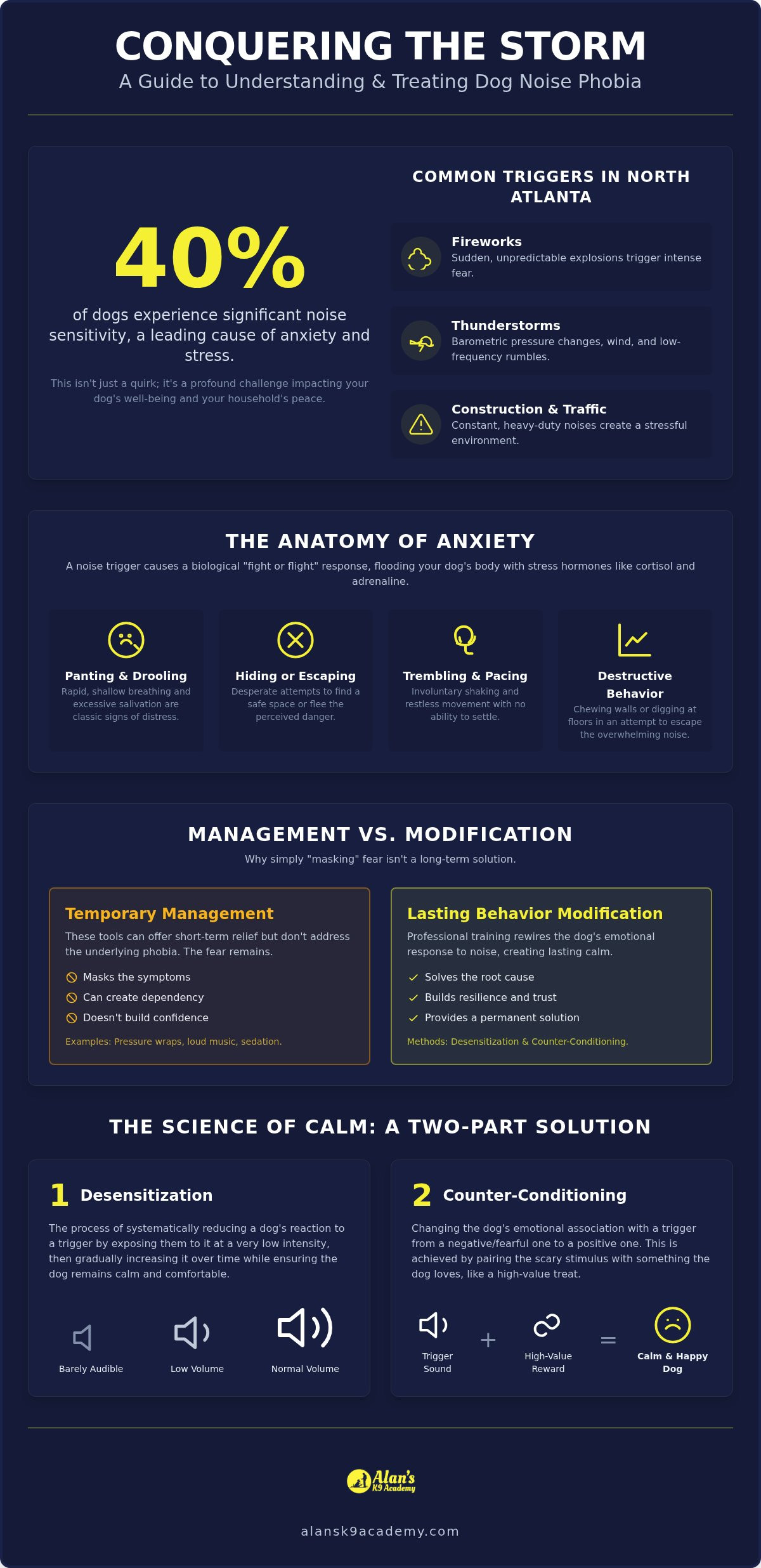
We understand that noise phobia isn't just a minor quirk; it's a profound communication challenge that impacts your entire household’s quality of life. Recent 2026 data shows that up to 40% of dogs experience significant noise sensitivity, so you are certainly not alone in this struggle. This guide will show you how professional in-home behavior modification can transform that paralyzing fear into lasting confidence. We’ll preview the latest layered management strategies and the proven techniques used to give you back control and provide your dog with the peace they deserve.
Key Takeaways
• Identify the specific environmental triggers in North Atlanta, from summer thunderstorms to local fireworks, that cause your dog’s intense fear response.
• Explore the science of desensitization and counter-conditioning to help your companion stay calm when the noise starts.
• Learn why professional training for dog noise phobia focuses on lasting behavior modification instead of just temporary management tools like pressure wraps.
• Establish a reliable foundation of obedience to help your dog focus on you when they feel overwhelmed by their environment.
• Discover the benefits of customized, in-home training that addresses your dog's unique needs right where they feel most comfortable.
Understanding Canine Noise Phobia: Why Dogs Panic
Noise phobia is more than a simple dislike of loud sounds. It's an intense, irrational fear response that can leave your dog feeling trapped and desperate. In North Atlanta, we see this most often during our heavy summer thunderstorms, neighborhood fireworks, or the constant hum of local construction projects. For many owners, it's difficult to distinguish between a natural startle response and a clinical phobia. A startle response is brief. Your dog might jump at a loud bang but quickly recovers and returns to their normal activity. A phobia is a sustained state of terror that can last for hours after the sound has stopped. Gaining a deeper Understanding Canine Noise Phobia requires recognizing that your dog's brain is in a state of crisis. Effective training for dog noise phobia starts with identifying these physiological triggers and understanding how they manifest in your home.
When owners try to "comfort" a dog in this state by coddling them or using high-pitched baby talk, they may unintentionally reinforce the dog's belief that the situation is indeed life-threatening. Our balanced approach focuses on building trust and clear communication before the next storm hits. This ensures your dog looks to you for guidance rather than spiraling into panic. By establishing a calm, authoritative presence, we can begin to bridge the communication gap that exists during these high-stress events.
The Physiology of Fear in Dogs
When a noise trigger occurs, your dog’s body is flooded with cortisol and adrenaline. This "fight or flight" response isn't a choice; it's a biological takeover. You might notice your dog panting heavily, pacing the room, or drooling excessively. In severe cases, dogs may attempt destructive "escape" behaviors, such as chewing through door frames or digging at carpets. Chronic exposure to this level of stress doesn't just ruin a quiet evening. It impacts your dog’s long-term health, potentially shortening their lifespan due to the constant strain on their cardiovascular and immune systems. Addressing these symptoms early is critical for their overall well-being.
Genetic vs. Learned Phobias
Why does one dog sleep through a storm while another trembles under the bed? Genetics often play a role. Certain breeds, such as herding dogs or hounds, can be more predisposed to sound sensitivity. However, many phobias are learned through a single traumatic event. One close lightning strike or a nearby firework can create a lifelong association of terror. Professional behavioral training for dogs is essential for identifying whether your pet’s fear is a deep-seated genetic trait or a conditioned response. This distinction is the first step in creating a successful plan for training for dog noise phobia that yields real-world results.
The Science of Sound: Desensitization and Counter-Conditioning
How do we move from managing a dog's panic to actually erasing the fear? The answer lies in two scientifically proven methods: systematic desensitization and classical counter-conditioning. These Behavior modification techniques work in tandem to rewire your dog's emotional brain. While desensitization focuses on reducing the intensity of the sound, counter-conditioning changes the dog’s emotional response from "scary" to "rewarding." Successful training for dog noise phobia requires precision. If the sound is too loud, the dog stays in a state of fear. If the reward comes too late, the association isn't made. Timing is everything.
We use high-value rewards that your dog never receives at any other time. Think of these as "jackpot" prizes, like fresh chicken or a favorite tug toy, reserved exclusively for noise training sessions. This creates a powerful incentive for the dog to look forward to the sounds they once feared. If you're finding it difficult to find that perfect balance, our behavior modification experts can help you identify the exact moment to reward your dog for their bravery.
Step-by-Step Desensitization at Home
The process begins by using recorded sounds of thunderstorms or fireworks played at a barely audible volume. You want the sound to be present but not enough to cause a reaction. Watch your dog's body language closely for the "threshold" of anxiety. The threshold is the point just before the dog begins to show physical signs of stress. If they stop eating or look toward the speaker with pinned ears, you've gone too far. We want to keep them in a "learning zone" where they notice the sound but remain completely relaxed.
Building Positive Associations
Once you've found the right volume, start pairing that low-level noise with your dog’s favorite activity. This might be a high-intensity game of fetch or a steady stream of treats. Consistency is the secret to long-term success. Training for 5 to 10 minutes daily is far more effective than trying to "fix" the issue only when it actually rains. As your dog becomes more comfortable, you’ll gradually increase the volume over several weeks. Eventually, you will transition from recorded sounds to real-world noise events, giving your dog the tools to remain calm when the North Atlanta skies turn dark.
Management vs. Modification: Why "Masking" Isn’t Enough
When the thunder starts rolling over Cartersville, most owners naturally reach for immediate relief. You might put on a pressure wrap, plug in a pheromone diffuser, or turn up the television. These are management tools. They're designed to help your dog survive the event, but they don't change how your dog feels about the sound itself. While management is a necessary first step, relying on it exclusively is like putting a bandage on a deep wound without treating the infection. Over time, a dog that is only "managed" can become even more sensitized to the noise, leading to a phobia that grows more intense with every passing season.
Effective training for dog noise phobia requires a shift from masking the symptoms to modifying the underlying behavior. Modification involves the active work of changing the dog’s emotional state, as we discussed in the previous section. A comprehensive plan for professional in-home dog training integrates both strategies. We use management to keep the dog safe and below their stress threshold while we do the hard work of behavior modification in their natural environment.
Creating a "Safe Haven" in Your Atlanta Home
A safe haven is a designated area where your dog feels completely secure. In many North Atlanta homes, this is often an interior closet, a basement, or a bathroom without windows. The goal is to select the room with the least amount of outside noise penetration. You can buffer sudden claps of thunder by using white noise machines or calming music specifically designed for canine ears. Crucially, this safe haven should be accessible to your dog 24/7. If they only have access to it during a storm, they may begin to associate the room itself with the onset of fear, defeating its purpose as a sanctuary.
When to Consult a Professional
How do you know when your management efforts aren't enough? If your dog begins to show signs of self-injury, such as raw paws from digging or broken teeth from chewing on a crate, it's time for professional intervention. Extreme destruction of property or sudden redirected aggression toward other pets are also major red flags. A Master Trainer can provide a critical assessment to determine if your dog’s fear has reached a clinical level that requires a veterinary referral. Often, owners miss "micro-stress" signals like subtle lip licking or muscle tension that indicate the training for dog noise phobia needs to be adjusted. We bring 35 years of experience to your doorstep to ensure your dog’s plan is as unique as their personality.
How to Train a Dog with Noise Phobia at Home
Effective home training isn't just about playing a soundtrack of thunder. It's about how your dog perceives you as their leader when the world feels like it's falling apart. While generic audio protocols are a starting point, they often fail because they lack the human element of security. Your dog needs to know that you are in control. This is where training for dog noise phobia becomes a partnership rather than a clinical exercise. By following a structured path, you can help your companion navigate their fear with confidence.
To begin the modification process in your North Atlanta home, follow these five essential steps:
Step 1: Identify the exact triggers.
Observe your dog closely. Do they react to the flash of lightning, the change in barometric pressure, or the specific low-frequency boom of thunder?
Step 2: Establish a foundation.
Use dog obedience training to improve your dog's focus and impulse control before you introduce triggers.
Step 3: Sub-threshold exposure.
Play recorded sounds at a volume so low your dog barely notices them while they enjoy a meal or a game.
Step 4: Increase complexity.
Gradually raise the volume and introduce visual triggers, such as flashing a flashlight to simulate lightning strikes.
Step 5: Generalize the training.
Move your practice sessions to different rooms of the house so the dog learns that "calmness" is a requirement everywhere, not just in one spot.
The Role of Structure and Obedience
A dog that looks to its owner for direction is significantly easier to train through a phobia. When you build a solid foundation of obedience, you aren't just teaching "sit" or "stay." You're teaching your dog how to handle stress. Using commands like "Place" or "Settle" gives your dog a specific job to do during a storm. This shift in focus from the scary noise to a known task provides a mental anchor. We focus on building this real-world reliability so that when the 4th of July arrives, your dog already has a practiced routine of relaxation.
Common Mistakes to Avoid
One of the most damaging things an owner can do is punish a dog for being afraid. Scolding a trembling dog only adds fear to fear, shattering the trust you've worked to build. Another common pitfall is "flooding," which is exposing the dog to full-volume noise before they are ready. This often results in a complete behavioral breakdown. Finally, remember that "tough love" backfires in phobia cases. A dog in a state of panic isn't being stubborn; they are in a physiological crisis. If you’re ready to see this transformation in your own living room, contact us today for a customized training plan that prioritizes your dog's emotional well-being.
Professional Behavior Modification in North Atlanta
Finding a solution for a panicked pet can feel like an uphill battle. While generic online directories might point you toward a long list of names, they don't offer the localized trust of a family-owned business. At Alan’s K9 Academy, we believe that effective training for dog noise phobia requires more than just a certification; it requires decades of real-world insight. Master Trainer Alan Carr brings over 35 years of award-winning experience directly to your doorstep in Cartersville and Marietta. We don't just treat the symptoms. We look at your dog's history, your household dynamics, and the specific environment to create a path forward that others might deem impossible.
Our approach is built on the belief that every dog deserves a life free from paralyzing fear. We've seen every level of anxiety, from mild trembling to severe property destruction, and we remain unfazed. By choosing a professional who understands the unique triggers of the North Atlanta area, you're investing in a personalized roadmap to success. This isn't about a temporary fix. It's about giving you the confidence to lead your dog through the next storm with calm authority.
The AK9A In-Home Advantage
The gold standard for behavior modification is the in-home setting. Why? Because that’s where your dog’s fear actually lives. When we visit families in Woodstock, Canton, and Alpharetta, we observe your dog in the exact environment where they feel most vulnerable. This allows us to spot the subtle environmental cues, like a specific window or a drafty door, that might be heightening their stress. We provide hands-on coaching for you, the owner, ensuring you have the tools to maintain the training between our sessions. You aren't just a client; you're our partner in your dog’s transformation.
A Mission of Compassion and Integrity
Our work is driven by a deep sense of accountability and a foundation of Christian values. We operate with integrity, treating every dog as if they were a member of our own family. We focus on building a lasting bond between you and your companion, grounded in mutual respect and clear communication. Our mission is to improve your quality of life by restoring peace to your home. If you're tired of feeling helpless during every thunderclap, we're ready to help you turn that fear into confidence. Schedule your in-home behavior modification consultation today and take the first step toward a storm-ready home.
Build a Storm-Ready Future for Your Dog
Watching your dog suffer through a thunderstorm or fireworks display is a heavy burden for any owner. You now know that while management tools provide temporary relief, true transformation requires meaningful behavior modification. By shifting from simply "masking" the sound to actively changing your dog's emotional response, you're giving them the tools they need to stay calm. Professional training for dog noise phobia isn't just about stopping the trembling; it’s about restoring the bond of trust between you and your companion.
With 35+ years of Master Trainer experience, we specialize in creating customized behavior modification plans that work in the real world. Our in-home sessions across North Atlanta ensure we address your dog's fears in the environment where they feel most vulnerable. You don't have to face the next storm season alone. We're here to guide you every step of the way with a proven, balanced approach that prioritizes your dog's well-being.
Restore peace to your home with expert noise phobia training from Alan’s K9 Academy. Let’s work together to turn your dog’s fear into lasting, calm confidence.
Frequently Asked Questions
Is it possible to "cure" a dog of noise phobia?
While "cure" is a strong word, you can certainly reach a point of successful management and significant fear reduction. The goal of training for dog noise phobia is to change the emotional response so your dog remains calm. It requires ongoing maintenance and patience, but most dogs can live a peaceful life without panic once they have the right tools. Success means a dog that recovers quickly rather than spiraling.
Can I give my dog Benadryl or other medications for fireworks?
You must consult your veterinarian before administering any medication. While Benadryl is sometimes used for mild sedation, it doesn't address the underlying panic of a true phobia. In fact, some dogs may feel more trapped if they are physically drowsy but still mentally terrified. As of 2026, the FDA has approved newer options like Tessie (tasipimidine) which are specifically designed to treat noise aversion and anxiety simultaneously.
How long does noise phobia training usually take?
The timeline varies based on the severity of the phobia and your dog's history. Generally, you should expect to see meaningful progress within 4 to 8 weeks of consistent, daily work. Because we are rewiring a deep biological fear response, this isn't a quick fix. It is a steady journey of building trust and resilience through structured behavior modification sessions in the comfort of your own home.
Should I ignore my dog when they are scared of thunder?
No, you should not ignore a panicked dog, but you must remain calm. If you ignore them, they feel isolated in their fear. If you coddle them with high pitched voices, you might reinforce their anxiety. The best approach is to provide a calm, steady presence. Offer a known task, like going to their "place" or "settle" command, to provide a sense of security and purpose during the storm.
Does a "ThunderShirt" actually work for noise phobia?
Pressure wraps like the Thundershirt have a reported 80% success rate in clinical trials for reducing mild to moderate anxiety. They work by applying gentle, constant pressure, similar to swaddling an infant. However, for a dog with a severe phobia, a wrap is a management tool, not a complete solution. It must be paired with professional training for dog noise phobia to achieve a lasting emotional transformation.
Will my puppy grow out of their fear of loud noises?
Puppies rarely grow out of noise fears without intervention; these fears usually worsen as the dog matures. The "fear periods" in puppyhood are critical windows where a single bad experience can create a lifelong phobia. Early socialization and positive, sub-threshold exposure to various sounds are essential. Taking action now prevents these sensitivities from developing into clinical phobias that become much harder to treat in adulthood.
What is the best way to handle a dog that panics during the 4th of July?
Preparation is the key to a safe holiday. Create a "layered" defense by using a white noise machine, a safe room in the center of your home, and high value treats to distract them. Keep your windows closed and curtains drawn to block out visual flashes. If your dog's panic is extreme, ensure you have discussed situational medications with your veterinarian well before the fireworks actually begin.
How do I know if my dog needs a professional behavior specialist?
If your dog is injuring themselves, destroying property, or becoming aggressive during noise events, you need professional help immediately. When your current management tools like white noise or wraps no longer keep them below their stress threshold, it's time for an expert assessment. A Master Trainer can identify subtle stress signals and create a customized plan that addresses the root cause of the fear rather than just the symptoms.