%20(620%20x%20150%20px)%20(14).webp)
%20(620%20x%20150%20px)%20(15).webp)
.webp)
_page-0001.webp)
.webp)
Adopting a Rescue Dog: A Practical First-Weeks Guide
What if the best first step after adopting a rescue dog is to ask less of them, not more? It’s natural to want to explore, introduce everyone, and start training right away. But a new home brings unfamiliar sounds, people, and routines. If you’re searching for what to do after adopting a rescue dog,...
%20(5).gif)
What if the best first step after adopting a rescue dog is to ask less of them, not more? It’s natural to want to explore, introduce everyone, and start training right away. But a new home brings unfamiliar sounds, people, and routines. If you’re searching for what to do after adopting a rescue dog, begin by creating a quiet place to rest and giving your dog time to adjust before expecting them to engage.
Keep the first days calm, and make meals, bathroom breaks, and rest as predictable as you can. It’s also normal for a dog’s behavior to change as they settle in. Early fear, withdrawal, or restlessness doesn’t automatically mean the adoption is going badly.
This guide offers a practical plan for the first weeks, including how to balance space with gentle interaction, when to introduce routines and training, and how to notice signs that your dog needs extra support. We’ll also explain the 3-3-3 Rule as a flexible guide, not a deadline. Small, steady steps can help your dog feel safer while giving trust room to grow.
Key Takeaways
• Make arrival easier with secure transport, a calm bathroom break, and a quiet entry into the home.
• Treat early behavior as an adjustment snapshot, not a fixed prediction of your dog’s personality.
• Use consistent daily patterns and calm reinforcement to help your dog understand household expectations.
• Start training gently with brief practice around their name, attention, and everyday routines rather than rushing through commands.
• When settling challenges feel hard to manage, personalized in-home training can help you work on communication and obedience where they matter most.
What to Do on the First Day With Your Rescue Dog
It’s natural to feel excited when your new dog arrives. You may want to show them every room, introduce the whole family, and start your life together right away. But a quieter welcome can take pressure off a dog facing unfamiliar people, smells, and surroundings. If you’re wondering what to do after adopting a rescue dog, focus on a calm arrival and a few basic needs before expecting interaction or exploration.
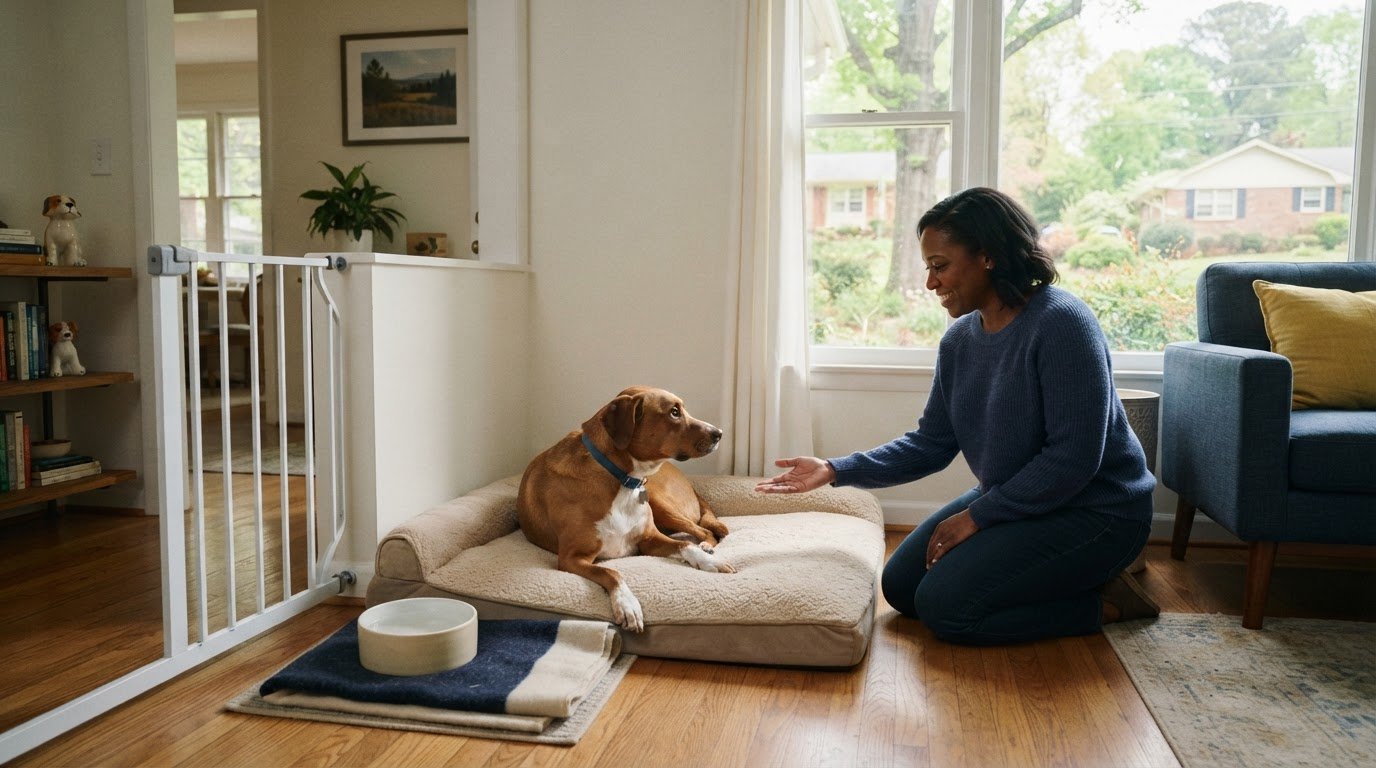
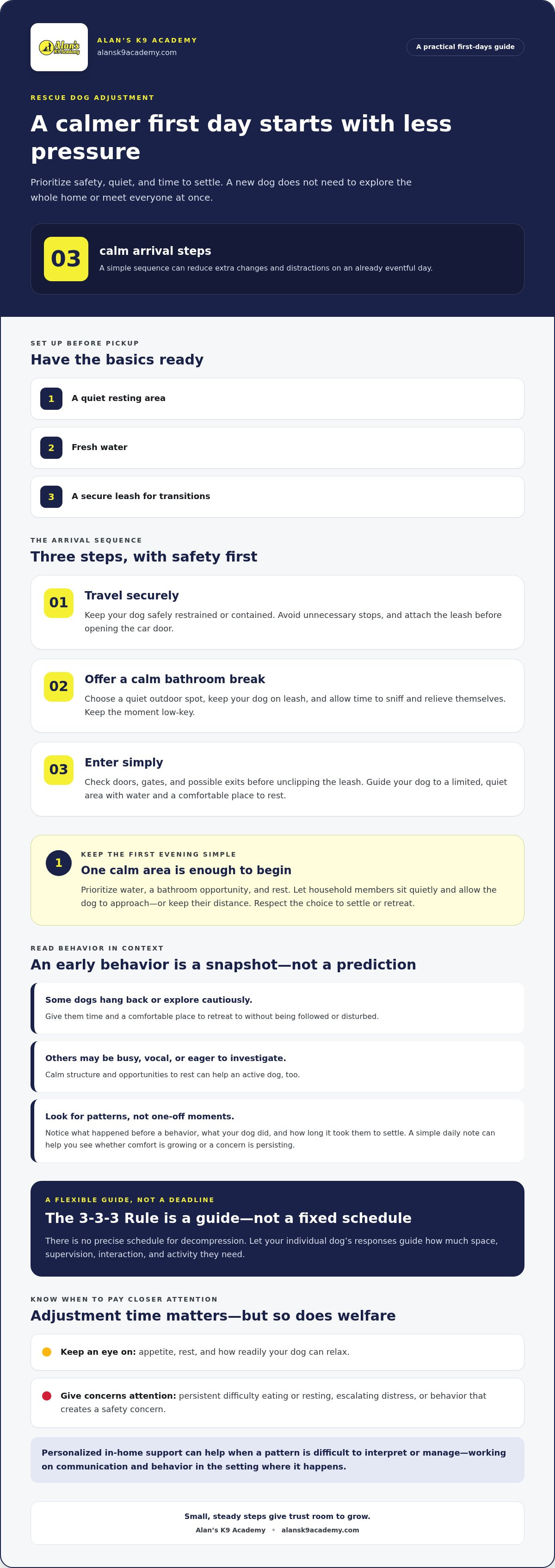
Prepare before pickup: set up a quiet resting area, put out fresh water, and have a secure leash ready for transitions. On the first day, prioritize safety, quiet, and time to explore at your dog’s own pace.
Travel securely.
Keep your dog safely restrained or contained during the journey, and avoid unnecessary stops. When you arrive, attach the leash before opening a car door so your dog can’t dash into unfamiliar surroundings.
Offer a calm bathroom break.
Take your dog to a quiet outdoor spot on leash and allow time to sniff and relieve themselves. Keep the moment low-key. They may need time to feel comfortable enough to go.
Enter the home simply.
Before unclipping the leash, check doors, gates, and other possible exit routes. Guide your dog to a limited, quiet area with water and a comfortable place to rest.
How to make the journey home and arrival safer
Calm supervision matters, but it doesn’t mean assuming every rescue dog will try to escape. Watch how your individual dog responds to doors, movement, and new surroundings. Keep them leashed during transitions while you learn their patterns. A direct trip home and a clear path inside reduce extra changes and distractions on an already eventful day.
Rescue dogs come from different circumstances, so the label alone can’t tell you how your new companion will react. For general background on the term and adoption, see What is a rescue dog? Let your dog’s behavior guide how much space and supervision they need.
How to introduce the home without overwhelming your dog
Begin with one calm area rather than opening every door. A smaller space makes it easier for your dog to rest and observe without having to process the whole household at once. Keep the leash on until you’re in a secure area and can supervise comfortably.
Ask household members to give the dog room. They can sit quietly and let the dog approach rather than leaning over, reaching out, or calling them over. If the dog chooses to settle or keep their distance, respect that choice. For the first evening, prioritize water, a bathroom opportunity, and rest over visitors, outings, or a busy tour of the home. You’re creating a gentle starting point, not trying to make the dog feel at home in a single night.
How to help a rescue dog decompress during the first weeks
Decompression means giving a newly adopted dog time to adjust without piling on demands. Your dog is learning how the household works, which sounds are ordinary, and whether people will respect their space. There’s no precise schedule for this process. Early behavior is a snapshot, not a complete prediction of who your dog will be once settled.
When deciding what to do after adopting a rescue dog, patient observation is more useful than rushing to label a behavior. Notice everyday patterns without assuming that one quiet afternoon or burst of energy defines your dog’s temperament. A simple daily note can help you see whether comfort is gradually growing or a concern is persisting.
What behavior changes can happen after adoption?
Some dogs initially hang back, explore cautiously, or seem less sociable than expected. Others may be busy, vocal, or eager to investigate. A reserved dog may need time to feel safe; an active dog can also benefit from calm structure and opportunities to rest. Neither response alone tells you exactly what their settled personality will be.
Track the context: what happened before a behavior, what your dog did, and how long it took them to settle. Look for patterns across situations rather than treating one incident as a permanent trait.
How much interaction should a new rescue dog have?
Offer brief, calm interactions and let your dog choose whether to come closer. Make sure they can retreat to a comfortable resting space without being followed or disturbed. Limit visitors and busy outings at first, then increase activity gradually as your dog’s responses suggest they’re comfortable. Reward relaxed, desired choices without demanding attention.
Gentle, reward-based interactions can make everyday learning feel less pressured. Best Friends Animal Society shares practical guidance on training a rescue dog with positive reinforcement, including ways to encourage behaviors you want to see.
Keep an eye on appetite, rest, and how readily your dog can relax. A disrupted meal or a day of extra hiding may be useful context, not a diagnosis. But persistent difficulty eating or resting, escalating distress, or behavior that creates a safety concern deserves attention rather than being dismissed as “just adjusting.” Give adjustment time, but don’t let patience become a reason to overlook a meaningful welfare or safety concern.
If a pattern is proving difficult to interpret or manage, personalized in-home support can help you work on communication and behavior in the setting where they happen. Alan’s K9 Academy offers in-home dog training and behavior modification for families in its service area.
Build trust with predictable routines and gradual introductions
A predictable day helps your dog learn what happens next. Regular patterns around meals, bathroom breaks, rest, and walks make household life easier to understand, especially while everything else is new. You don’t need a strict timetable. Aim for a steady rhythm your household can maintain, and give your dog time to learn it.
Trust also grows through your responses. Rather than correcting every unfamiliar behavior, notice and calmly reinforce choices you want to encourage, such as settling on a bed or checking in with you. This helps your dog understand what works without turning each new experience into a test. For broader home-training context, explore this professional in-home dog training guide.
Which simple routines should owners establish first?
Choose consistent places and simple cues for everyday needs. Serve meals in the same quiet spot, use a familiar cue before bathroom breaks, and keep the resting area available throughout the day. Walks can follow a familiar pattern, too. Keep expectations manageable: establish the basics before changing several household rules at once.
• Agree on household cues for common requests, such as “outside” or “bed.”
• Respond consistently when your dog follows a cue or settles calmly.
• Keep meals, rest, and bathroom opportunities in a dependable daily rhythm.
• Make sure family members know which behaviors they’re encouraging and how.
Consistency doesn’t mean expecting instant understanding. If one person invites the dog onto the sofa while another redirects them, the rule becomes harder to learn. Decide what works for your household and use the same response where practical. Small, repeatable habits are easier for everyone to maintain than a long list of new commands.
How should a rescue dog meet family members and other pets?
Socialization isn’t a greeting marathon. It means introducing people, animals, and everyday experiences at a pace suited to your individual dog. Keep first interactions calm and controlled, give your dog room to move away, and avoid crowding or forcing contact. A short, relaxed encounter can be more useful than a long one that leaves the dog overwhelmed.
With existing pets, preserve their familiar spaces and supervise interactions closely. Let them observe each other without requiring them to approach or share resting places. Watch for signs that either animal needs more distance, such as trying to retreat or becoming increasingly tense. Pause or increase separation as needed. Progress can be gradual, not perfectly smooth.
As your dog becomes more comfortable, add new experiences one at a time and let their response guide the pace. Calmly reward relaxed behavior, then give them a chance to rest. If introductions lead to persistent distress or raise safety concerns, individualized professional guidance can help you make a plan suited to your household. That’s a constructive next step, not a sign you’ve failed.
When and how to begin training after adopting a rescue dog
You don’t need to teach every command right away to give your new dog a good start. Early training is less about a checklist and more about building clear communication through calm, repeatable experiences. As you decide what to do after adopting a rescue dog, begin with small opportunities to connect and let your dog’s comfort guide how quickly you add new skills.
What should early rescue-dog training focus on?
Start with the foundations of daily life: feeling comfortable around the household, noticing you, and learning simple expectations. Say your dog’s name once, then reward a glance in your direction. Invite them to a resting spot or reward them for choosing to settle there. These small moments help make communication understandable without turning practice into pressure.
Keep learning opportunities brief and manageable. You might practice a name response in a quiet room, then pause while your dog explores or rests. End before they seem distracted, tense, or tired. There’s no deadline for adding commands. Your dog’s ability to stay comfortable matters more than how many skills they learn in a day.
• Use one familiar cue at a time and give your dog a moment to respond.
• Reward attention and calm choices with something your dog enjoys.
• Pause if your dog loses interest or seems overwhelmed, then try again later.
Think of training as guidance, not a test of whether adoption is succeeding. If you’re ready to build practical skills for everyday situations, explore real-world dog obedience training.
When should owners seek help with behavior challenges?
Get support if fear, anxiety, aggression, or disruption at home persists or escalates, especially when it’s affecting daily routines or making it difficult to keep everyone comfortable. If there’s an immediate risk to a person or another animal, prioritize distance and safety, and seek qualified professional help rather than attempting a difficult interaction on your own.
Support can help you understand what may be contributing to a behavior and plan appropriate next steps for your household. For more on behavior-modification support, read this guide to dog behavioral training.
For personalized guidance with communication, obedience, or behavior challenges at home, explore in-home dog training with Alan’s K9 Academy. Alan Carr brings over 35 years of professional dog-instruction experience to tailored training support.
When extra help makes sense: rescue-dog training in North Atlanta
Seeking guidance doesn’t mean you’ve failed your dog. It can make a difficult part of settling in more manageable, especially if you’re unsure how to respond or household routines are becoming stressful. Not every rescue dog needs professional training. But if you’d benefit from a clearer plan, one-on-one coaching can help you and your dog build communication at a pace that fits your home.
What can personalized in-home training help owners work on?
In-home training connects practice to the routines your dog needs to navigate every day. You can work on communication, household expectations, and practical obedience in the spaces where those skills matter, such as settling when visitors arrive or responding to you around everyday distractions. A tailored approach focuses on your goals and your dog’s responses, rather than asking every newly adopted dog to follow the same program.
Behavior modification can help address more complex or persistent challenges. The work can focus on understanding behavior patterns and developing appropriate ways to respond, without assuming there’s a quick fix or promising a particular outcome. Bring examples of what’s happening at home, including the context and any patterns you’ve noticed. That gives training a practical starting point.
How can local owners take a practical next step?
Start by identifying the challenge you most want help with. Is it communication during daily routines, a behavior that’s disrupting home life, or uncertainty about how to respond safely? A specific goal helps keep guidance focused. If a situation feels unsafe, prioritize separation and safety while arranging qualified support.
Alan’s K9 Academy serves Cartersville, Bartow County, and North Atlanta. Founder Alan Carr is a Master K9 Trainer with over 35 years of professional dog-instruction experience. Personalized in-home training offers a way to work on communication and obedience in your dog’s home environment, with guidance connected to the household routines you’re building.
As you consider what to do after adopting a rescue dog, remember that asking for help is one possible next step, not a requirement or a verdict on how things are going. If tailored guidance would help your household move forward with more confidence, explore personalized support from Alan’s K9 Academy.
Keep building confidence, one step at a time
Your rescue dog’s first weeks are a beginning, not a deadline for having everything figured out. As you decide what to do after adopting a rescue dog, let the relationship develop through the choices you make next. Notice what feels easier, where your dog still needs room, and which parts of daily life could use more structure. Progress may be quiet, but small signs of growing comfort matter.
You don’t have to solve every challenge alone. If you’re unsure how to respond to a behavior or want a clearer plan for your household, personalized guidance can help you move forward with greater confidence. The right support should meet your dog where they are and help you build skills that make sense in everyday life.
Explore personalized dog training support when you’re ready to take the next step. With patience, thoughtful guidance, and time to build trust, you and your dog can create a home life that feels more secure for both of you.
Frequently Asked Questions
Is it normal to feel overwhelmed after adopting a rescue dog?
Yes, feeling overwhelmed can be a normal part of adjusting to a new responsibility and changing household routines. Focus on one manageable priority at a time, such as helping your dog feel secure or arranging a routine veterinary visit. You don’t need to solve every behavior question immediately. If you’re unsure what to do after adopting a rescue dog, keep notes about what’s challenging and ask a trusted person or qualified professional for support.
How long does it take a rescue dog to settle into a new home?
There’s no single timeline. Some dogs begin exploring and relaxing fairly soon, while others need more time before they seem comfortable with household life. Changes in behavior can continue as your dog learns which people, sounds, and routines are familiar. Rather than judging progress by a deadline, look for gradual changes in how they rest, explore, and respond to everyday situations.
Can I change my rescue dog’s name after adoption?
Yes, you can teach your dog a new name. Choose one short name and use it consistently, especially during calm moments. Say it once, then reward your dog when they look toward you, using praise, a treat, or a favorite toy. Avoid repeating the name over and over or using it only to interrupt unwanted behavior. Your dog can learn that the new sound predicts good things and connection with you.
Should I take my newly adopted rescue dog to a veterinarian?
Arrange a veterinary appointment to review your dog’s health and care needs. Bring any adoption paperwork or medical records you received, and share what you’ve observed about appetite, energy, digestion, or other changes. The veterinarian can advise you about an appropriate care plan and follow-up. If your dog seems acutely unwell or has a concerning symptom, contact a veterinary clinic promptly rather than waiting for a routine visit.
What should I do if my rescue dog refuses food after coming home?
A dog may eat less during a stressful transition, but keep track of what they actually eat and drink. Offer their familiar food in a quiet spot, if you know what they’ve been eating, and avoid repeatedly changing meals or adding lots of extras. Contact a veterinarian if refusal continues, your dog isn’t drinking, or you notice other concerning signs. A vet can help assess the cause rather than guessing that it’s only stress.
Can I leave my rescue dog alone during the first few days?
Keep absences brief at first if you can, and don’t assume your dog is ready to manage a long stretch alone. Set them up in a safe area with water, then step away briefly and observe how they respond. If they become distressed, shorten the absence and build up gradually. For unavoidable time away, arrange for someone the dog can safely spend time with while they adjust.
What should I do if my rescue dog tries to run away?
If your dog gets loose, avoid chasing toward traffic. Call calmly, ask nearby people to note the direction, and contact local shelters or animal services if you can’t recover them safely. Prevent another escape with secure doors and a well-fitted leash. For ongoing leash or door concerns, Alan’s K9 Academy serves Cartersville, Canton, Woodstock, Marietta, Rome, Acworth, Kennesaw, Sandy Springs, Roswell, Alpharetta, Powder Springs, Dallas, Hiram, Jasper, Cumming, Holly Springs, Ball Ground, and Milton.