




30 Day Rescue Dog Decompression: Settle In and Know When to Seek Support
The first 30 days aren’t a deadline for your rescue dog to feel completely at home. The 3-3-3 rule is a rough guide: allow about three days to decompress, three weeks to learn household routines, and three months to grow more comfortable. A 30-day rescue dog decompression guide can help you focus on...

The first 30 days aren’t a deadline for your rescue dog to feel completely at home. The 3-3-3 rule is a rough guide: allow about three days to decompress, three weeks to learn household routines, and three months to grow more comfortable. A 30-day rescue dog decompression guide can help you focus on steady progress, not pressure.
It’s understandable to wonder whether hiding, a poor appetite, or unsettled behavior means something is wrong. Dogs adjust at different speeds, and settling in can be uneven. A calm routine and room to take things gradually can make those early days easier for everyone.
This guide explains how to build predictable routines, introduce family members and resident pets gradually, and create a safer, more structured first week. You’ll also learn to recognize when your dog needs more space and when health or behavior concerns call for professional support.
Key Takeaways
• Build a steady daily rhythm and reinforce the behaviors you want to see, while allowing your dog time to adjust.
• Make family and pet introductions gradual, brief, and guided by your dog’s comfort signals.
• Use simple safety and structure during the first week to help your new dog settle without unnecessary pressure.
• Notice changes in appetite, health, or behavior so you can recognize when veterinary or training support may help.
1. How can you build a predictable daily routine?
For the first 3 weeks, repeat the same basic pattern for meals, potty breaks, rest, and quiet activity. A rescue dog learns household routines through familiar events, not a packed schedule of new experiences. Choose consistent cues, such as clipping on the leash before going outside, then returning to the same calm spot indoors. A 30 day rescue dog decompression guide works best as a flexible framework, helping you build predictability without demanding instant adjustment.
House-training works best when you offer frequent, predictable chances to go outside. Take your dog out every couple of hours, and after waking, meals, and play. Go to the same potty area on leash, then reward outdoor elimination immediately with praise or a small treat. If your dog goes outside and then has an accident indoors, calmly reset and offer another outdoor break. NYC Second Chance Rescue recommends positive reinforcement for new dogs. Avoid scolding after an accident; your dog may not connect a delayed correction with the behavior.
Make crate time part of a calm routine rather than a sudden separation. Set up the crate as a quiet resting place, and introduce it gradually with comfortable bedding and a treat. A foster dog may sleep in a crate at night for safety and to help prevent separation anxiety. If your dog cries, wait until they’ve been quiet for 15 seconds before opening the door. Pairing the crate with rest and rewards helps make it a familiar part of the day.
Keep a simple record of meals, potty trips, and rest periods during the first month. For example, note whether your dog needs to go out after breakfast or wakes from a nap ready for a break. These patterns help you adjust timing without changing the whole routine. By the end of the first month, most rescue dogs have a recognizable routine, but the 3-3-3 rule is a rough guide, not a deadline. Use this 30 day rescue dog decompression guide to notice patterns, reward calm choices, and support small steps toward comfort.
2. Gradually introducing family members and resident pets
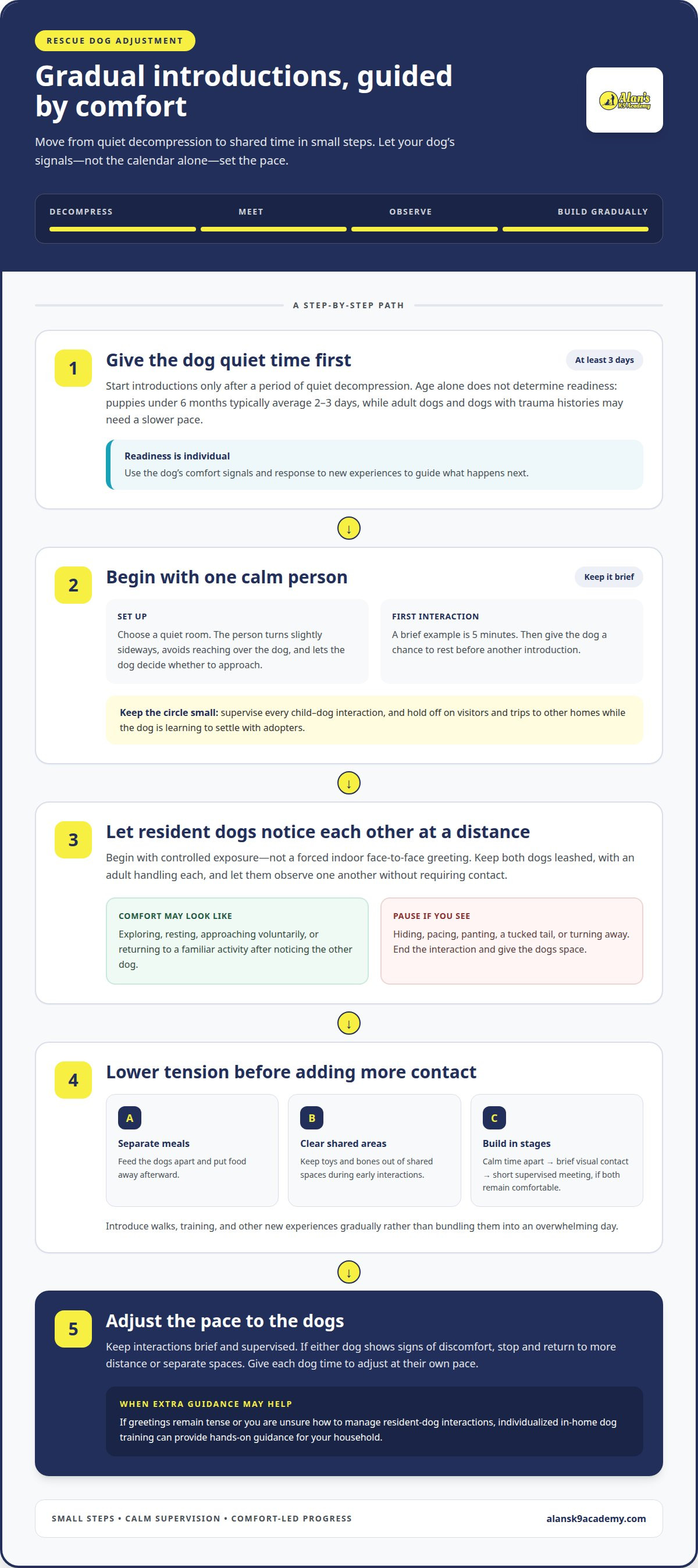
After at least three days of quiet decompression, begin introductions gradually, rather than bringing your new dog into a busy gathering. Puppies under 6 months typically spend an average of 2-3 days decompressing, but age alone doesn’t determine readiness. Adult dogs and dogs with trauma histories may need a slower pace, guided by their comfort signals and response to new experiences.
Start with one calm family member in a quiet room. Have them turn slightly sideways, avoid reaching over the dog, and let the dog choose whether to approach. Keep the first interaction brief, such as 5 minutes, then give the dog a chance to rest. Ask children to stay quiet and let an adult supervise every interaction. Hold off on visitors and trips to other homes while the dog is still learning to settle with adopters.
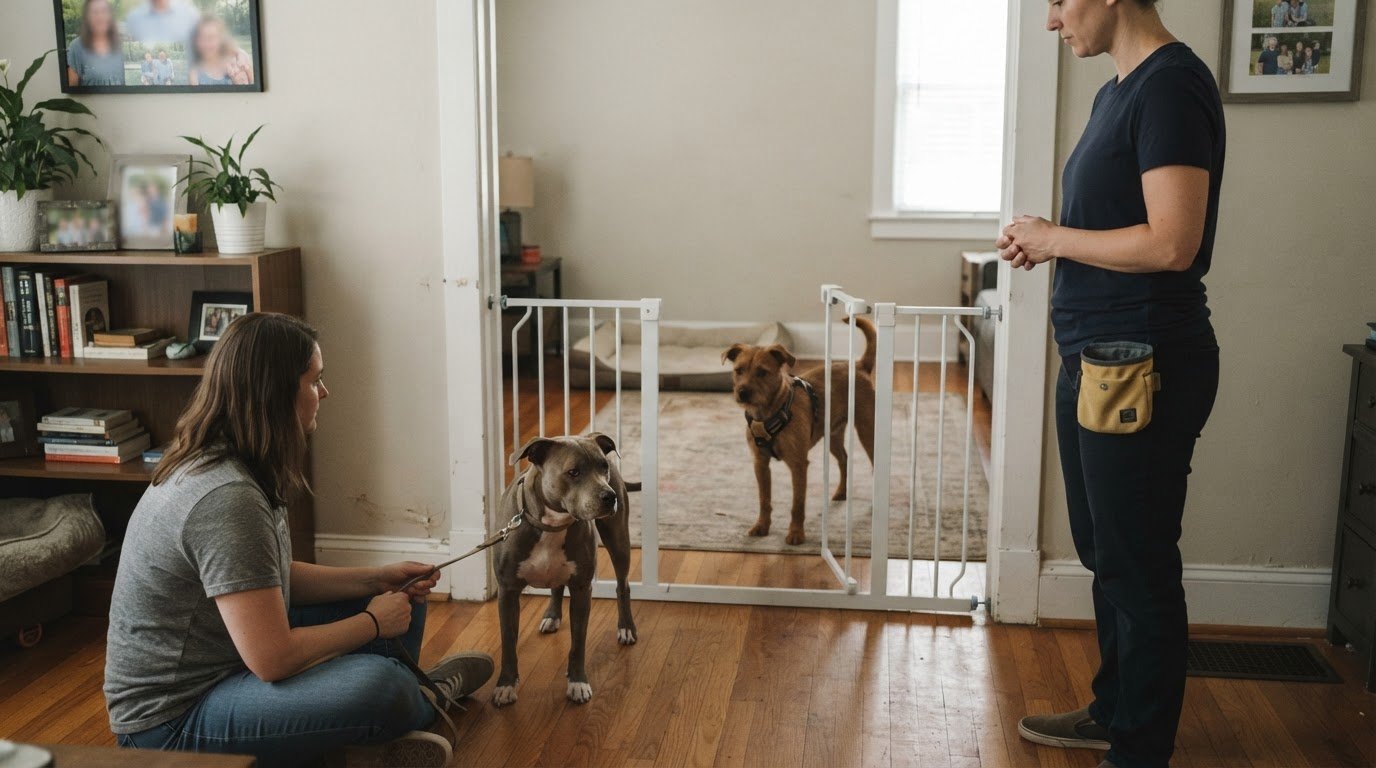
For resident dogs, start with distance and controlled exposure rather than an indoor face-to-face greeting. Keep both dogs leashed, with an adult handling each, and let them notice one another without forcing contact. End the interaction if either dog hides, paces, pants, tucks their tail, or turns away. A relaxed dog may explore, rest, or approach voluntarily. Returning to a familiar activity after noticing the other dog can also signal comfort.
Feed resident and newly arrived dogs separately, and put food away afterward. Keep toys and bones out of shared spaces during early interactions, since valued items can add tension. Build exposure in small steps: calm time in separate areas, brief visual contact, then a short, supervised meeting if both dogs remain comfortable. Introduce walks, training, and other new experiences gradually rather than bundling them into an overwhelming day. Give each dog time to adjust at their own pace.
If greetings remain tense or you’re unsure how to manage resident-dog interactions, individualized in-home dog training can provide hands-on guidance for your household.
3. First-week safety and structure
Set up a quiet room with water, a resting place, and a way to limit foot traffic. Keep visitors and busy household activity away while your dog learns this new setting. On arrival day, take your dog to the toilet spot on leash before entering the home. For a newly arrived foster dog, a 15–20-minute crate rest can provide time to take in the surroundings.
During the first week, leash your dog for every outdoor trip, even in a fenced yard. A frightened dog may bolt, so don’t allow off-leash roaming outside. Supervise yard time, and don’t leave your dog alone in the fenced area during the early adjustment period. Avoid retractable leashes with a newly arrived dog; a standard leash gives you closer control if an unexpected sound or interaction startles them.
For the first 1–2 days, double leashing can add a layer of security while your dog adjusts to unfamiliar doors and outdoor surroundings. Check that the harness and collar fit comfortably, and attach the leash before opening an exterior door. A harness is useful for walks with small dogs because a tightening collar can press on a small dog’s windpipe. Keep handling calm and predictable.
Build trust through brief, low-pressure interactions and clear household boundaries. Don’t leave animals together unattended. Use doors or barriers to separate them whenever an adult can’t supervise. Watch for signs your dog needs more space, such as hiding, pacing, panting, or turning away. Pause the activity and move to a quieter area rather than pushing through. Safety gives your dog room to observe, rest, and become familiar with daily sounds. If routine handling or household activity seems overwhelming, reduce stimulation and make the next interaction shorter. Consistent supervision helps prevent a startling moment from becoming an escape or conflict.
4. When to seek veterinary or behavior support
Fear can show up as hiding, pacing, panting, a tucked tail, or turning away. A dog may also growl, snap, or guard food, resting places, or furniture. Give your dog a safe place and stop the interaction instead of forcing contact. If fear or aggression recurs, escalates, or makes everyday care difficult, seek professional behavior support. These signs call for a plan shaped around the dog’s triggers and household setting.
Arrange a veterinary visit within the first week or two after adoption, even if your dog appears healthy. Bring adoption and medical records so the veterinarian can review the health history. Ask which vaccines and parasite prevention suit your dog’s age, health, and known history. A veterinary assessment can also help determine whether changes in eating, energy, or behavior may have a medical cause.
If your dog eats nothing for a full day, contact a veterinarian; seek help sooner for a puppy or very small dog. Call a veterinarian about diarrhea lasting beyond a day or a limp that doesn’t improve within a day or two. Hiding alone may reflect nervousness in a new home, so reduce noise and let your dog rest. If hiding comes with signs of illness or a sudden behavior change, seek veterinary advice.
Track practical details before you consult: when symptoms began, what your dog ate, how often diarrhea occurs, and which situations trigger fear. A brief record helps describe patterns clearly. Keep your dog in a quiet, safe place while you arrange care, and avoid testing reactions with visitors or other animals. For recurring fear, guarding, or aggression, talk through your dog’s behavior concerns and build a thoughtful support plan.
Alan's K9 Academy
Alan's K9 Academy can help you turn settling-in guidance into a practical plan for your dog and household. If routines feel difficult to maintain, introductions remain tense, or fear-related behaviors are affecting daily life, personalized training and Behavior Modification can address those challenges in real-world settings. In-Home Dog Training lets the work focus on the dog’s home environment, while Group Classes can support learning around other dogs and people. The right next step depends on what your dog is showing and where you need support. Veterinary concerns, such as ongoing diarrhea or refusing food, need veterinary care rather than dog training. For help with your dog’s adjustment, contact Alan's K9 Academy.
Keep Building Confidence Together
Your dog’s progress isn’t measured by a calendar. It shows in small shifts: choosing to rest nearby, recovering after a startling sound, or approaching a familiar person at their own pace. Let those moments guide what comes next. A 30 day rescue dog decompression guide is a starting point, not a script your dog must follow. Keep adjusting your approach to what your dog communicates, and make room for steady, meaningful growth.
If uncertainty about fear, behavior, or training is making daily life harder, personalized support can help you decide on a practical next step. Alan's K9 Academy offers training tailored to dogs and their families, including support for behavior concerns and therapy or service dog foundations. Contact Alan's K9 Academy to discuss the support that may fit your situation. Every calm interaction helps create a stronger foundation for the life you’re building together.
Frequently Asked Questions
What is Decompression?
Decompression is the adjustment period when a rescue dog gets used to a new home, people, sounds, and expectations. After a move, ordinary things such as a doorbell or kitchen appliance may feel unfamiliar. Keep the surroundings manageable and let your dog observe without demanding interaction. The 3-3-3 rule offers a rough framework for this transition, not a fixed test of how well your dog is doing.
Can I take my new rescue dog on walks right away?
Yes, take your dog outside on leash for essential bathroom breaks, but keep early outings calm and practical. Choose a quiet route close to home instead of a crowded park or busy sidewalk. Use a secure harness or collar and leash, and avoid off-leash areas while your dog is still unfamiliar with you and the surroundings. If your dog freezes or seems overwhelmed, create distance and head back calmly.
How can you build a predictable daily routine?
Build the day around repeatable cues rather than scheduling every minute. For example, use the same phrase before meals, keep the leash by the exit, and guide your dog to a familiar resting spot after activity. Household members can share a simple note about meals, outings, and stress triggers so expectations stay consistent, even when different people are caring for the dog.
How can you tell whether your rescue dog is settling or feeling overwhelmed?
Notice how your dog recovers after something unfamiliar. A dog who notices a passing truck, then resumes sniffing or resting, is coping with that moment better than one who stays tense, paces, or avoids the area. Consider the overall pattern rather than reading one signal in isolation. Note what happened just before a reaction, such as a visitor arriving or a loud household sound.
How should you respond when progress feels uneven?
Keep familiar cues in place and make the next interaction easier when your dog struggles. If your dog was comfortable near a family member yesterday but hides today, create more distance and let the dog choose whether to approach. Track changes alongside context, such as noise, visitors, or activity. Dogs adjust at different rates, so focus on the next manageable step.
Is the 3-3-3 rule a reliable schedule for every rescue dog?
No. The 3-3-3 rule describes about three days to decompress, three weeks to learn household routines, and three months to feel more at home. It’s a broad guideline, not a research-backed deadline or a promise that every dog will follow the same pattern. Use your dog’s behavior and ability to recover from new experiences to guide each next step.